
The Collector's Checklist: What to Gather Before Selling a Watch
Selling a watch goes smoother when the work happens before the listing goes live. The collectors who get clean offers, fewer back-and-forth questions, and faster closes are almost always the ones who showed up with a folder, not a story. Here is the checklist worth running through a week or two before you decide to sell.
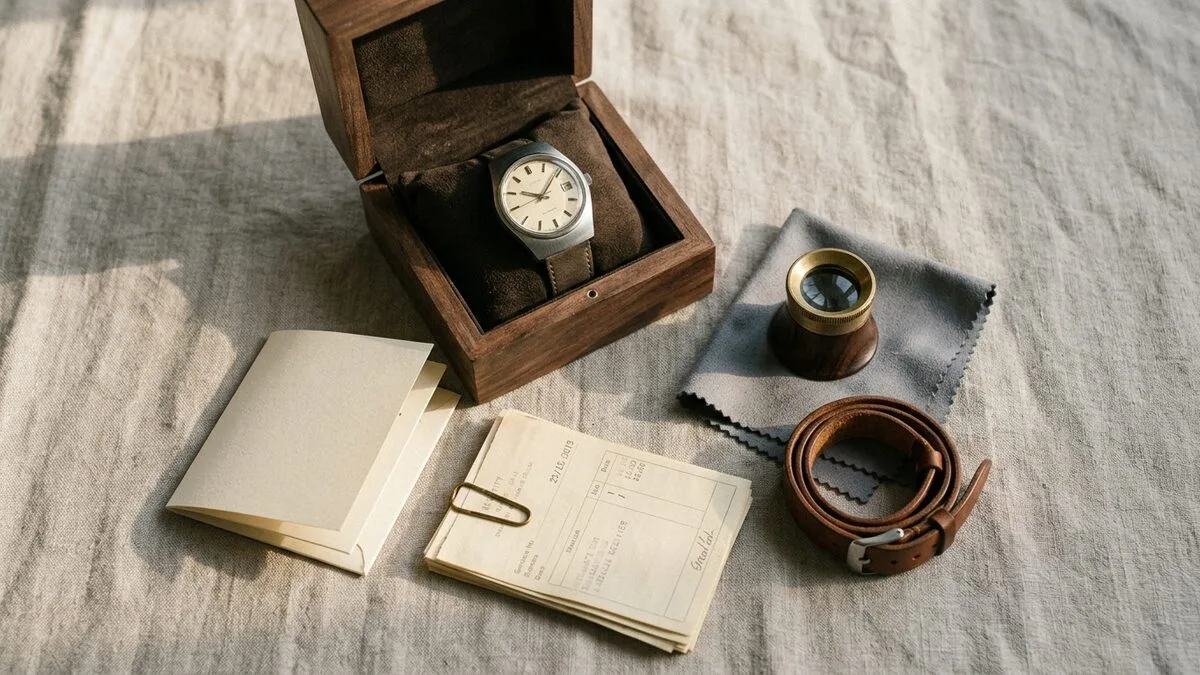
Start with paperwork, because it sets the ceiling on what a buyer is willing to pay. The original box, the warranty card with a legible stamp and date, the booklets, any service receipts from an authorized center, and the original sales receipt if you still have it. Each of these is a small lever on price. A full set tends to command a premium over a watch-only sale, and the gap widens on pieces where provenance is part of the appeal. If something is missing, note it honestly. A missing card is a deduction, not a deal-breaker, and trying to hide it almost always backfires when the buyer sees the watch in person.
Next, get honest about condition. Take the watch off your wrist, set it on a clean cloth under good light, and look at it the way a buyer would. Bezel edges, lug tips, the clasp, the case back, the crystal. Note every scratch, ding, and worn spot. If it has been polished, write down when and by whom if you remember. Polishing history matters more on sport pieces and vintage references than on dress watches, but a buyer will ask. Wind it, set it, and check that it keeps reasonable time over twenty-four hours. If it gains or loses noticeably more than the spec, factor a service into your asking price or disclose the deviation up front.
Photography is where most private sales lose money. You do not need a studio. You need a window with indirect daylight, a neutral background (a folded grey or white sheet works), and a phone camera with the lens wiped clean. Shoot the dial straight on, the case profile from both sides, the crown, the case back, the clasp open and closed, the bracelet endlinks, and any flaws you noted in the condition pass. Include a shot of the full set laid out, papers visible. Twelve to fifteen sharp, evenly lit photos beat fifty blurry ones. Avoid heavy filters; buyers want to see what they are actually buying, and overprocessed images read as cover-up attempts even when they are not.
Documentation, market context, and timing your listing for the best result
Once the photos are done, write down the serial and reference numbers and confirm they match the card. Make a short condition summary in plain language: years owned, service history, any modifications, current accuracy, and a one-line note on the strap or bracelet. This becomes the body of your listing later, and having it written before you start talking to buyers keeps your story consistent. If you have changed straps over the years and kept the originals, gather those too; original bracelets are often worth more than collectors expect when sold with the watch.
Spend an evening on market context. Check completed sales on the major enthusiast marketplaces and auction recaps for the past three to six months on your exact reference. Asking prices and sold prices are different numbers, and the sold figure is the only one that matters. Note the range, then locate where your specific example sits within it based on condition, completeness, and any desirable details like a particular dial variant or production year. Coming to a buyer with a defensible number, rather than a hopeful one, shortens negotiation considerably.
Timing matters more than most sellers realize. The watch market has seasons. Buyers tend to be more active in late spring and through the fall, with a noticeable slowdown around major holidays and tax deadlines. New releases from the major houses can pull attention away from secondary market activity for a few weeks. None of this means you should wait six months for a perfect window, but if your timeline is flexible, listing into a busy week instead of a quiet one is worth a few days of patience.
Finally, decide your channel before you commit. A trusted dealer offers speed and certainty at the cost of a margin. A consignment arrangement splits the difference. A direct private sale through an enthusiast forum or marketplace can yield the highest net but requires more time, more communication, and more diligence on the buyer side. There is no wrong answer; there is only the answer that fits how much friction you are willing to absorb. Whichever route you choose, the prep work above pays off the same way: faster conversations, fewer surprises, and an outcome you can feel good about a month after the watch has moved on.