
Why Lug Width Matters More Than You Think
Case diameter gets all the attention, but it is quietly one of the least useful numbers on a spec sheet. The measurements that actually decide whether a watch sits well on your wrist, and whether your strap drawer becomes a source of joy or frustration, are the two most people scroll right past: lug width and lug-to-lug distance. Learn to read them and you will shop smarter every time.
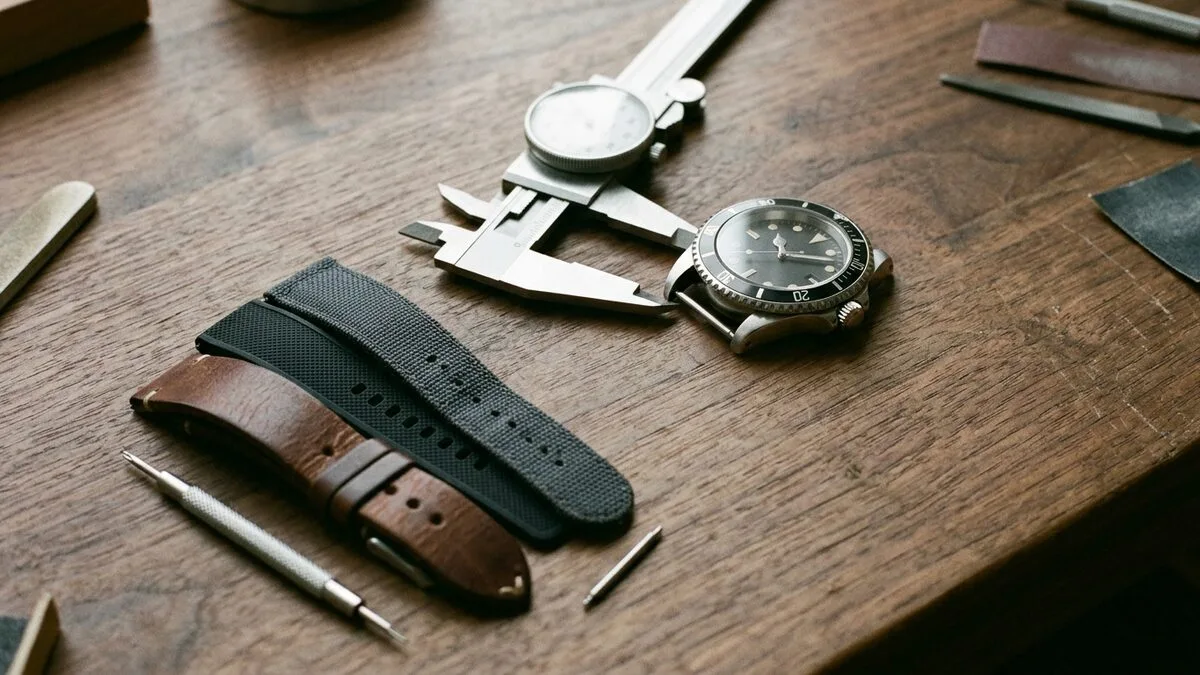
Here is the scenario every enthusiast eventually lives through. You buy a 40mm watch because 40mm is supposed to be the safe, universal size. It arrives, you strap it on, and the ends of the case hang off the edges of your wrist like a diving board. The diameter was fine. The problem was a number the listing never emphasized.
That number is lug-to-lug, and once you start checking it, you cannot unsee it. Together with lug width, these two figures tell you far more about real-world fit and long-term enjoyment than the headline case size ever will.
Lug-to-lug is the number your wrist actually feels
Lug-to-lug distance is the measurement from the tip of the top lugs to the tip of the bottom lugs: the true vertical footprint of the watch. Your wrist does not care how wide the bezel is. It cares whether the case ends sit flat on top of your wrist or dig into the slopes on either side.
A good rule of thumb: measure the flat top of your wrist in millimeters, and treat that as your lug-to-lug ceiling. If your wrist measures 55mm across the top, a watch with a 52mm lug-to-lug will sit beautifully, while a 50mm case that happens to have long, straight lugs pushing it to 57mm will overhang and feel unstable no matter how modest the diameter reads.
This is why two watches with identical case diameters can wear completely differently. A dive watch with thick, downturned lugs often wears smaller than its diameter suggests, because the lugs curve into the wrist and shorten the footprint. A dressy piece with long, flat, outstretched lugs can wear a full size larger. If you have ever wondered how a 42mm field watch felt more comfortable than a 38mm dress watch, the lug geometry is your answer.
So when you are working through a buying decision, especially for smaller or larger wrists, do the math in this order: check lug-to-lug first, then lug shape, then diameter, then thickness. That sequence will save you more returns than any influencer wrist shot.
The frustrating part is that lug-to-lug is the spec most often missing entirely. Case diameter is a marketing number and it sells; lug-to-lug is an engineering number and it tells the truth. When a listing omits it, that absence is itself information. It usually means someone would rather you not run the numbers, so run them anyway. A quick email asking for the lug-to-lug is completely fair game, and any seller who genuinely knows watches will have it.
Lug width is the number your strap collection lives by
Lug width is the gap between the lugs where the strap or bracelet sits, measured in millimeters, and it quietly governs your entire ownership experience. Get a common lug width and the world of straps opens up. Get an unusual one and you will spend the life of the watch hunting for anything that fits.
The friendly sizes are the even numbers: 18, 20, and 22mm cover the overwhelming majority of aftermarket straps, quick-release options, and NATO passes. 20mm in particular is the sweet spot, with the deepest selection at every price point. If part of the fun for you is rotating between leather, rubber, and a summer canvas, buying into a common width is one of the smartest things you can do.
Odd widths are where people get caught out. A 19mm or 21mm lug width looks like a trivial difference on paper, but it shrinks your strap options dramatically and pushes you toward pricier, brand-specific sources. Vintage pieces are the usual culprits here, along with a few modern designs that chase proportion at the expense of practicality. None of this makes an odd-width watch a bad buy; it just means you should know the tax before you sign up for it.
Two practical checks before you commit. First, confirm whether the watch uses drilled lugs or hidden lug holes. Drilled lugs, with visible holes through the side of the case, make strap changes a thirty-second job with a simple spring bar tool and spare you a lot of scratched cases. Second, ask whether the piece ships with quick-release spring bars. If it does, you can swap straps with your fingernails and no tools at all, which turns strap-swapping from a chore into a habit.
Value-minded buyers should think about this holistically. A watch with a common lug width and drilled lugs effectively comes with a lower cost of ownership, because every strap you already own has a shot at fitting, and every future strap is cheaper and easier to source. That flexibility is real money over the years, and it is worth weighing against a piece that locks you into proprietary fittings.
There is also a resale angle worth a mention. Watches on common lug widths tend to be easier to move on, simply because the next buyer inherits the same open strap ecosystem. It is a small factor next to brand and condition, but when two similar pieces are side by side, the one that plays nicely with a strap drawer tends to find its next home faster.
Put the two numbers together and a clear shopping habit emerges. Before you fall for a dial, pull the lug-to-lug to confirm it will sit flat, and pull the lug width to confirm you can dress it however you like. Diameter tells you what a watch looks like in a photo. Lug-to-lug and lug width tell you what it will feel like on your wrist and in your life. Those are the numbers worth memorizing, and the ones worth asking for when a listing goes quiet about them.