Values & guides
Ref. 69160 and 69173 deliver the same 26mm Datejust case as the gold 6917, with quick-set and sapphire included.
The 26mm Datejust occupies a specific spot in Rolex's catalog. Built for narrower wrists, it has run through several references over the years, and three come up most often when buyers start looking: the 6917, the 69173, and the 69160. All three share the same 26mm case diameter. What separates them is metal, and metal is what drives the price difference.
Reference 6917 is a solid yellow-gold Datejust. Case, caseback, bezel, crown: all yellow gold. That material cost is real and shows up consistently in asking prices on the used market. Beyond the metal, the 6917 predates Rolex's quick-set date mechanism, so adjusting the date means cycling the hands through the hours rather than pulling to a dedicated date position. It also uses an acrylic crystal rather than sapphire. For some collectors those are desirable period-correct details. For others they are practical limitations worth paying less to avoid.
Rolex's move to the "69" prefix on the 26mm Datejust brought two functional upgrades: quick-set date and sapphire crystal. Quick-set means the date advances directly from the crown, without running the hands around the dial. Sapphire resists scratching far better than acrylic. Both are everyday improvements rather than cosmetic ones.
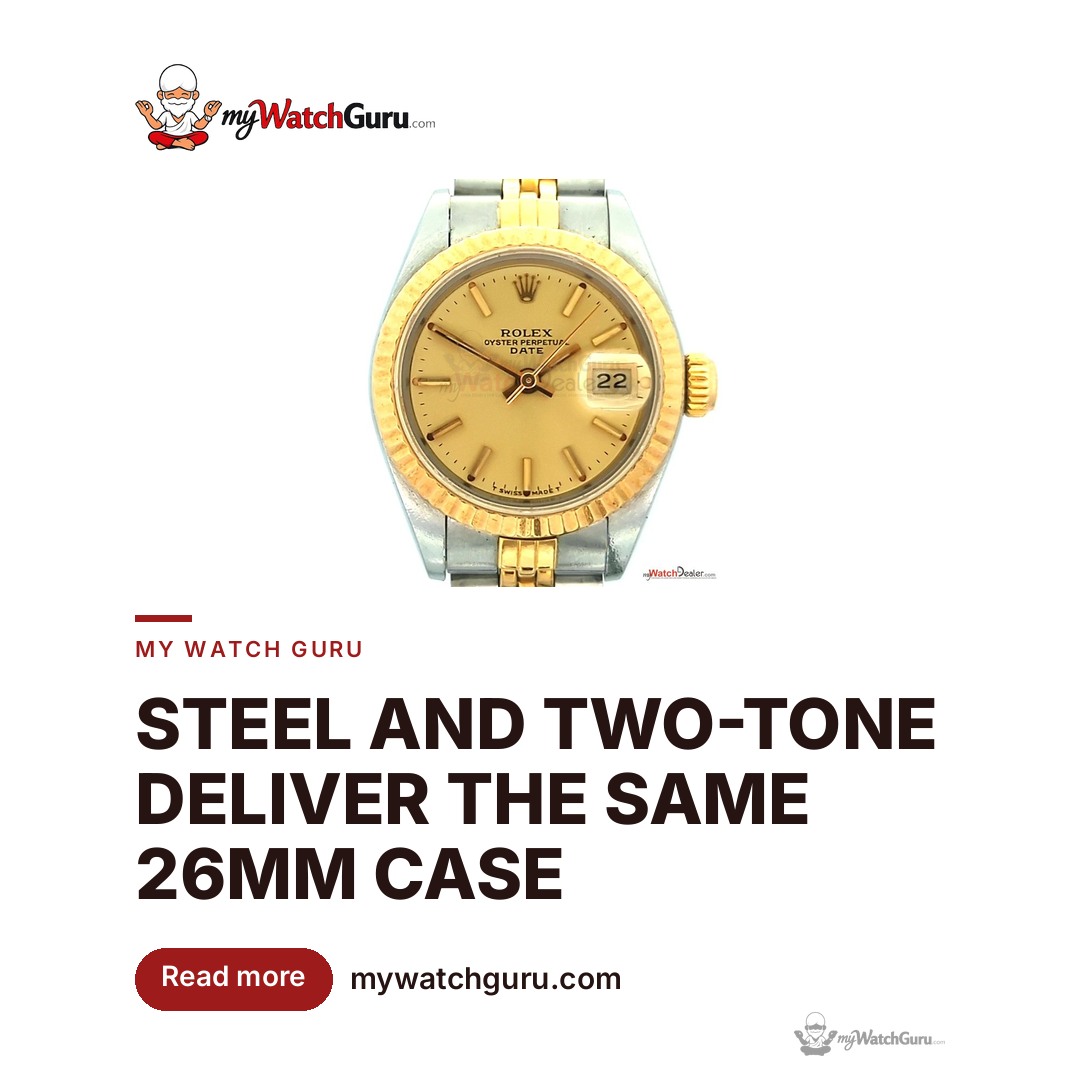
Within that generation, the 69173 is the Rolesor configuration: steel case with yellow-gold bezel, crown, and a two-tone bracelet. Steel does the structural work while gold handles the visible surfaces. Reference 69160 goes further, running an all-steel case with no gold components at all. Both references sit below solid-gold examples on the used market because their metal content is predominantly steel, and both carry the quick-set and sapphire upgrades the 6917 does not have.
From 1985, the Rolex Datejust ref 69173 is a two-tone example in steel and yellow gold with a champagne stick dial, a fluted yellow-gold bezel, and a Jubilee D bracelet. It comes with papers, which adds real documentation value for a watch of this age. The champagne dial and fluted gold bezel give this piece a warm, distinctly Rolex character without requiring a fully gold case. Quick-set date and sapphire crystal are both present, making it a more practical daily wearer than a same-era 6917 would be.
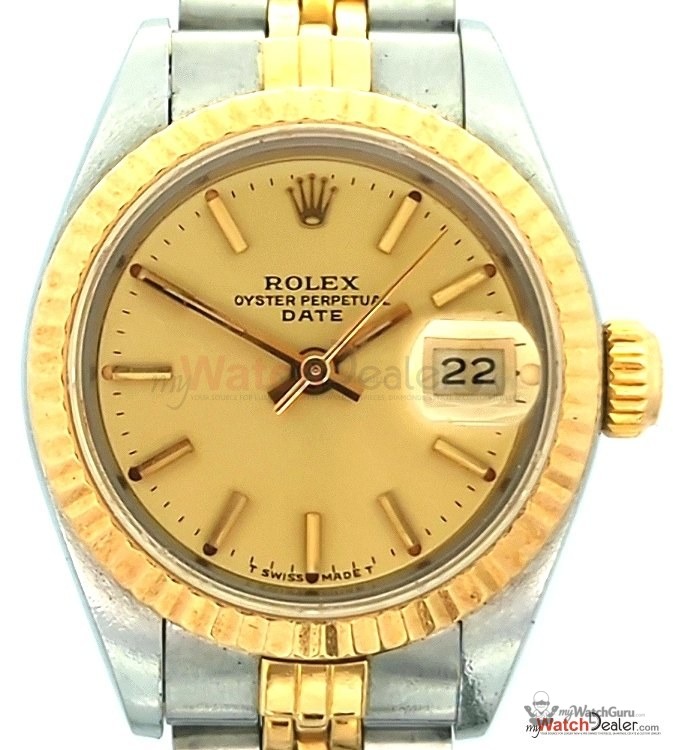
All steel and from 1995, the Rolex Datejust ref 69160 carries a silver stick dial and a smooth bezel on a Jubilee bracelet, with no box or papers. It is the quieter end of the 26mm spectrum: no gold anywhere, a clean silver dial, and a smooth bezel that keeps the whole presentation understated. A decade newer than the Rolesor example above, it shares the same quick-set and sapphire advantages over the 6917 and represents the most accessible metal configuration in the 26mm Datejust range.
Solid yellow gold means gold throughout: case, caseback, crown, bezel. On the pre-owned market, that metal premium is not trivial, and it compounds with the age of the reference. Gold also wears differently than steel, showing contact marks in ways that steel tends to absorb more evenly. For a watch worn regularly, steel and Rolesor both hold up better to daily contact.
Rolesor occupies a genuine middle position. Yellow gold appears where it shows most clearly, on the bezel and selected bracelet elements, while the case and most of the bracelet are steel. Visually it reads as a gold-accented watch. Structurally it behaves more like a steel one.
Neither featured watch comes with a box. The 1985 69173 has papers, which matters for provenance on a piece that old. The 1995 69160 has neither box nor papers, which is common for a steel watch from that period and is typically reflected in the price. Both are unmodified and in the configuration Rolex originally produced, with no custom work and no diamond settings.
If the question is which reference to chase, the metal tells you the answer. Buyers who specifically want all-yellow-gold and the period-correct movement architecture of the 6917 are purchasing something distinct from the others, not simply a pricier version of the same watch. The 69173 and 69160 share the quick-set and sapphire upgrades, with the 69173 adding gold to the visible surfaces and the 69160 stripping back to plain steel. Case size stays the same across all three.
Sold through My Watch Dealer, our retail desk — full details, current price and purchase all happen there.
View this piece at My Watch Dealer ›