Values & guides
Choosing a Datejust size from a spec sheet is guesswork, and seeing all three diameters shows what actually fits your wrist.
The Datejust family spans more than sixty years and at least three distinct case diameters buyers commonly encounter today: 36mm, 40mm, and 41mm. Three millimeters between the smallest and the largest sounds like a rounding error, but in practice it reads as a noticeably different watch on the wrist. Buyers who commit to a size from a spec sheet, without handling the references in person, tend to regret it.
Case diameter is only one dimension. Lug-to-lug distance, case height, and bracelet width all contribute to how a watch reads on the wrist. A 36mm Datejust on a Jubilee bracelet can look wider than its diameter implies because the bracelet adds visual spread at the sides. A 41mm on an Oyster bracelet sits differently again. No product photograph substitutes for putting the case against skin.
Wrist circumference matters, but so does how and where you plan to wear the watch. A buyer focused on formal dress and one who wears it every day in casual contexts can both be right that the same size is wrong for them, for entirely different reasons. Seeing the options side by side is the only shortcut that works.
At 36mm, the Datejust sits close to the wrist, clears a shirt cuff without catching, and reads as a refined, understated piece. Some buyers expecting to find it small are surprised by how present it feels in person. Others find it genuinely compact and wish they had held one before deciding. Both reactions are valid, and neither one shows up on a spec sheet.
Buyers who skip past the 40mm often pass up a useful middle ground. For wrists that find 36mm too compact but 41mm slightly wide, the 40mm can sit exactly right. The difference in visual weight between 40 and 41 is subtle in photographs and fairly clear in person. Dial color, metal combination, and bracelet style all affect that perception as much as the raw diameter does.
At 41mm, you are looking at the current standard case in Rolex's modern Datejust lineup. It reads as assertive, which suits buyers who want the watch to be visible and who lean toward a contemporary look. On a smaller wrist it can read dominant. On a standard or larger wrist it tends to look proportional, particularly with the structured Oyster bracelet rather than the softer, more classic Jubilee.
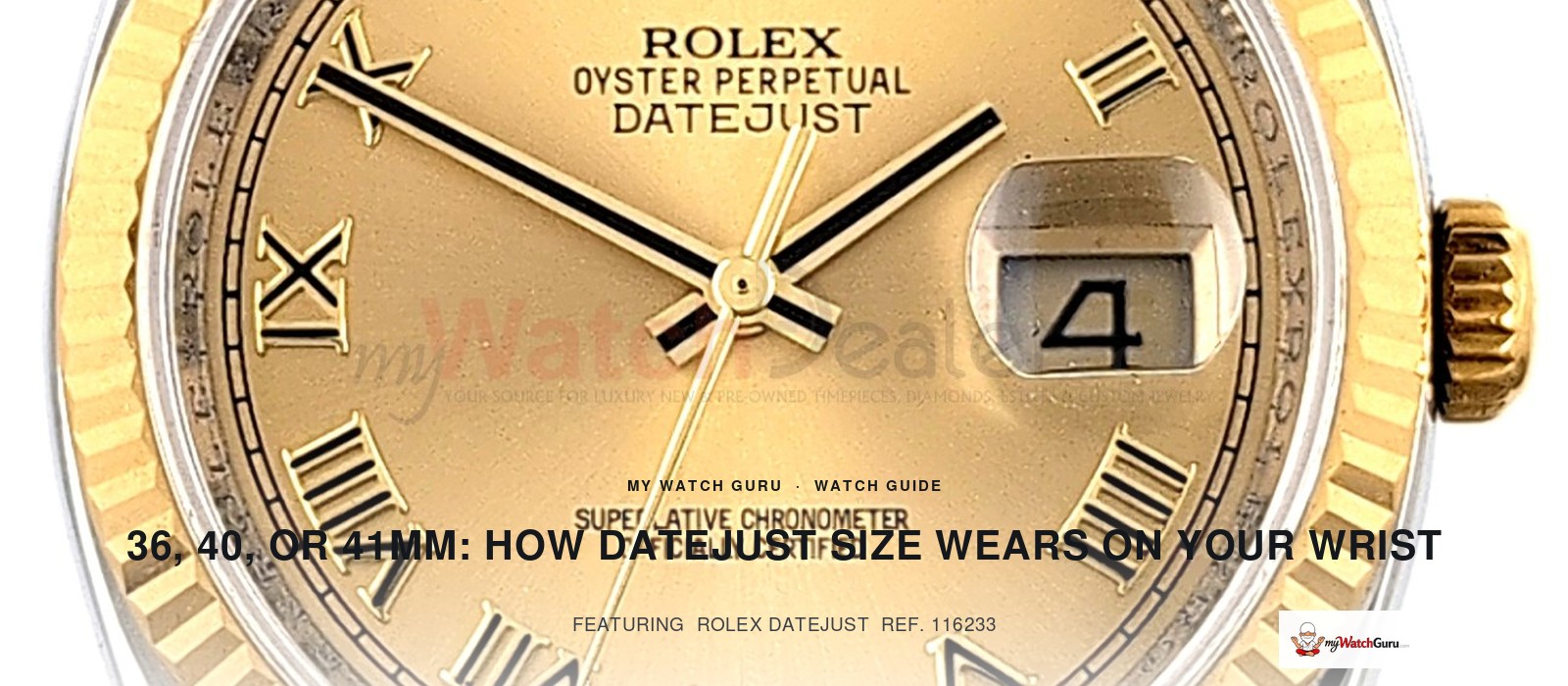
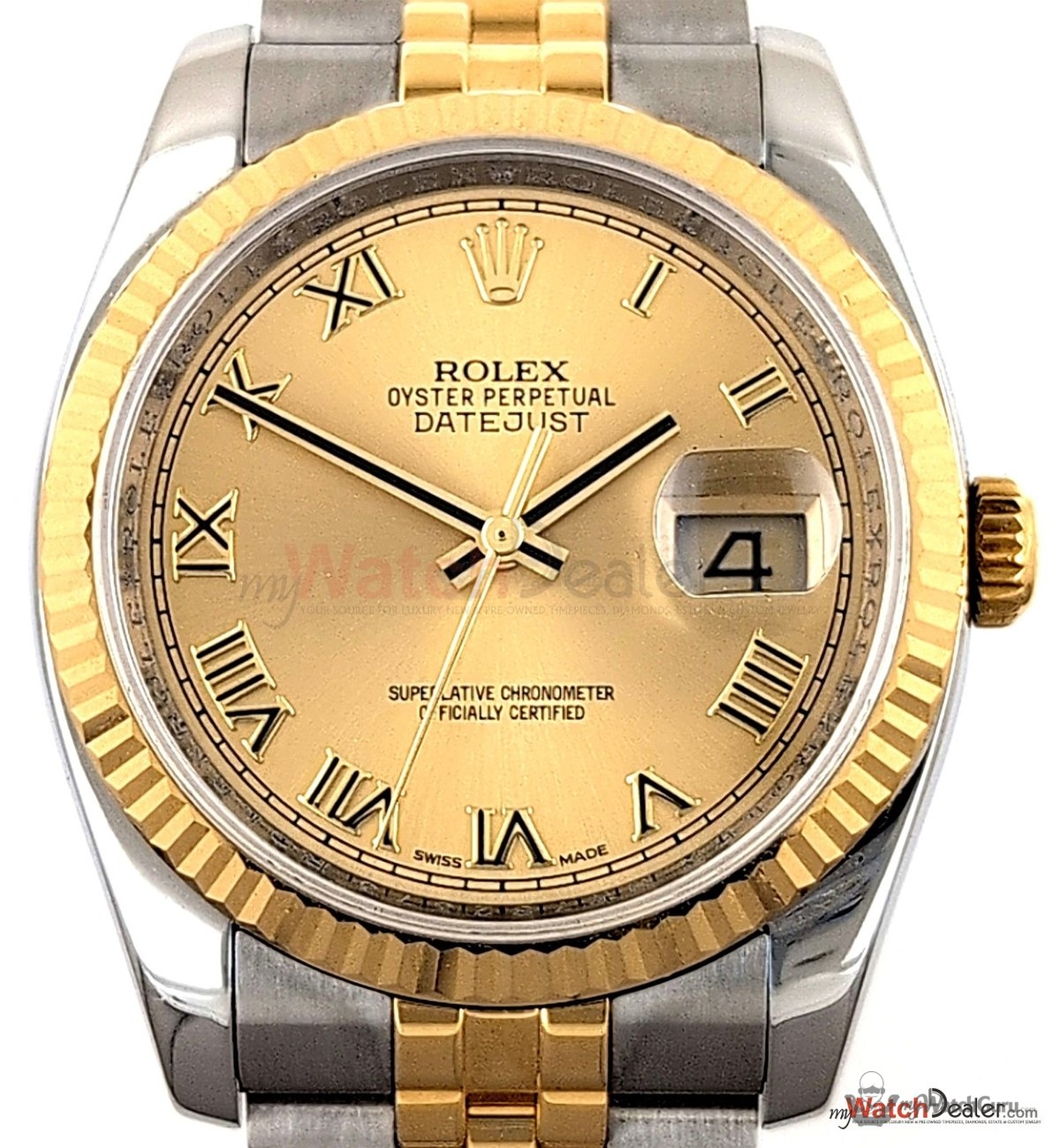
The Rolex Datejust 36 116233 is ref 116233, steel and yellow gold, with a champagne Roman numeral dial, fluted yellow gold bezel, and Jubilee bracelet. It is in used condition without box or papers. The Roman dial adds visual density that fills the 36mm face without leaving it looking sparse, and the two-tone yellow gold construction pulls the whole piece toward formal dress wear. This is the combination that tends to surprise buyers who assumed 36mm would feel undersized.
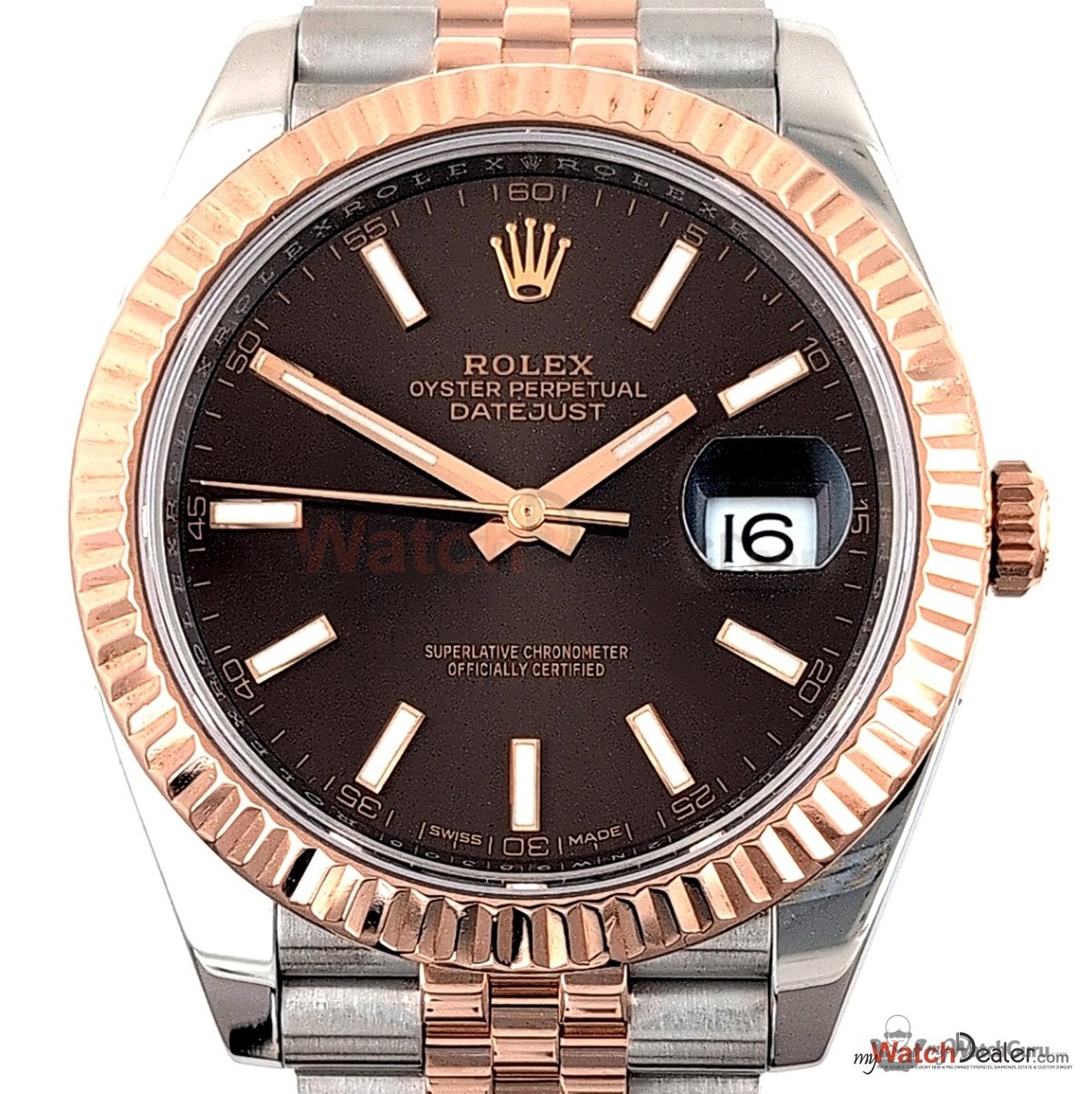
For the 40mm, the Rolex Datejust 40 126331-0002 is ref 126331-0002, steel and rose gold, listed in like new condition. It has a chocolate index dial, fluted rose gold bezel, and Jubilee bracelet. A chocolate dial absorbs light differently than a white or blue one, giving the 40mm case a quieter visual presence than its diameter might suggest. Rose gold reads warmer and softer than yellow gold, and the Jubilee bracelet at this diameter fills the wrist in a way photographs consistently fail to capture.
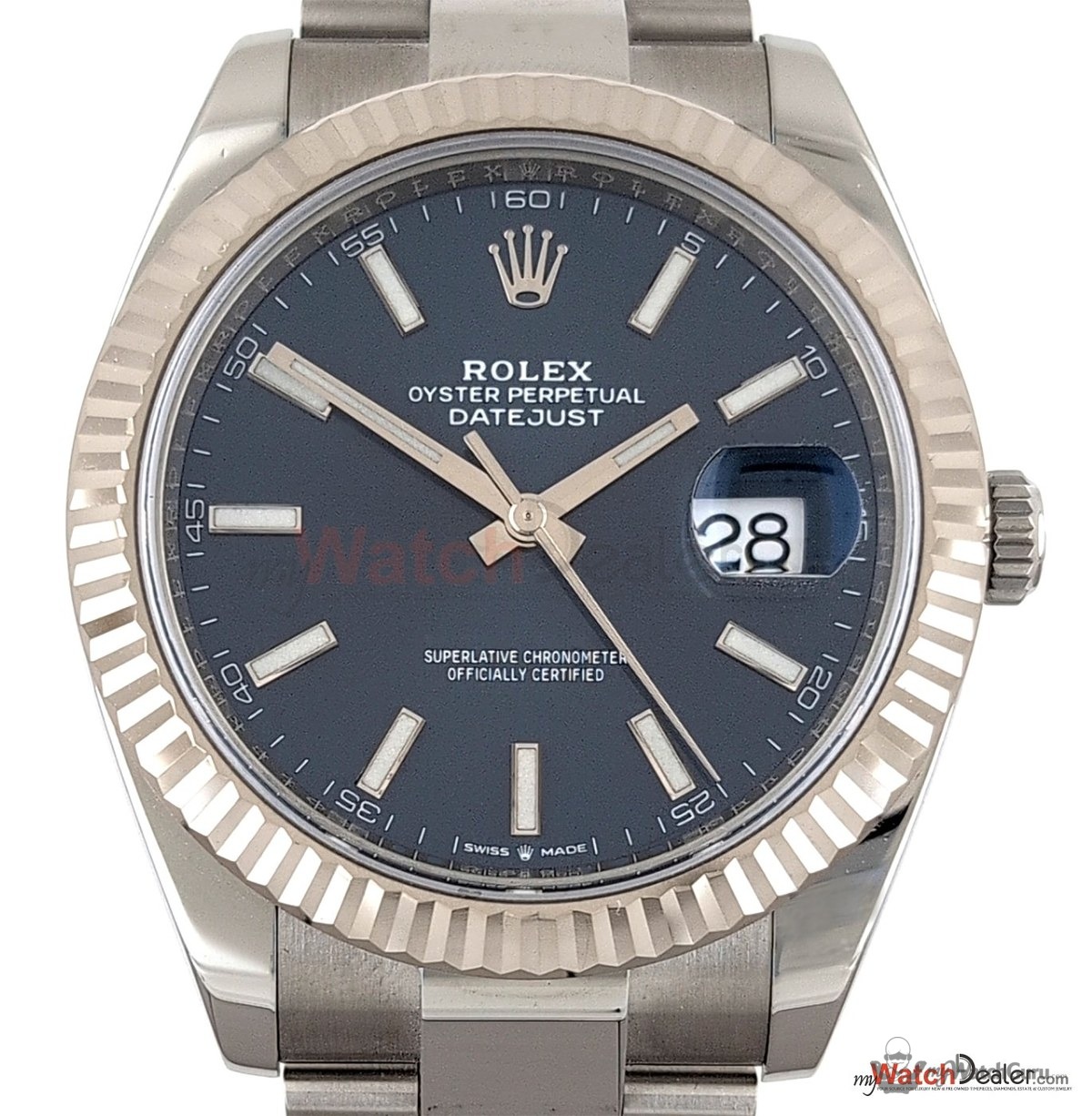
Rounding out the range, the Rolex Datejust 41 126334-0002 is ref 126334-0002, steel, in used condition, with a bright blue index dial, fluted white gold bezel, and Oyster bracelet. Steel construction and the Oyster bracelet give it a utilitarian, sport-adjacent character compared to the two Jubilee-bracelet variants above. The bright blue dial is visually assertive in a way the champagne and chocolate dials are not. At 41mm on an Oyster bracelet, this reads most clearly as a contemporary watch rather than a classic dress piece.
Sizing a Datejust is genuinely easier in person than from a screen. If handling all three side by side isn't practical, talking through the options with a specialist before purchasing is a reasonable step. My Watch Dealer operates from the Los Angeles jewelry district and trades through the International Watch & Jewelry Guild, and a specialist can walk through the choice before any purchase is made.
Sold through My Watch Dealer, our retail desk — full details, current price and purchase all happen there.
View this piece at My Watch Dealer ›