Values & guides
Knowing which crystal type is fitted before you buy sets realistic daily-wear expectations and prevents a surprise repair bill.
The crystal sitting over the dial is one of the first things most buyers look at when they pick up a watch. What they often don't think to ask is what it's made of, and that question matters more on a pre-owned piece than on a new one.
Rolex has used two crystal materials across its history: acrylic (sometimes called hesalite or plexiglass) and sapphire. Each behaves very differently, and the used watch you're considering will tell a different story at the watchmaker's bench depending on which one is fitted.
Acrylic is relatively soft. It picks up fine surface scratches from ordinary daily wear: keys, desk edges, the occasional sleeve catch. Those scratches are easy to see and can make a crystal look cloudy or tired over time. The upside is that many of them polish out. A watchmaker can use a fine polishing compound to remove light surface marks and restore a lot of clarity. Deep gouges or cracks won't polish away, but the kind of haze that accumulates from normal use often will. Replacement, when it's needed, is also inexpensive on most vintage Rolex references.
Sapphire is a different story. It's extremely hard, far harder than acrylic, and resists day-to-day scratching well. You can carry a sapphire-crystal watch for years and the crystal stays clear. The problem comes when it does take damage: a sharp enough impact can chip or crack sapphire, and unlike acrylic, a scratched or chipped sapphire cannot be polished. It has to be replaced. That replacement costs more than swapping an acrylic crystal.
On a used watch with an acrylic crystal, the condition of the crystal tells you something about how the watch was worn but doesn't necessarily signal a large expense. A hazy acrylic can often be restored at a service. A crystal that's cracked or deeply gouged will need replacement, but the part itself is not costly.
On a pre-owned sapphire-crystal watch, light fine scratches that have built up over time should concern you less. What you're checking for is edge chipping or any crack across the face. Either means a replacement crystal, and you should factor that into your offer or your first-service budget.
There's also an issue specific to the pre-owned market: sellers and even dealers don't always flag which generation crystal is fitted. On vintage Rolex, some watches have had their original acrylic swapped for a sapphire at some point in their life. That may or may not matter to you, but it changes both the look and the service calculus going forward. Sapphire typically carries an anti-reflective coating and has a different appearance at the edges than acrylic does, so the two are distinguishable if you know what to look for.
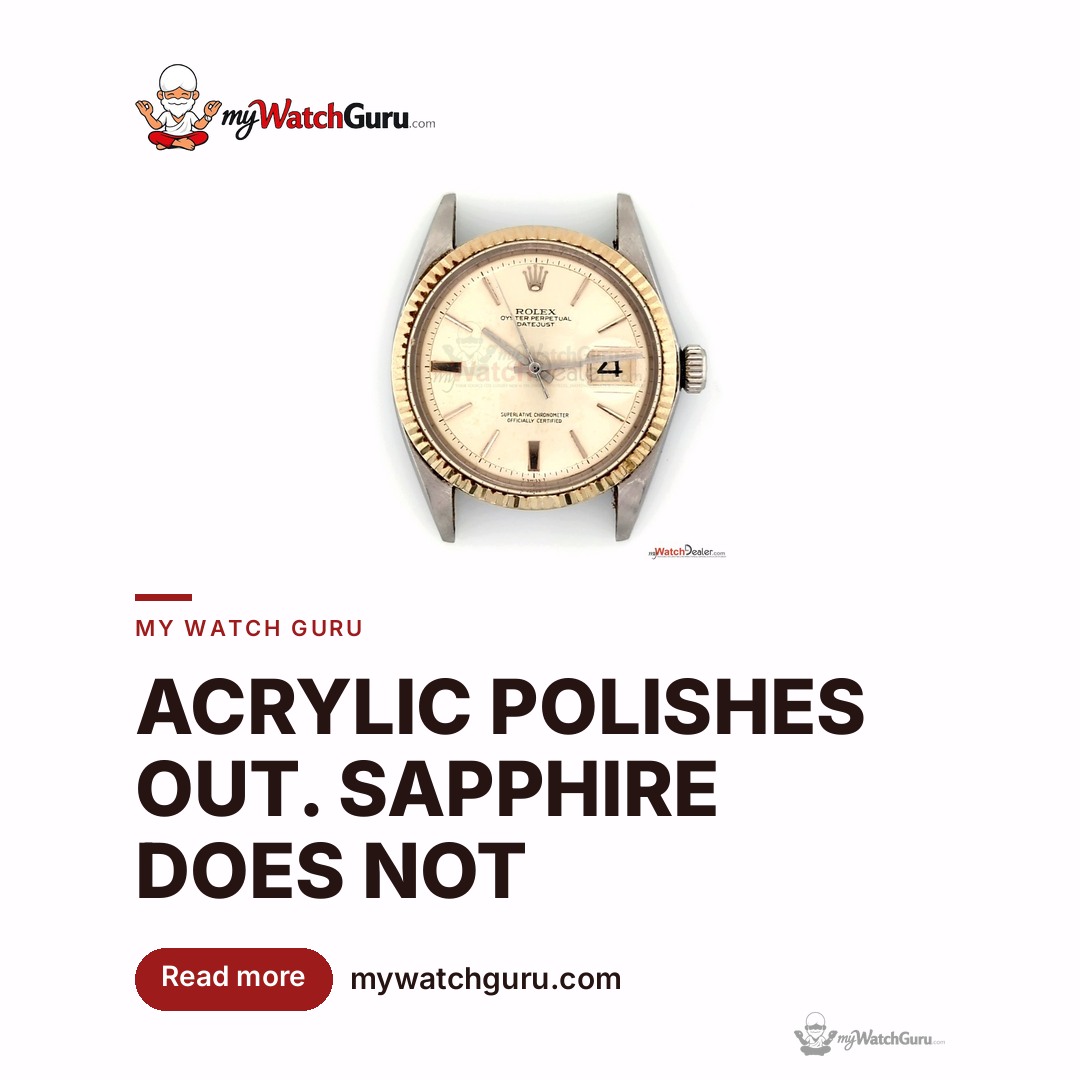
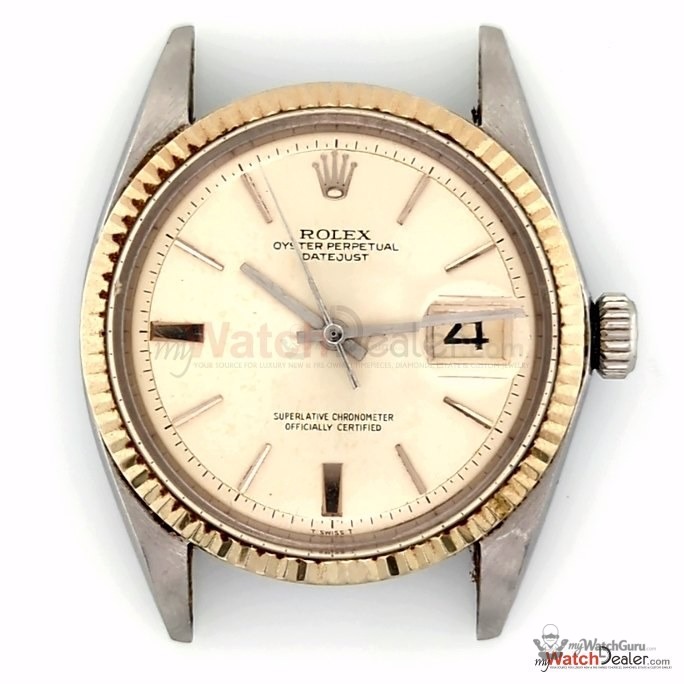
The Rolex Datejust ref 1601 is a 1959 36mm steel Datejust with a silver stick dial and a fluted white gold bezel, sold as a head only. At that age, the crystal is acrylic. If it shows the kind of light surface haze that accumulates over decades of honest wear, that's expected and largely fixable at a service. What to check for are deep gouges or cracks that go beyond what polishing can address. Without box or papers, a careful crystal and dial inspection matters even more here.
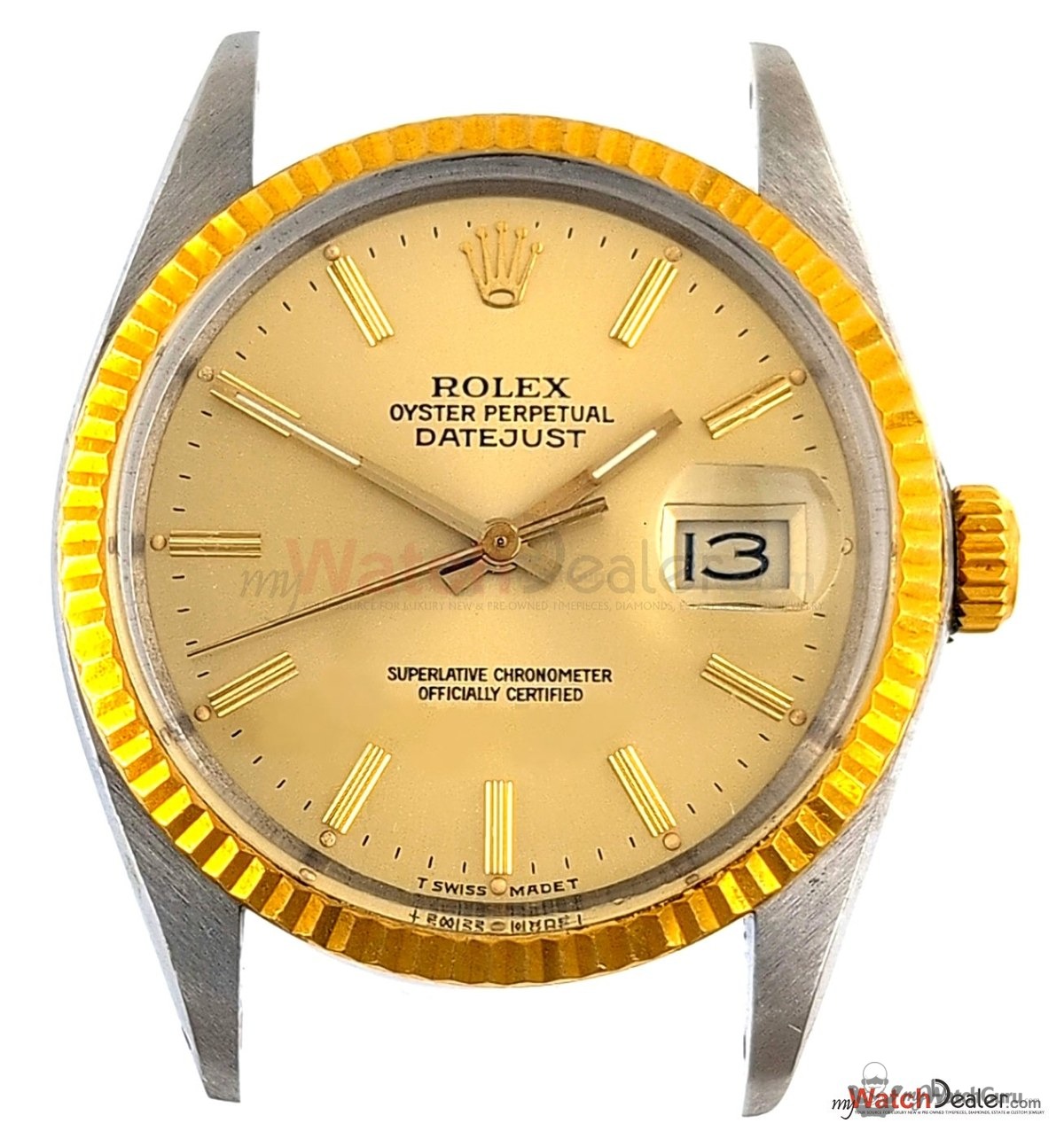
Rolex Datejust ref 16013 is a 1985 36mm two-tone steel and yellow gold quick-set Datejust with a champagne stick dial and a fluted yellow gold bezel. The product listing identifies this as the plastic (acrylic) crystal variant, which is worth knowing: Rolex was fitting sapphire on some references from this period, so not every buyer assumes acrylic on a watch this age. The polishing logic applies here just as it does on the 1601. A head-only listing means the crystal is one of several details worth examining carefully before purchase.
Acrylic scratches freely but polishes out at low cost. Sapphire resists scratches but cannot be polished, and a chipped or cracked sapphire is a replacement job, not a polish-out. Neither material is inferior. They just behave differently, and knowing which one you're buying sets reasonable expectations for care and for any first service.
Confirming the crystal material and its current condition before the sale closes is a straightforward step. It takes a few seconds and can prevent a conversation with a watchmaker that you weren't budgeting for.
Sold through My Watch Dealer, our retail desk — full details, current price and purchase all happen there.
View this piece at My Watch Dealer ›