Values & guides
Movement type shapes how you interact with a watch every single day, and the practical differences are worth understanding before you buy.
Movement type is the most practical spec on any watch, and it gets less attention than it deserves. The visible specs are easy to compare. But how a watch keeps time, and what that demands of you daily, often gets skipped entirely at the point of sale. That is where first-time buyers tend to hit surprises.
An automatic, sometimes called a self-winding movement, uses a rotor that spins as you move your wrist. That motion winds the mainspring. Wear the watch regularly and it stays running. Leave it in a drawer for a week and it will stop. An automatic suits someone who wears one watch consistently and does not want to think about winding.
A hand-wound movement has no rotor. You wind it yourself by turning the crown, on whatever schedule the power reserve demands. That might be daily, or it might be once a week depending on the calibre. Some buyers find this routine satisfying. Others find it a burden. Knowing which camp you are in before buying matters more than most people realize.
Quartz is battery-powered. A tiny quartz crystal oscillates at a fixed frequency when current passes through it, and that drives the timekeeping. A quartz watch can sit in a drawer for months and pick up where it left off when you put it on. Accuracy is typically better than a mechanical movement. The trade-off is that eventually the battery needs replacing, usually every few years.
Rotating between multiple watches makes the automatic-versus-quartz gap obvious. An automatic that has been sitting for a few days gains or loses time and needs to be set. If you are switching between watches regularly, you will spend real time adjusting. A quartz always reads correctly when you pick it up.
Hand-wound watches ask the most of the owner in one specific way: you need to remember to wind. But they also tend to create the closest relationship between wearer and mechanism. Feeling the mainspring load up through the crown is a tactile experience that an automatic or quartz simply does not offer.
Power reserve matters more with hand-wound pieces than most buyers anticipate. A standard calibre might offer 40 to 50 hours, meaning you need to wind it every day or two. An eight-day movement is a different proposition entirely. It changes the ownership experience in a way that is hard to appreciate until you have lived with one.
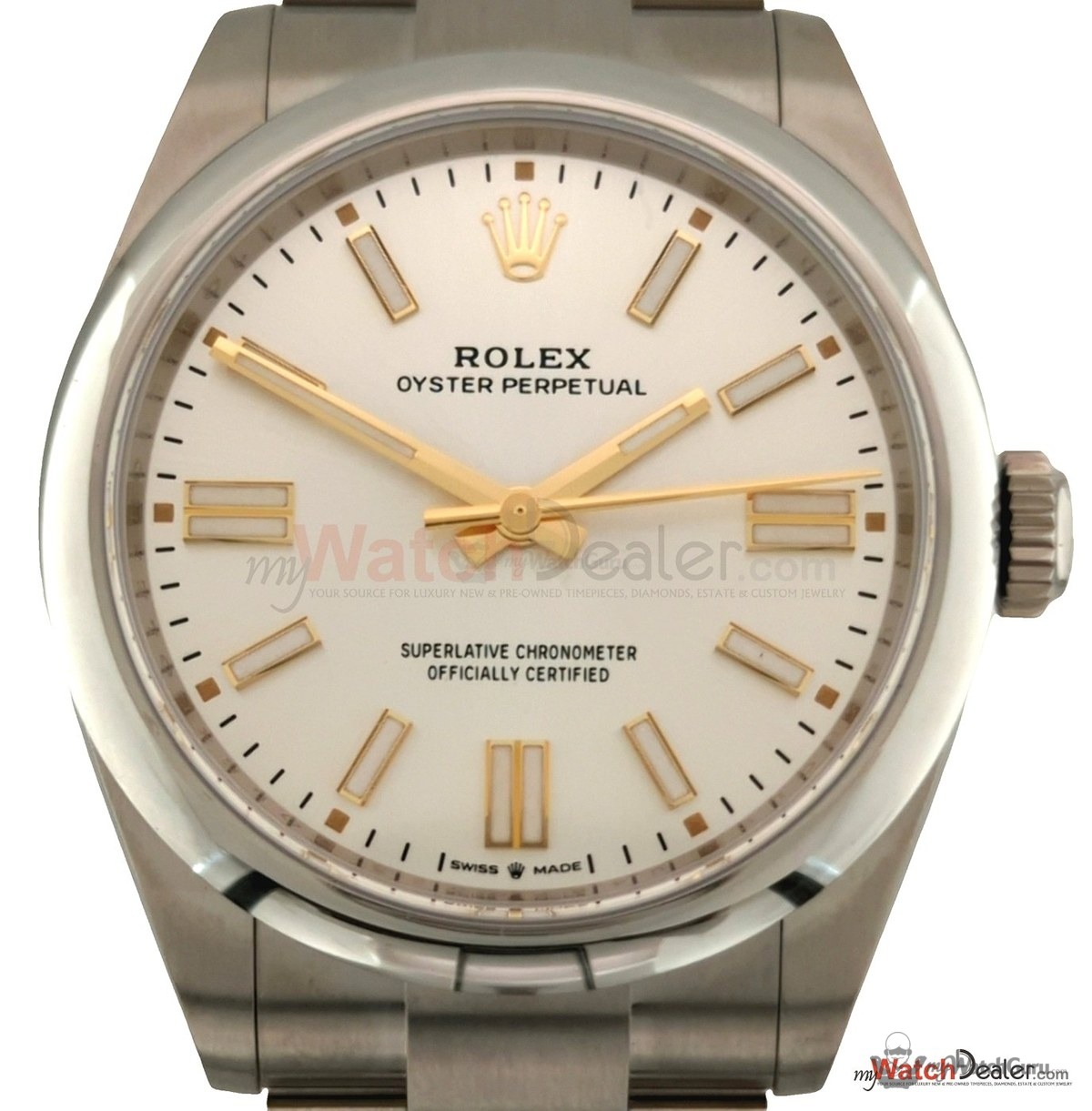
The Rolex Oyster Perpetual 41 is a clear example of what an automatic looks like when everything is dialed in. This is a 2026 unworn steel watch, 41mm, with a silver index dial and an Oyster bracelet, sold with box and papers. The Perpetual rotor inside does the winding for you: wear it regularly and it maintains itself. You never touch the crown unless you need to set the time after an extended break from wearing it. For buyers who want a mechanical movement with no winding ritual attached, this reference is a direct answer.
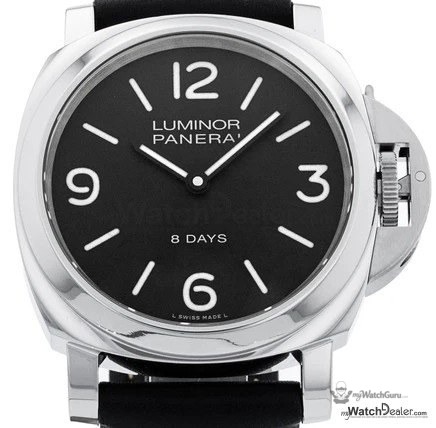
Among hand-wound options, the Panerai Luminor Base 8 Days PAM00560 stands out for its eight-day power reserve. The case is 44mm steel with a black standard dial and a rubber strap, and it is sold used without box or papers. That eight-day reserve changes the practical equation considerably: instead of winding every morning, you wind once a week. For buyers who want the engagement of manual winding without a daily obligation, this type of movement is worth understanding before deciding.
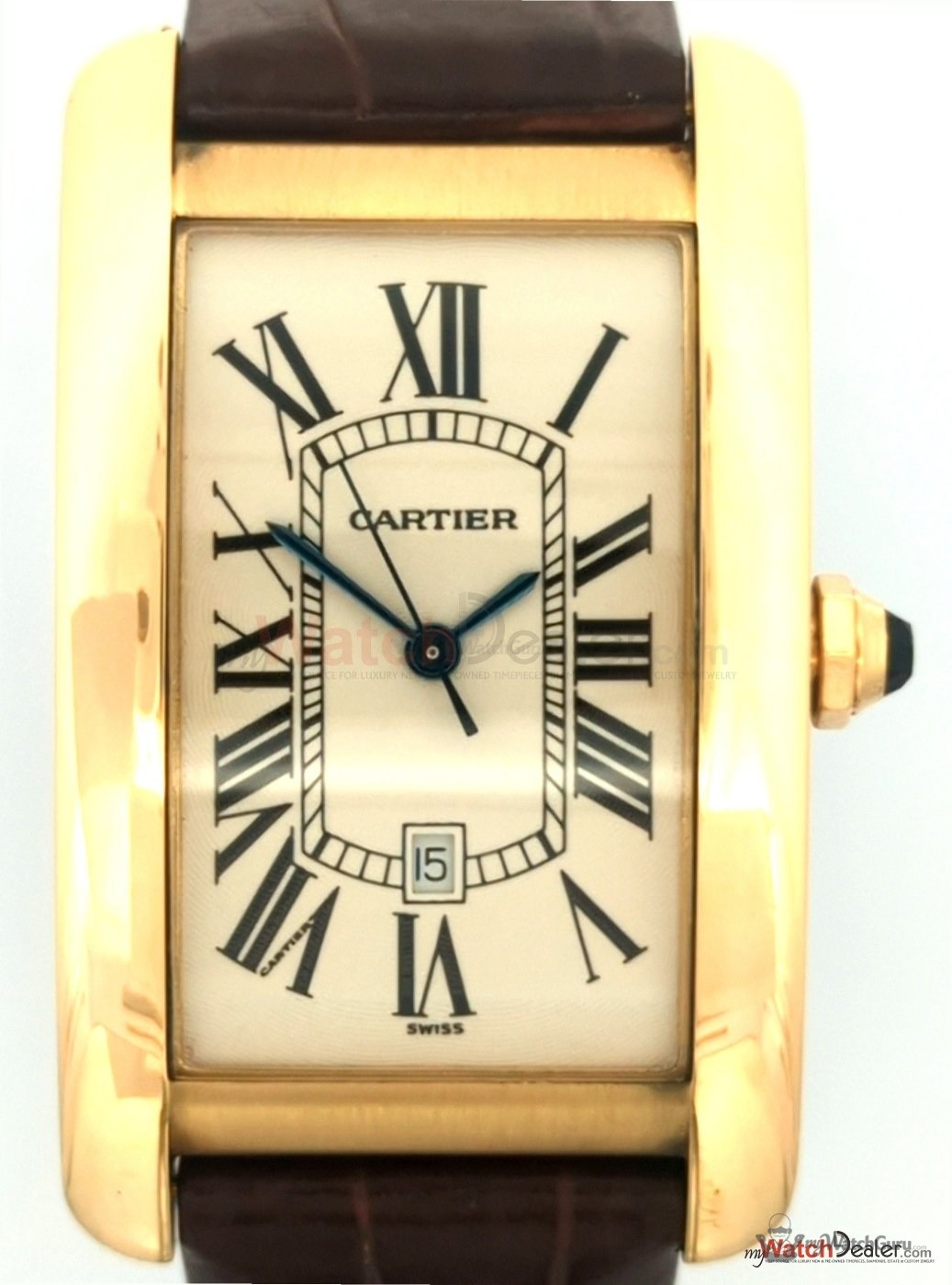
Running on quartz, the Cartier Tank Americaine W2603156 makes a different kind of case. It is a yellow gold watch measuring 26.6 by 45.1mm, with a white Roman numeral dial and a leather strap, sold used without box or papers. You set it once, replace the battery every few years, and the accuracy holds steady in between. For a dress watch worn occasionally rather than daily, that reliability with no maintenance routine attached is exactly the point.
Someone who wears one watch every day and values the mechanical tradition will usually be drawn to an automatic. Someone who wants a closer relationship with the movement, and does not mind building a winding habit, may prefer hand-wound, particularly if the power reserve is generous. Someone who rotates pieces frequently, travels across time zones, or simply wants to pick up a watch and trust the time, tends to be happiest with quartz.
Movement type affects every interaction you have with a watch, from the morning you put it on to the moment you glance at it across a table. Giving that spec the same attention as case size or dial color saves buyers from daily friction they could have anticipated.
Sold through My Watch Dealer, our retail desk — full details, current price and purchase all happen there.
View this piece at My Watch Dealer ›