Values & guides
A chronograph adds pushers, sub-dials, and a real price jump: here is what all of it does and how to tell whether you will actually use it.
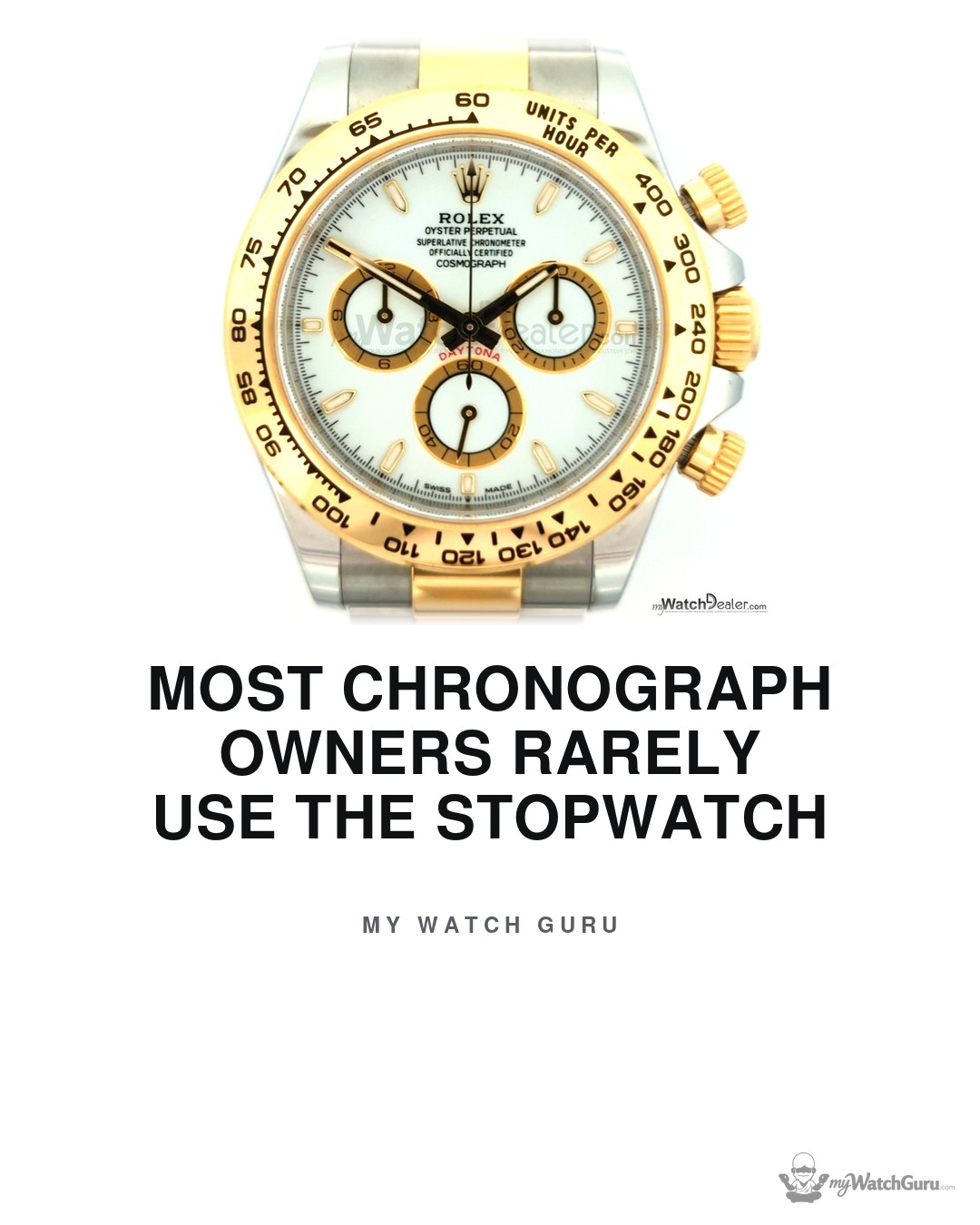
A chronograph is a stopwatch built into a watch. Press the top pusher to start a dedicated seconds hand moving, press it again to stop, and press the bottom pusher to reset. The sub-dials on a chronograph dial are counters for elapsed minutes and elapsed hours, and sometimes also for running seconds, letting you track intervals longer than sixty seconds without losing count.
One term gets confused with another constantly. "Chronograph" means stopwatch function. "Chronometer" means a movement that has passed a specific accuracy certification from an independent testing body. A watch can be one, both, or neither, and knowing the difference saves confusion in most watch conversations.
When you press the pusher, a column wheel or cam engages a series of levers and gears that start a dedicated chronograph seconds hand without disturbing the watch's regular timekeeping. You're running a second, parallel gear train alongside the main movement. That train has to engage and disengage cleanly without causing the display hands to jump or stutter.
Good chronograph movements are expensive to make and expensive to service. Integrated calibers, where the chronograph mechanism shares its architecture with the base movement rather than sitting on top of it as an add-on module, tend to be thinner and are generally considered more refined. They also command higher prices at both the manufacturing and service level.
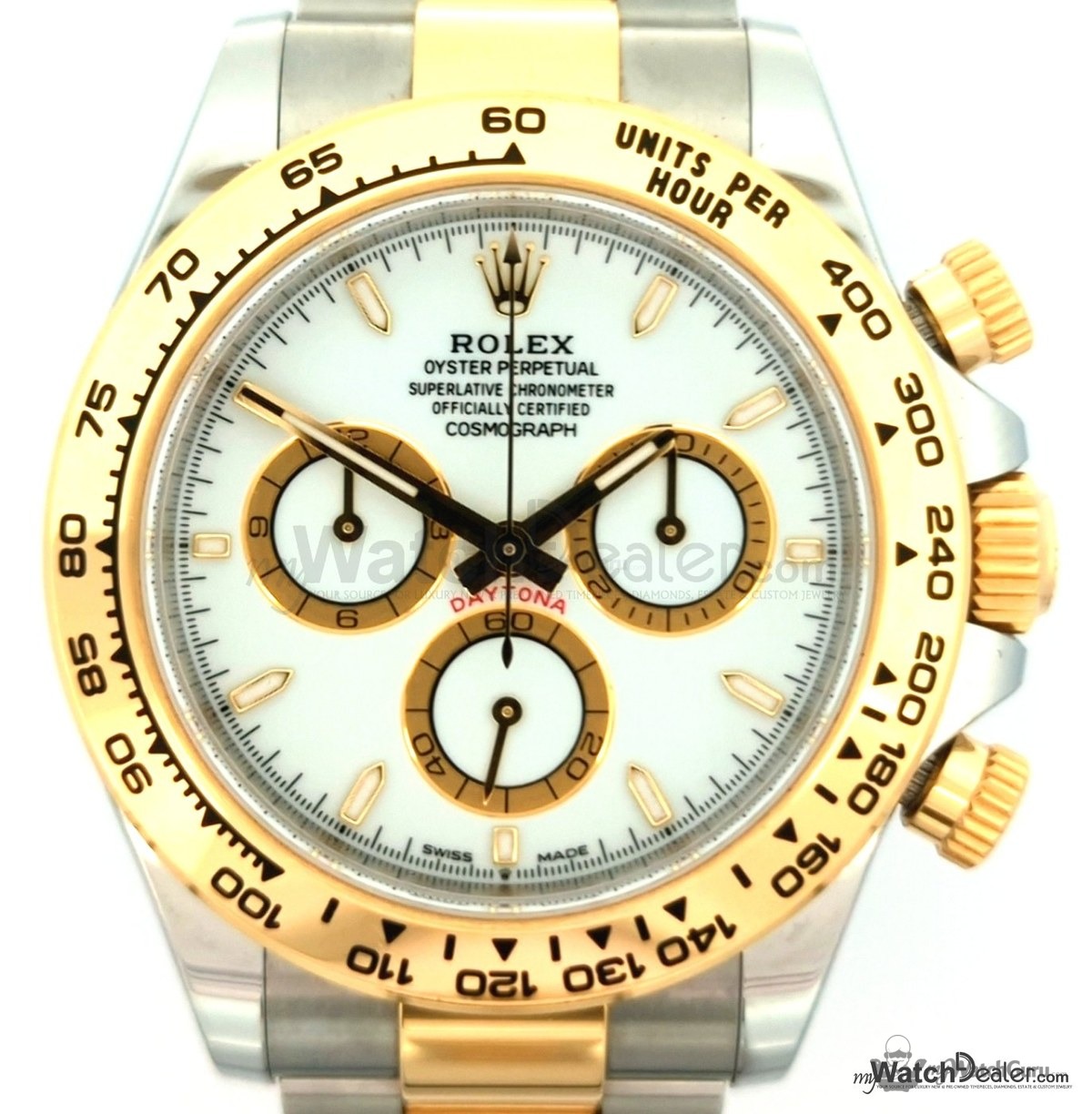
Most chronographs use a layout with two or three sub-dials, a design called bicompax or tricompax depending on the count. Placement varies by brand and caliber. On many Daytonas, registers appear at 6 and 9 o'clock alongside the running seconds counter. The bezel on a purpose-built chronograph often carries a tachymetre scale, a ring of graduated numbers that lets you calculate average speed over a known distance by stopping the chronograph at the end of that distance. Practical for racing applications, and largely decorative for most owners.
Be honest with yourself before buying. Most people who own chronographs time things occasionally, a parking meter here or a recipe there, and spend the rest of the time with the central hand parked at zero. That's not disqualifying. A chronograph adds mechanical complexity to a watch, which is its own valid reason to own one. But if you're buying purely for appearance and will quietly resent the extra dials every time you check the time, a well-made three-hander will serve you better.
If you cook, train, race, or fly regularly, the function earns its place. For most owners it ends up being an aesthetic and mechanical choice rather than a practical one, and the sub-dials spend most of their lives pointing at zero.
The Rolex Daytona 126503-0001 is a 2025 example in 40mm steel and yellow gold with a white standard dial and an Oyster bracelet, listed in like-new condition with box and papers. Rolex's caliber 4130 is an in-house integrated movement, meaning the chronograph mechanism shares architecture with the base movement rather than being bolted on as a separate module. The steel-and-yellow-gold Rolesor combination gives the case a warmer tone than all-steel, and the white dial keeps the sub-dials easy to read.
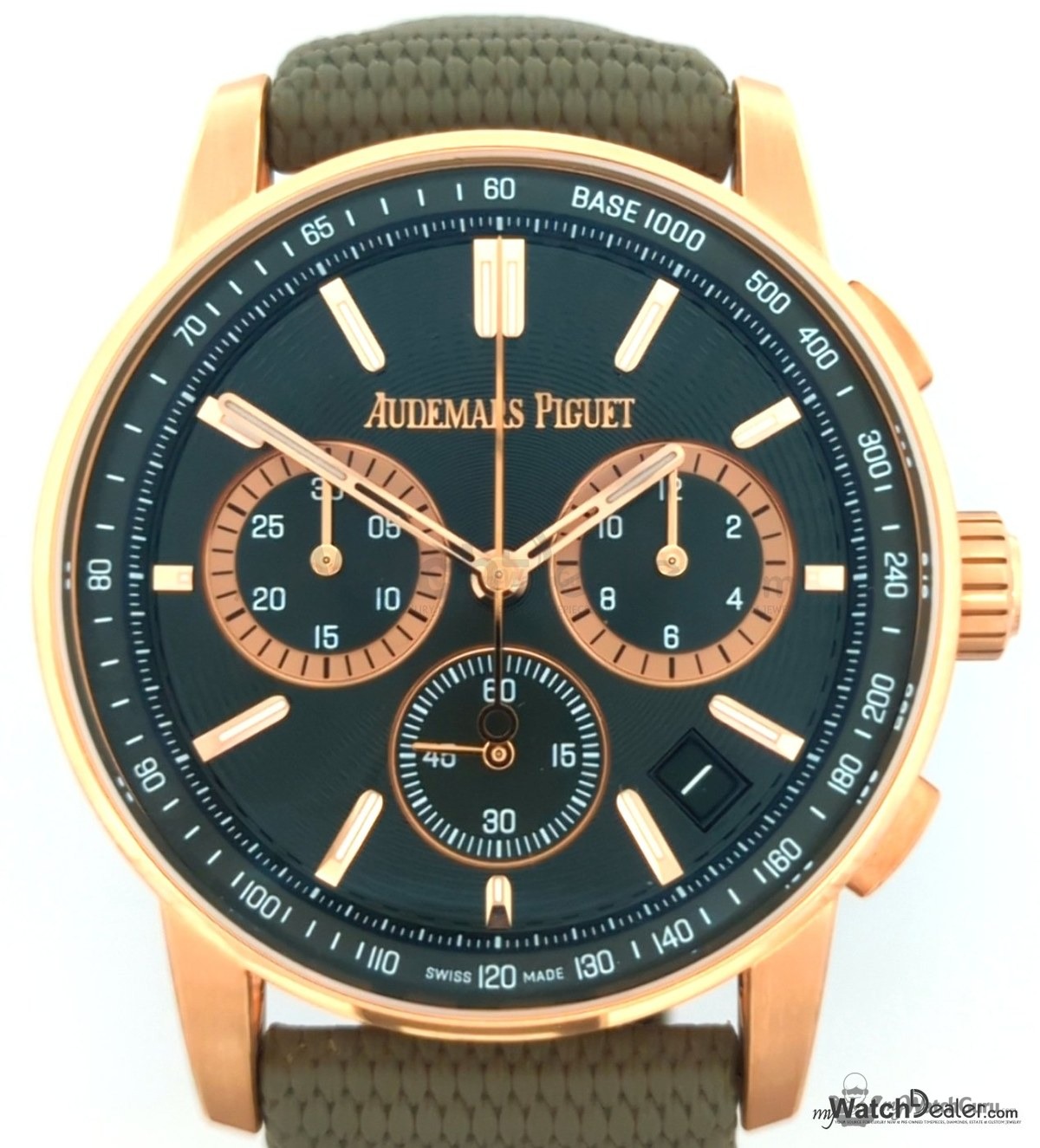
For a considerably different approach, the Audemars Piguet Code 11.59 Chronograph 26393OR.OO.A056KB.01 is a 41mm rose gold piece with a green dial and a matching green inner bezel, listed as unworn with full box and papers. The Code 11.59 case uses multiple curved surfaces that read differently from various angles, and a sapphire case back puts the movement on display. Rose gold and green is a pairing that photographs darker than it appears in person, and the dial has considerable depth.
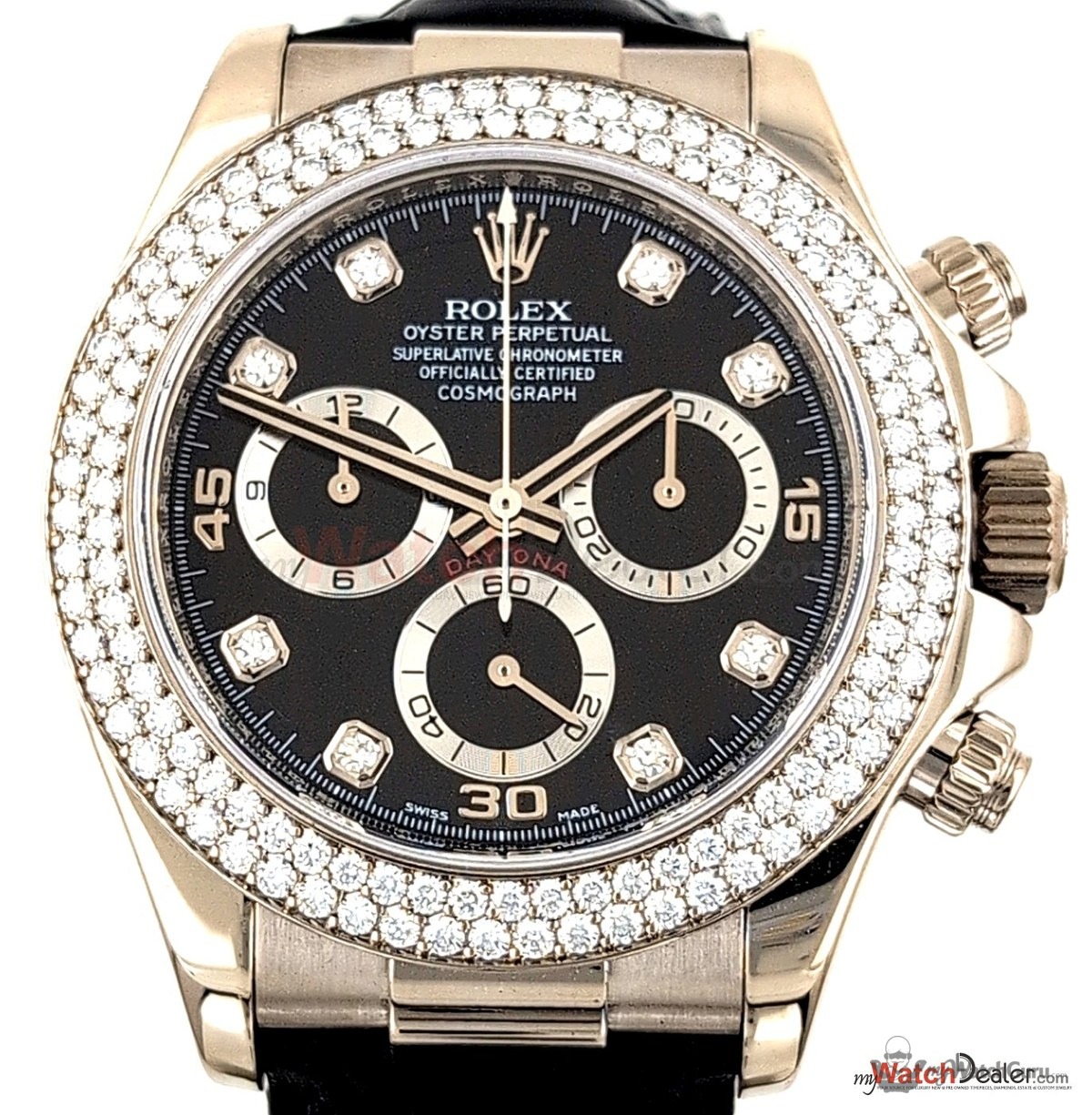
Something different again: the Rolex Daytona 116589RBR is a 40mm white gold piece with a black diamond dial and a diamond-set white gold bezel on a leather strap, dated 2011. It runs the same chronograph complication as any other Daytona. With a diamond bezel and diamond dial, this example sits closer to high jewelry than sport watch, which is a legitimate use of the platform. Used examples from 2011 with papers but no box are common at this specification level, and the condition is worth assessing closely.
Paying for a chronograph makes sense if you want mechanical depth or if you genuinely time things. It also makes sense when the specific reference you want only comes in chronograph form, which is true of several well-regarded designs. It makes less sense if the sub-dials are going to bother you every morning. Most chronograph references have a time-only counterpart in the same family worth comparing before you decide.
Sold through My Watch Dealer, our retail desk — full details, current price and purchase all happen there.
View this piece at My Watch Dealer ›