Values & guides
What those dial surface descriptions actually mean, how they age, and what damage looks like on a vintage Day-Date before you buy.

Cream, linen, champagne. You see these words in vintage Day-Date listings constantly, often with no further explanation. Sometimes a seller stacks two together, calling a dial "cream linen" or "champagne linen," and suddenly you're trying to decode a description that was vague to begin with. Before committing to a vintage 36mm Day-Date in yellow gold, it pays to know what each term is actually pointing at.
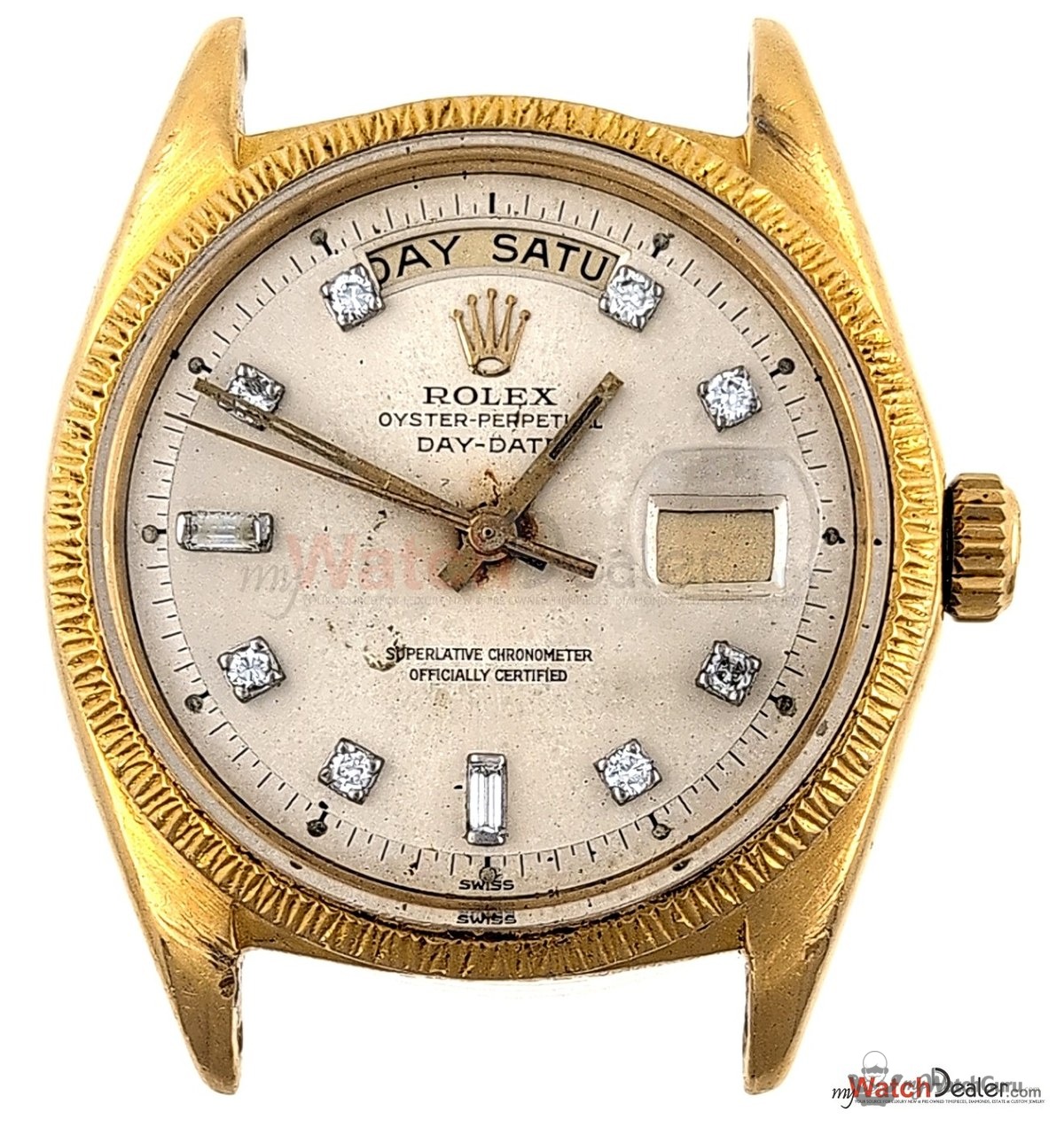
Cream is a color. It describes a dial that reads off-white with a warm, slightly yellow undertone, as opposed to pure white or bright silver. On vintage Day-Date examples, cream dials were often lacquered, giving the surface a flat, smooth finish. Over decades that lacquer can shift further toward ivory, and that gradual shift is part of what draws buyers who want visible age on a piece. What matters for condition is whether the aging is even across the full surface. A cream dial that has shifted uniformly reads as patina; one with blotchy patches, dark rings near the chapter ring, or concentrated fading near the lugs suggests moisture exposure or poor storage at some point in its life.
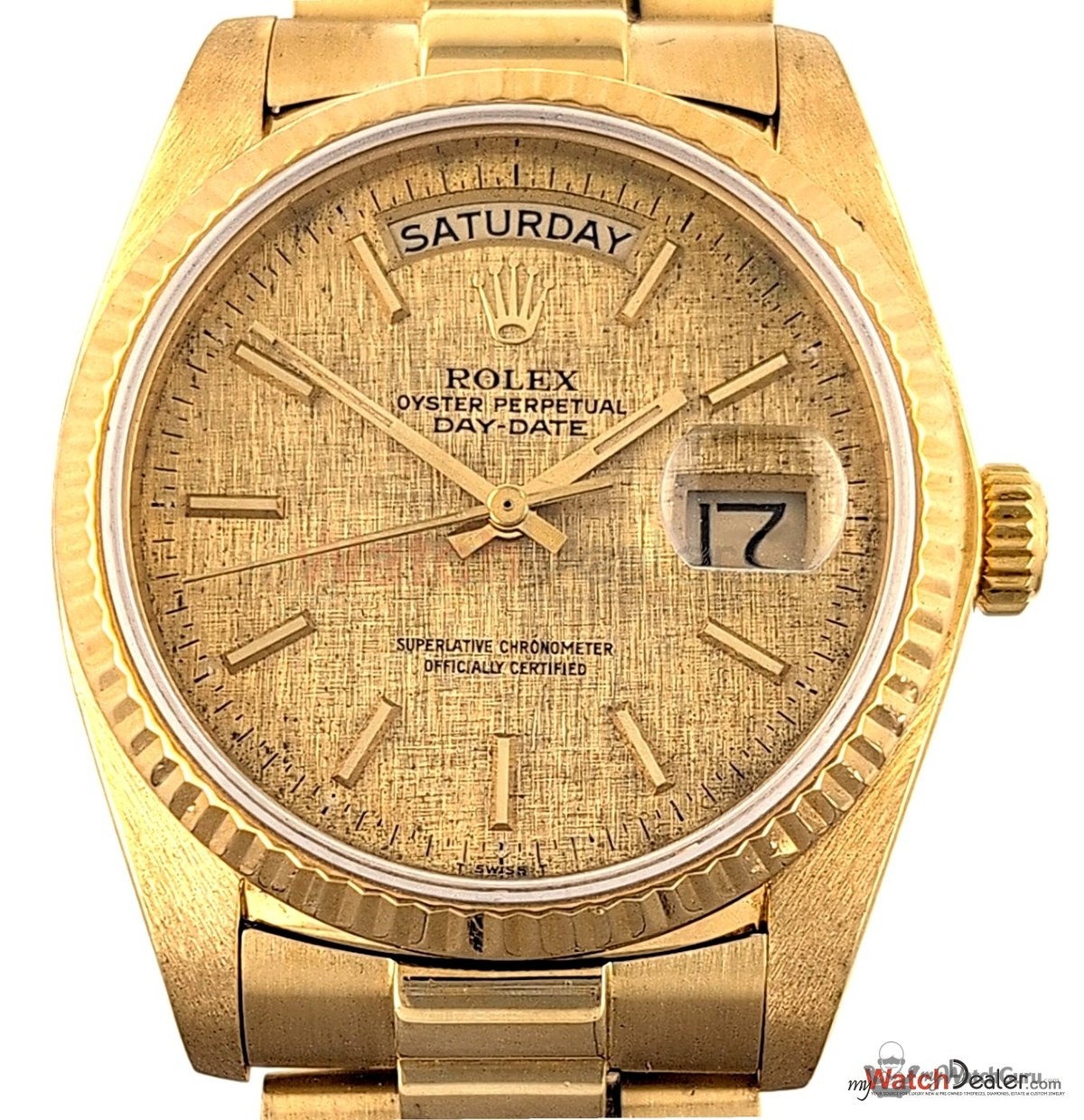
Linen is a surface texture, not a color. A linen dial has a fine, woven-fabric-like pattern across its face, which catches light differently depending on the angle you hold the watch. In a flat photograph it can nearly disappear, which is one reason listing descriptions often fall short. Under direct light the texture becomes clearly visible; under diffuse light it reads almost smooth. On vintage Rolex linen dials the weave pattern is tight and regular, giving the surface a quiet visual complexity that plain lacquered dials don't have. Damage to check for includes any lifting, bubbling, or separation at the edges of the applied texture, since linen surfaces can deteriorate with moisture exposure or careless handling during a service.
Champagne is the most slippery of the three terms because sellers use it to describe both a color and a general impression of warmth. At its most precise it refers to a golden-tan hue, warmer than cream but without the orange or brown tones that would make a dial read as aged or faded. In practice the word shows up for dials that could reasonably be called cream, and sometimes for dials that started life in a slightly different register and shifted toward champagne over time. When a listing says "champagne linen," both descriptors apply independently: the surface has a woven texture and the color sits in that warm gold-tan range. Together they tend to make a dial look richer than either quality alone.
Whatever the surface type, a few indicators apply across the board. Hairline cracks in lacquer are usually irreversible and tend to grow over time. Restored dials, meaning those that have been refinished or repainted to look fresh, are a different category from naturally aged originals, and refinishing destroys patina along with collector value. A refinished dial often looks too clean and too even, lacking the small surface variations present on an untouched piece. Applied indices that sit flat with no visible gap under their feet are a good sign; any that appear lifted or re-glued suggest either a restoration or a rough prior service. On diamond-set dials, checking each stone's setting for looseness or replacement is worth doing before you commit.
At 36mm in yellow gold, the Rolex Day-Date ref 1803 is a 1972 example with a cream diamond dial and bark bezel, listed as head only with no box or papers. A diamond-set cream dial from this period carries over fifty years of potential aging, and evaluating it well means checking whether that aging is even across the lacquered surface, whether any stone settings show looseness, and whether the dial reads as genuinely original or has been touched up. The bark bezel brings its own textured surface to consider, but on a piece like this the dial is the primary variable.
Rolex Day-Date ref 18038 is a 1983 piece in 36mm yellow gold with a champagne linen dial, stick indices, fluted bezel, and a President bracelet, also without box or papers. This watch puts both texture and color terms from this article directly in play: the dial carries a woven surface finish and sits in that warm golden register. Stick indices on a champagne ground leave a lot of open dial surface exposed, which means any inconsistency in the linen texture or uneven color shift reads clearly. Checking that the woven surface appears intact and consistent edge-to-edge is the first thing to do with a description like this one.
If listing photos don't show the dial under at least two different lighting angles, ask for more. A seller who has actually examined the piece should be able to say whether the dial appears original or refinished, whether indices show any sign of re-gluing, and whether the surface aging looks even throughout. Neither of these watches comes with original box or papers, which is common for pieces from the 1970s and early 1980s, and that absence puts more weight on physically verifying the dial's condition rather than relying on documentation. Getting that assessment right before purchase matters more than almost anything else on a vintage Day-Date.
Sold through My Watch Dealer, our retail desk — full details, current price and purchase all happen there.
View this piece at My Watch Dealer ›