Values & guides
The 6605 and 1625 predate the reference most buyers know, what sets them apart changes how you evaluate one in person.
Mention "vintage Rolex Datejust" to most buyers and they picture the ref. 1601, which ran through much of the 1960s and 1970s, was produced in large numbers, and turns up regularly on the secondary market. Because of that familiarity, the references that came before it get less attention than they deserve, and less scrutiny than they need.
Rolex introduced the Datejust in 1945. The early references, the 6605, the 1625, and others from that era, document Rolex working out what this watch was going to be. Different bezel treatments, crystal materials, bracelet options, and case metal combinations were used across these early references, and those details matter when you are standing in front of one trying to decide whether it has been correctly described.
Bezel style is the most visible point of separation. A fluted yellow gold bezel and an engine-turned bezel are both period-correct options depending on the reference and configuration, but they are not interchangeable. Confirming the right bezel for the right reference is one of the first things to check when evaluating any early Datejust.
Crystal material is another point of difference. Early references, including pieces from the late 1950s, used acrylic crystals. This is correct and expected for the period. A plastic crystal on a late-1950s Datejust is not a problem; it is original equipment. What you want to verify is whether the crystal has been replaced and whether any replacement is period-appropriate.
Date function is worth understanding too. None of these pre-1601 era references have a quickset date. To advance the date you run the hands through midnight, the same as any non-quickset Datejust. When a seller describes one of these as "non-quickset," that is accurate and expected for the period, not a fault.
Some early Datejust examples surface as head-only, case and movement without a bracelet. This is not unusual for watches that have been around for several decades. Bracelets get replaced, sold separately, or worn out entirely. For a buyer, a head-only piece offers flexibility in how you wear it, but factor the cost of a period-appropriate bracelet or strap into your thinking before purchase.
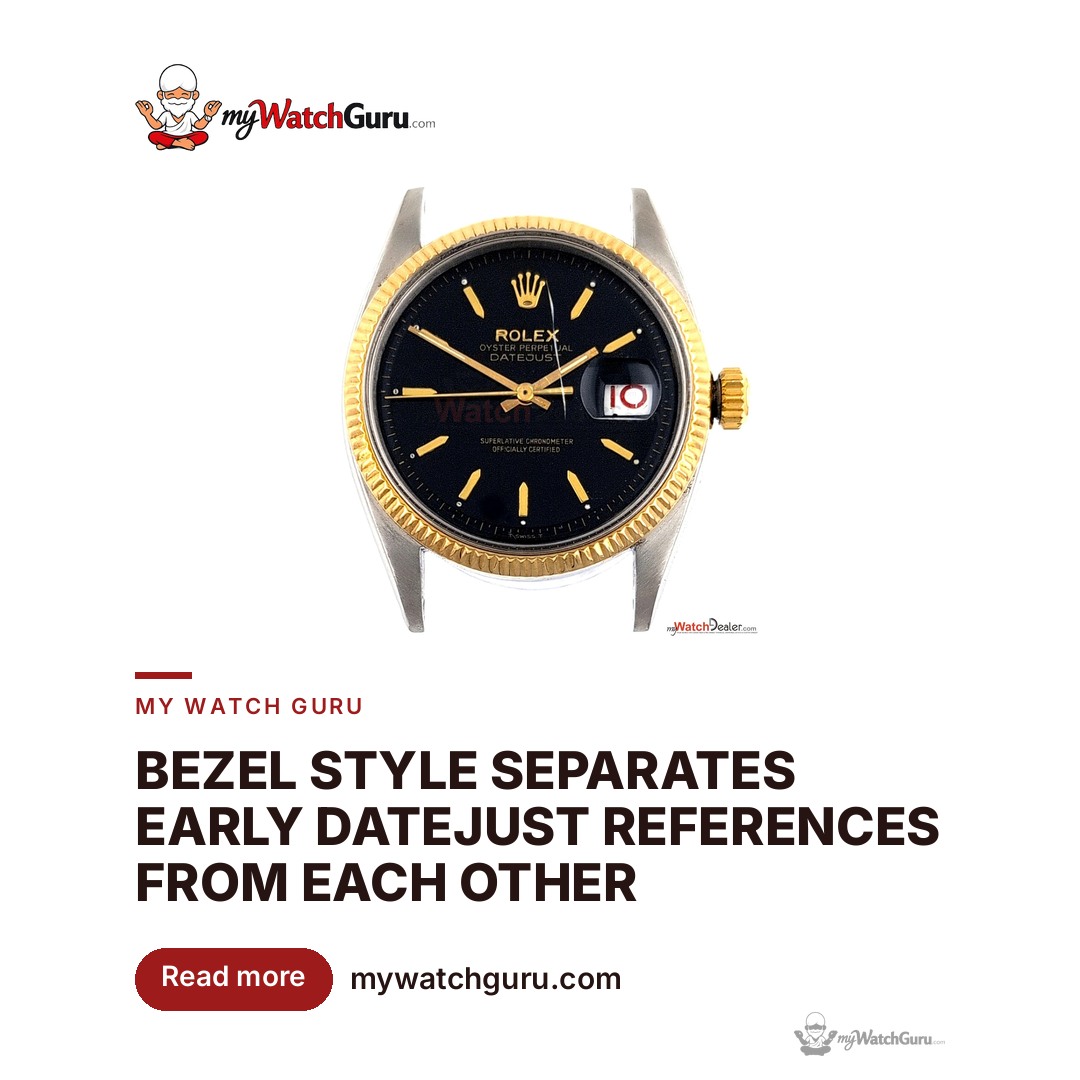
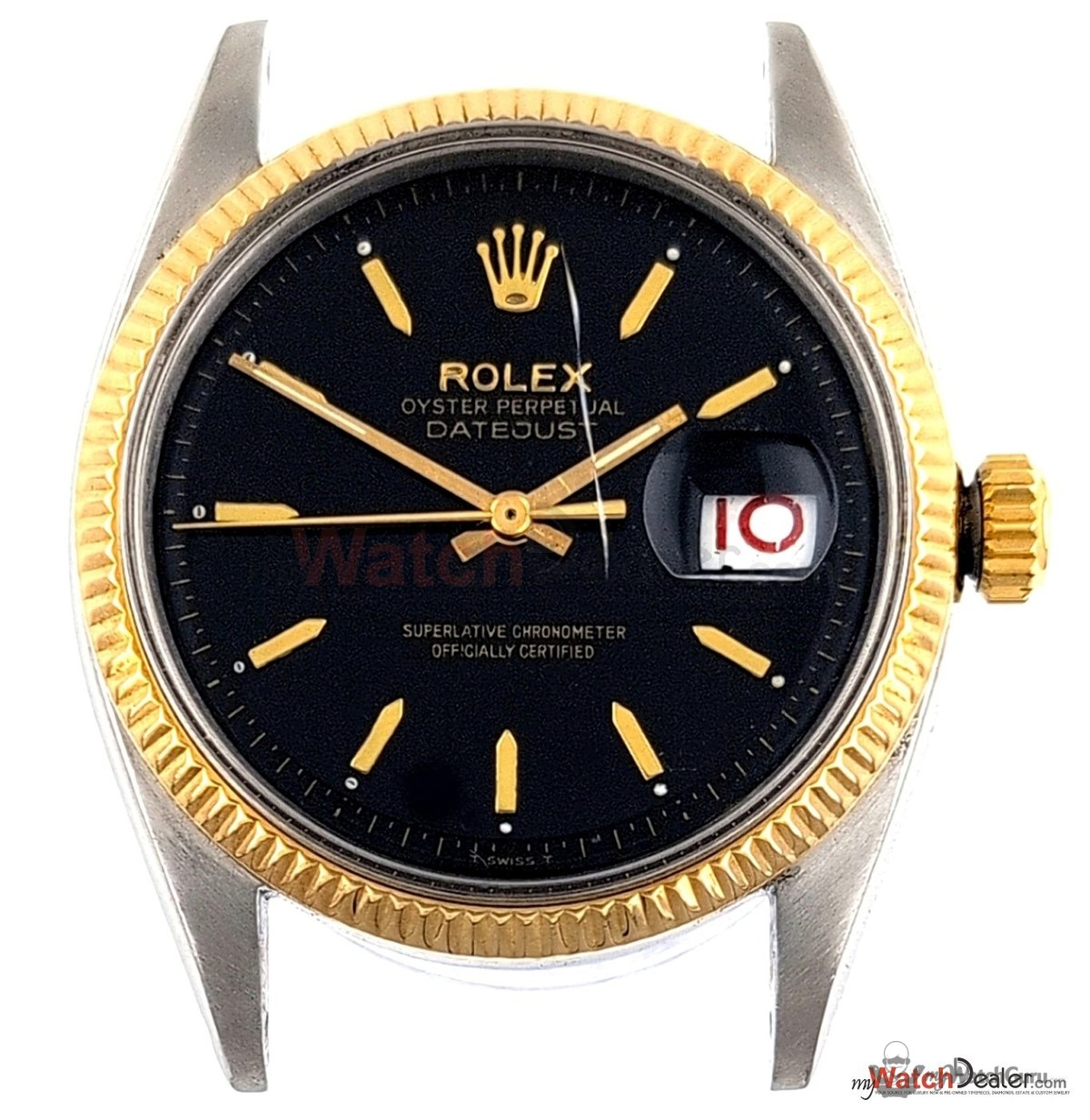
Right now, the Rolex Datejust ref 6605 listed here is a 36mm two-tone steel and yellow gold head, case only, no bracelet, with a black stick dial and a fluted yellow gold bezel. This is a pre-1601 reference from the 1940s, and it illustrates directly why bezel material matters: the fluted bezel here is yellow gold, not steel, which is correct for this configuration. The black dial with stick indices is clean and legible in the way early Datejust dials typically are. It comes without box or papers, as most pieces of this age do, so condition is the primary thing to evaluate closely.
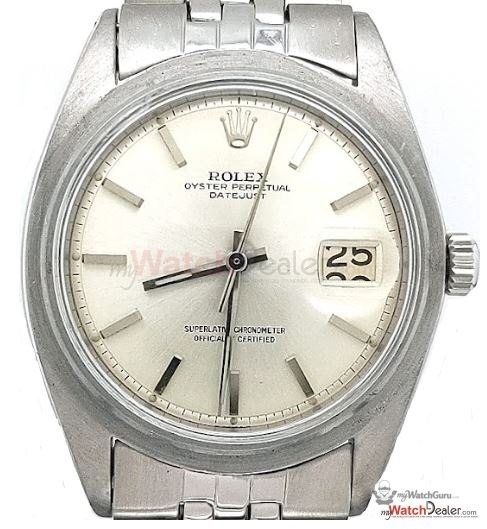
A different configuration: the Rolex Datejust ref 1625 is a 36mm all-steel piece from 1959 with a silver stick dial, an engine-turned bezel, and a Jubilee bracelet. This is where a side-by-side bezel comparison becomes direct and useful, the engine-turned bezel on the 1625 has a clearly different visual character from the fluted gold bezel on the 6605. The listing notes it as Plastic Non Quick, meaning it retains its acrylic crystal and has no quickset date, both entirely period-correct for a 1959 Datejust. It comes on a Jubilee bracelet, which pairs naturally with the Datejust and is correct for the era.
When examining any pre-1601 Datejust in person, the case edges are one of the first indicators of how much the watch has been handled over decades. Heavy polishing rounds off the lugs and removes the sharpness from the case sides. On two-tone pieces, check the gold bezel for wear at the high points, gold surfaces show age differently than steel and can tell you a lot about how the watch was cared for.
Dial condition matters more than many buyers initially expect on watches of this age. Refinished dials lose the original printing depth and patina that a genuine old dial carries. On a piece from the 1940s or late 1950s, an obviously fresh-looking dial with no aging is worth questioning.
These early references are less common than the 1601 and its close variants, and fewer buyers actively seek them out. That tends to reward buyers who take the time to understand what they are looking at before they look.
Sold through My Watch Dealer, our retail desk — full details, current price and purchase all happen there.
View this piece at My Watch Dealer ›