Values & guides
The Oysterflex isn't a rubber strap. There's a metal blade running through it, and that changes everything about fit, feel, and who it suits.
When a listing says "Oysterflex bracelet," a lot of buyers picture a simple rubber strap. That's understandable, it's black, it's flexible, it looks like a sport strap. But what Rolex built into the Oysterflex is more involved than that, and knowing the construction helps you figure out whether it actually suits your wrist and your life.
The Oysterflex is not a plain elastomer strap. Running lengthwise through the body of it are metal blades made from a nickel-titanium alloy, encased in black elastomer on the outside. Those blades give the bracelet structure and spring tension, so it hugs the wrist with a firmness you won't get from an aftermarket rubber strap or a standard deployant-buckled leather band. The outside material is what you see and feel against your skin: smooth, flexible, resistant to salt water and sweat. The metal inside is what holds the shape.
That combination changes the wear experience significantly. A traditional Oyster bracelet in steel or gold is rigid until you put it on, then sits on the wrist with its own weight. The Oysterflex does the opposite, it flexes to conform to the wrist, but the internal blades prevent it from going floppy. On a warm day, or in the water, most wearers find it more comfortable than a metal bracelet, because there is no metal touching the skin and no thermal mass to make the watch feel cold or clammy when first put on.
On a metal bracelet, fit is adjusted by adding or removing links. The Oysterflex uses a folding clasp with a built-in micro-adjustment system, but the range of that adjustment is limited compared to a link bracelet. If your wrist is very large or very small, or if it fluctuates significantly through the day or across seasons, the Oysterflex may not give you the same precision fit that a fully adjustable link bracelet can offer. Worth knowing before you commit.
The bracelet also sits with a slight upward arc between the lugs and the clasp, shaped by the spring tension of the blades inside. In photos it can look flat; in person it curves. Short lug-to-lug wrists tend to wear it well. Very flat wrists sometimes find the curve more noticeable than they expected. Neither is a defect, it is the construction doing what it was designed to do, but it is the kind of thing you want to understand before buying a precious-metal watch configured this way.
The Oysterflex makes the most sense for buyers who want the comfort and water-resistance of a rubber-style strap without giving up the integrated, finished look that Rolex's sport-luxury references are built around. It is not a casual afterthought the way an inexpensive rubber strap can feel. The construction is intentional, and the result is a bracelet that reads as designed rather than substituted.
For someone who swims regularly, travels actively, or simply dislikes the feel of metal on skin through a full working day, it is a genuinely practical choice on the right reference. It suits precious-metal cases particularly well because of one specific reason: the Oysterflex was designed alongside these references and integrates with the case shape in a way no third-party strap can replicate. Gold on a generic rubber strap can look like a mismatch; gold on the Oysterflex does not, because the bracelet was engineered as part of the watch.
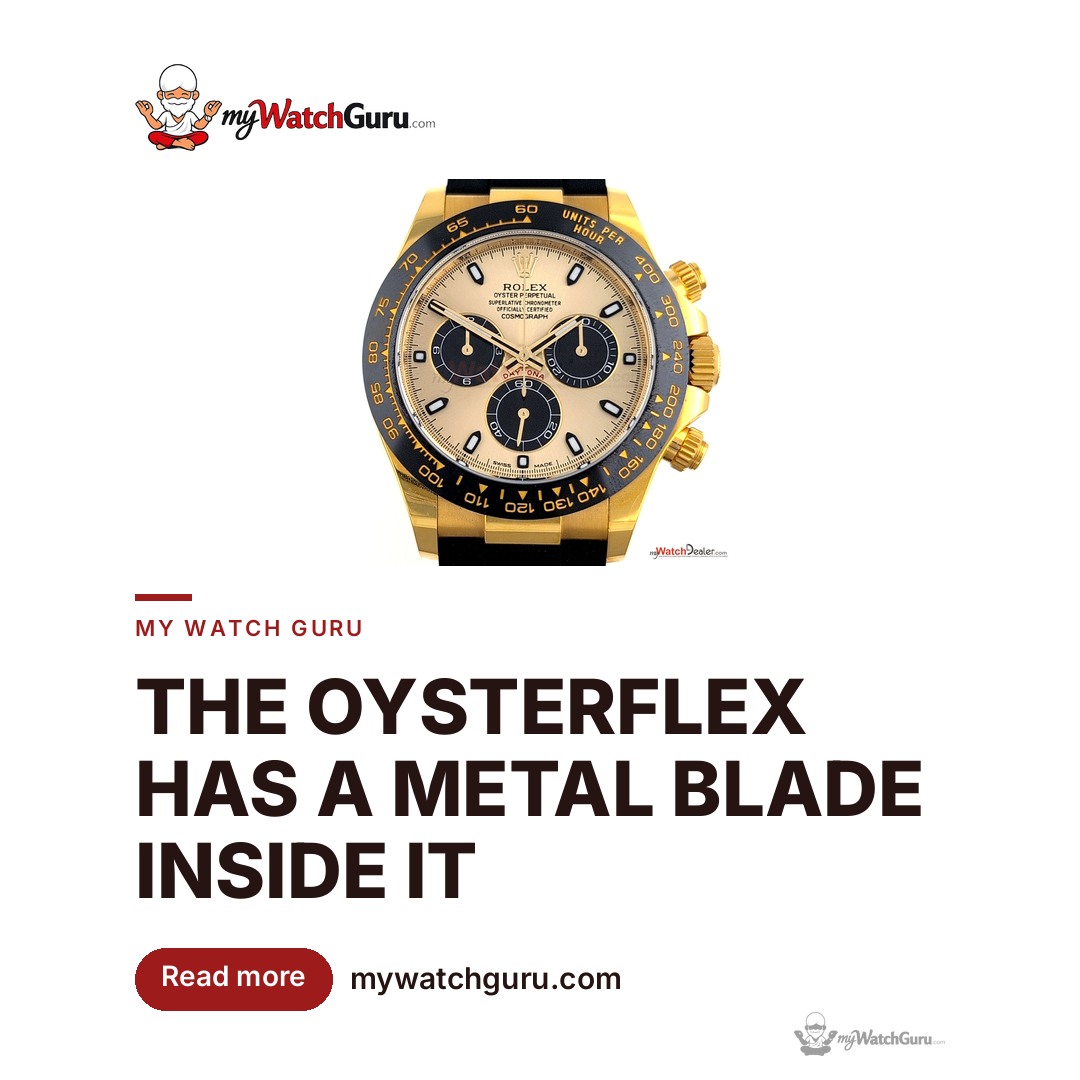
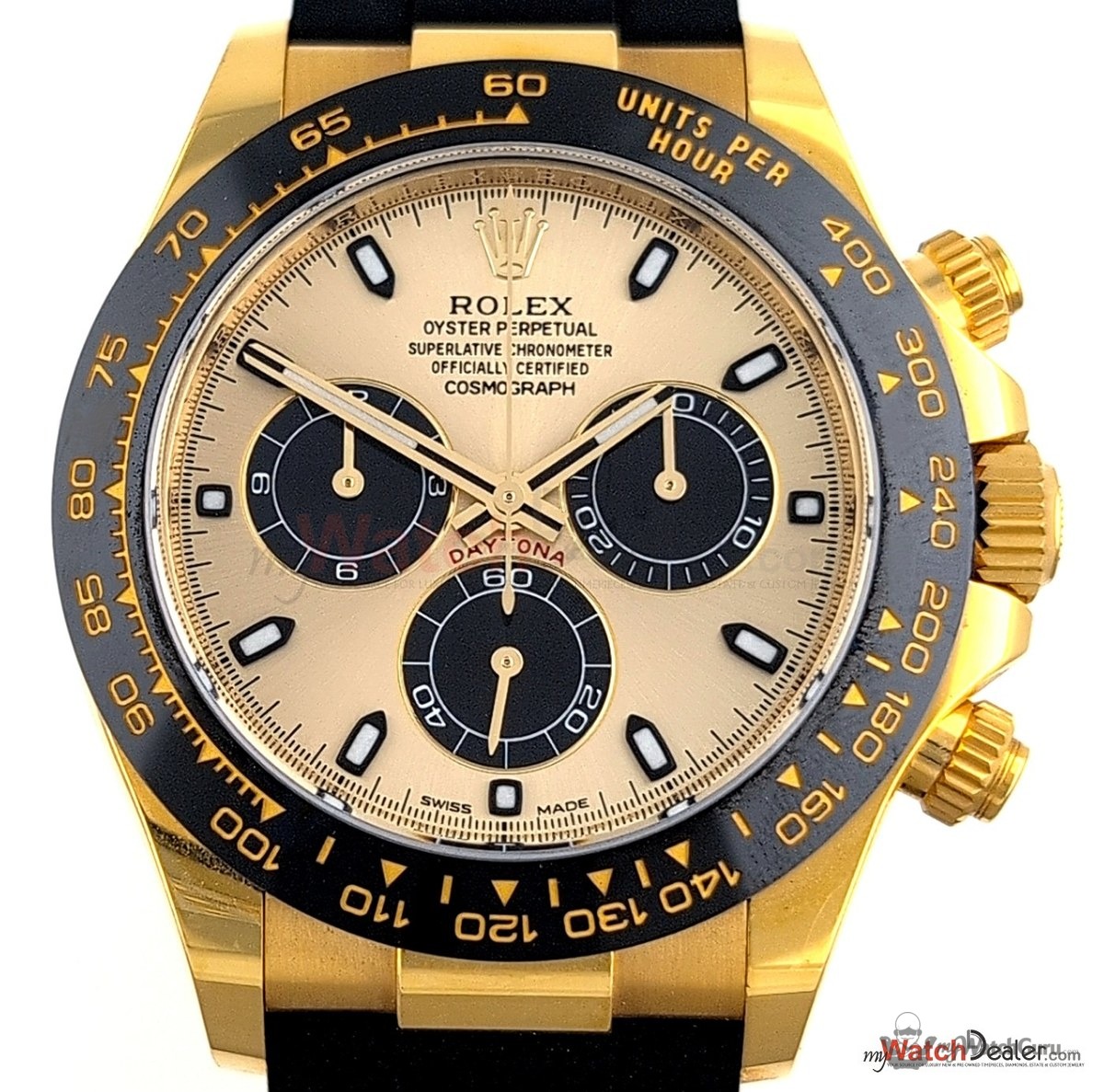
The Rolex Daytona 116518LN is a 40mm yellow gold Daytona from 2022, with a golden and bright black dial and a black ceramic bezel, on Oysterflex. This is exactly the configuration where the bracelet's design logic becomes clear. The black elastomer exterior ties visually to the black ceramic bezel, the internal metal blades match the structural intent of a serious sports chronograph, and the yellow gold case benefits from a bracelet you can wear actively without worrying about scratching polished links. On a warm day at the track, or anywhere the wrist runs warm, this setup is more comfortable than the equivalent metal bracelet. This example is used and comes with box and papers, full documentation on a precious-metal reference with an integrated bracelet is the right way to approach a purchase like this.
The Oysterflex appeared on Rolex's sport-luxury references because there was a real gap: buyers who wanted precious-metal cases and also wanted a bracelet suited to active wear. A plain rubber strap never filled that gap convincingly. The metal blade underneath is what separates the Oysterflex from every other black strap you will see in a listing photo, and it is the first thing worth understanding when you see the term.
Sold through My Watch Dealer, our retail desk — full details, current price and purchase all happen there.
View this piece at My Watch Dealer ›