Values & guides
Once polished, a brushed case surface cannot be restored, and knowing how to spot the difference changes what you are actually buying.
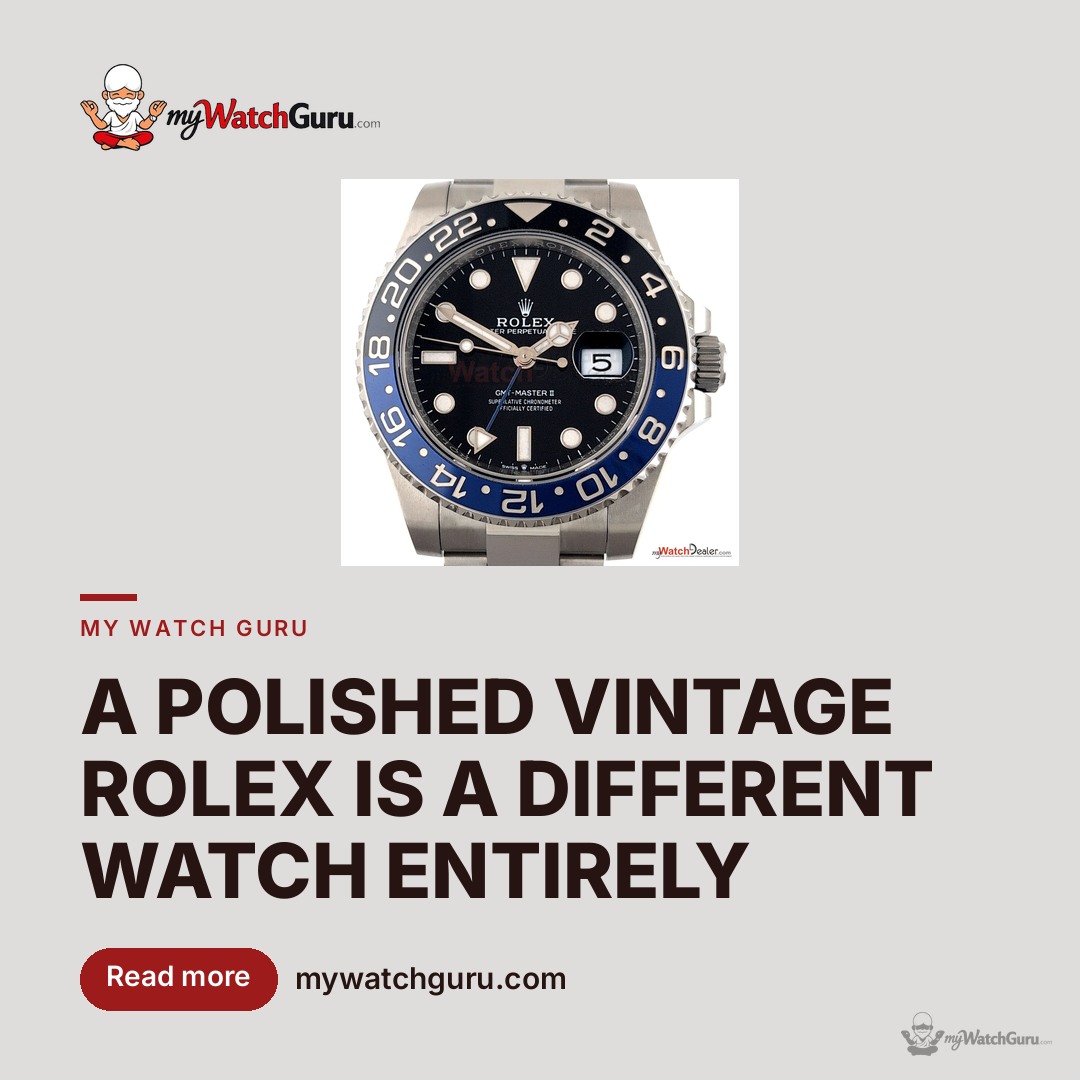
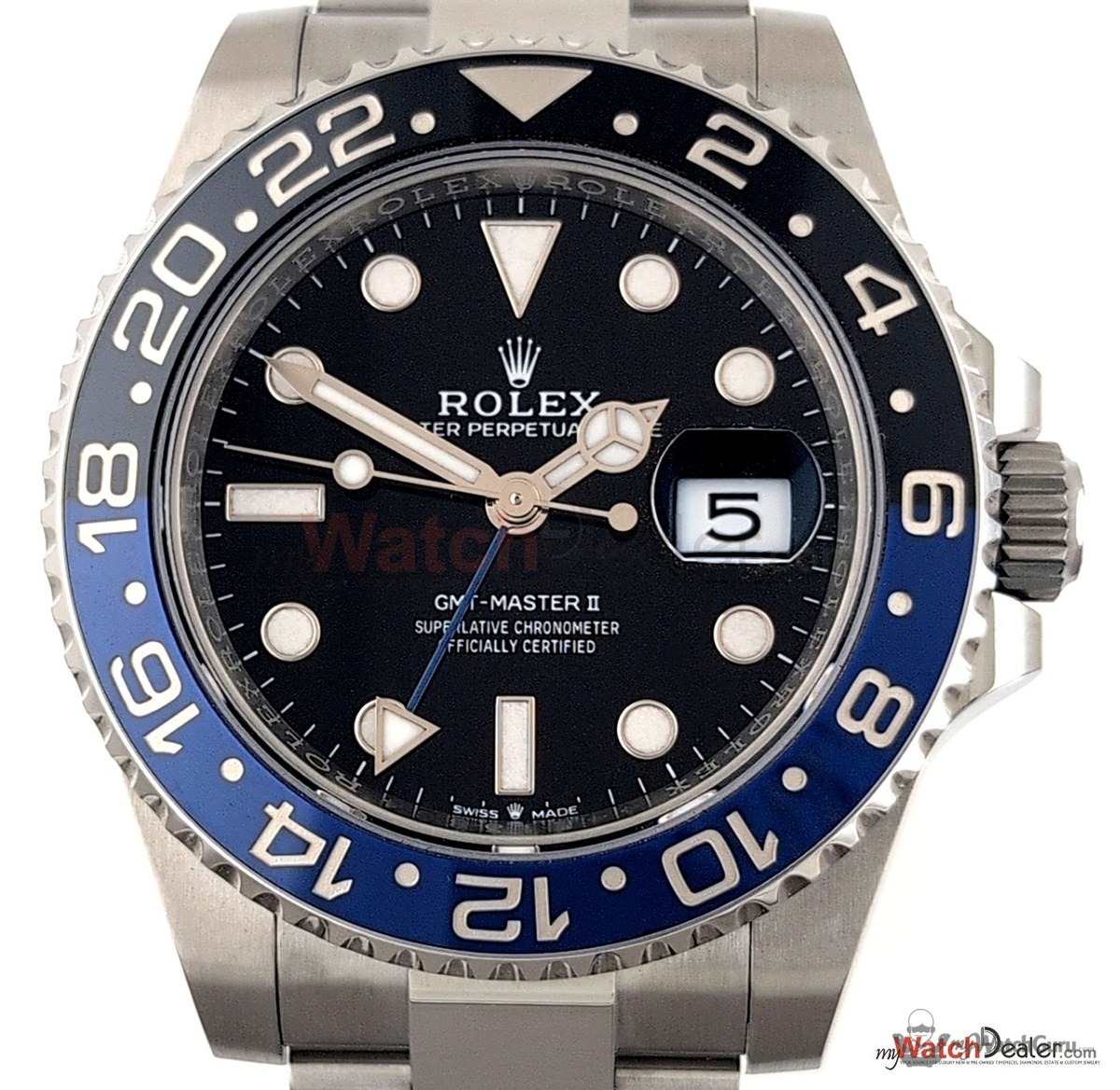
When Rolex builds a watch like the GMT-Master II, they apply different finishing to different surfaces deliberately. The flat sides of the case mid and the bracelet center links are brushed, a fine, directional texture applied by drawing an abrasive across the metal. The lugs, case flanks, and certain bracelet edges are polished to a mirror finish. The contrast between these two textures is part of the design, and it is, in a meaningful sense, one of the things you are buying.
What polishing removes is that contrast. When a watchmaker or jeweler buffs a case with a polishing wheel, they remove a thin layer of metal across the whole surface. The brushed areas become shiny. The defined edges where brushed meets polished soften and round. The lugs, which on a well-preserved older Rolex are still squared off and crisp, lose their corners. That metal does not come back.
Brushing is done with an abrasive tool held in a consistent direction, leaving a pattern of fine parallel lines in the metal. Satin finishing is similar but slightly finer and less directional. Both create surfaces that absorb light rather than reflect it sharply. Polishing uses progressively finer compounds to remove all those lines and bring the metal to a mirror state. Different techniques on different surfaces require different tools and real skill, and once the factory's original work is gone, recreating it perfectly is not realistically possible.
On a modern Rolex sports watch, you can see the intended contrast on the bracelet: the center links are brushed and the outer links are polished. On a vintage piece from the 1960s or 70s, those same distinctions exist in the case itself. When a watch has been polished at some point in its service history, that bracelet and case contrast is often the first thing to blur.
Sharp lugs are the clearest sign of original condition. On a steel sports watch, the lug tips should come to defined edges or corners, not rounded slopes. If the lugs look smooth and softly contoured, polishing is likely. The same applies to case flanks: flat surfaces that meet at a clean angle indicate the original geometry is intact. A watch that has been polished will often look shinier overall, which can be mistaken for good condition, but it is the opposite.
Scratches and light scuffs on brushed surfaces are not damage. They are evidence that the original surface has not been touched. Collectors often consider honest wear on an unpolished case to be worth more than a polished case that looks superficially clean, because the wear confirms nothing has been taken away.
The Rolex GMT-Master II 126710BLNR illustrates the starting point: a 2026 40mm steel GMT-Master II in unworn condition, with its blue and black ceramic bezel and black dial, arriving with box and papers. The case geometry on a piece like this has never been touched by a polishing wheel. The brushed and polished surfaces are exactly as the factory delivered them, with sharp transitions between the two finishes intact. Buying unworn with full documentation means you know with certainty what you are getting: the original finishing is confirmed and the condition is verifiable from the outset.
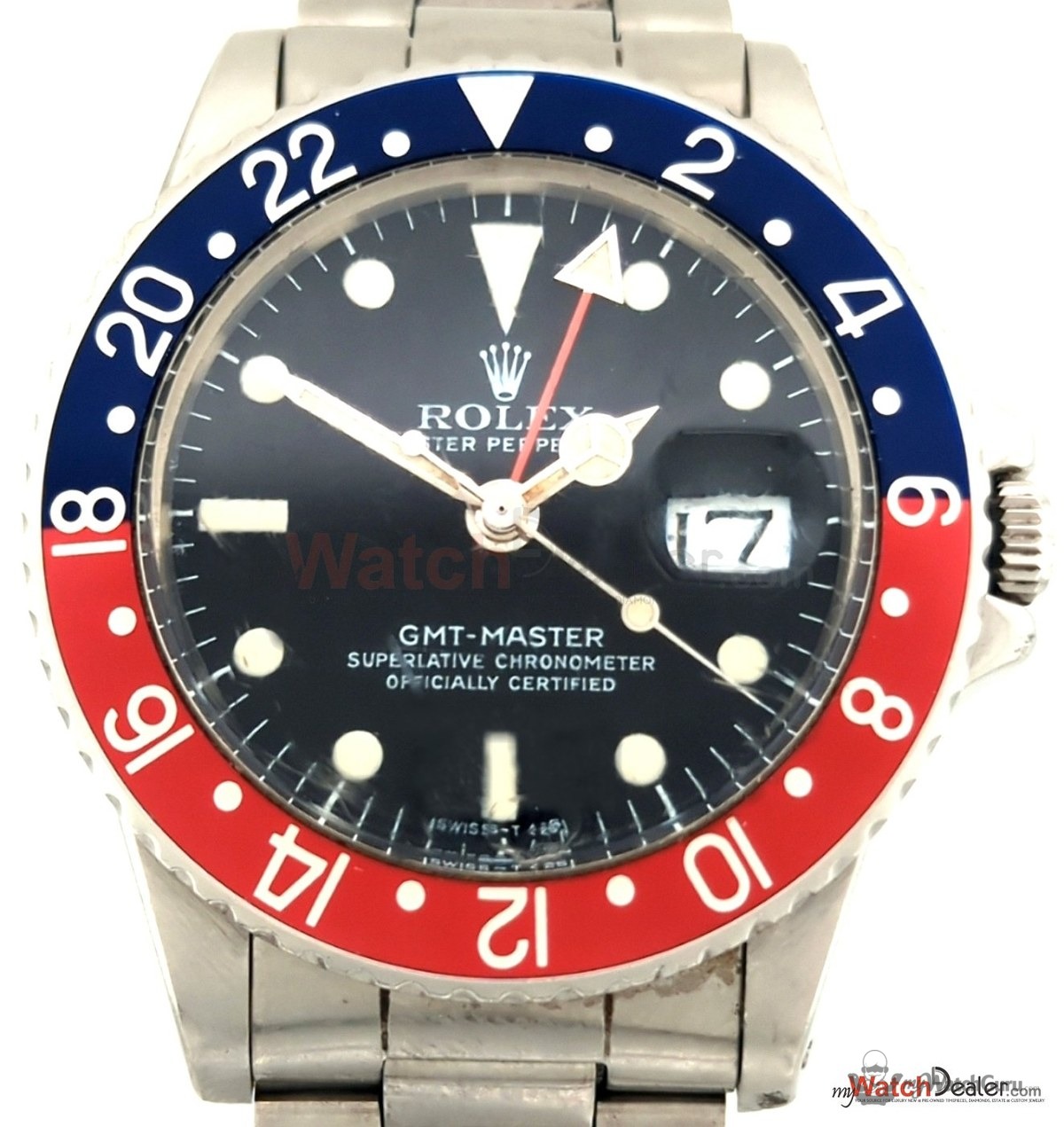
The Rolex GMT-Master ref 1675 from 1971 puts the finishing question front and center. This is a used, 55-year-old steel GMT in blue and red bezel configuration, no box or papers, with a black dial on an Oyster band. For a watch this age, the state of the case finishing is one of the most meaningful things a buyer can assess before committing. Original brushed surfaces surviving on a 1971 Rolex represent decades without intervention, which is genuine and significant in how collectors and the secondary market approach a piece like this. Examining lug edges and case transitions closely is the most direct way to understand what the watch has been through.
For a modern watch, polishing is a lower-stakes issue if the work was done carefully and the original case geometry is still intact. For anything vintage, it is a defining factor in what the watch actually is. A well-preserved, unpolished case with genuine wear is generally regarded as more original than a polished case with a fresh shine, and the market tends to price accordingly. Knowing which one you are looking at before you agree on a number is basic due diligence.
Sold through My Watch Dealer, our retail desk — full details, current price and purchase all happen there.
View this piece at My Watch Dealer ›