Values & guides
The digits in a Rolex reference encode material, size, era, and generation. Reading them correctly stops you from buying the wrong watch.
A Rolex reference number is the fastest fact-check available when you're reading a listing. It's stamped into the case, printed on the papers when they exist, and included in any serious seller's description. Learning what those digits actually encode takes about ten minutes and can stop you from paying a two-tone premium on what turns out to be a steel watch, or confusing a 36mm vintage Datejust with a 40mm modern one.
Rolex reference numbers got longer over time, and that digit count is its own signal. Four-digit references are vintage territory, generally predating the late 1970s mechanical updates. Five-digit references cover the later 1980s through the early 2000s. Six-digit references are the current generation. Before you've read anything else in a listing, counting the digits gives you a rough production era.
Within the Datejust line, the reference also reflects the case metal. Steel-only and two-tone references sit in different families. The prefix digits differ between a steel watch and a steel-and-gold one of the same generation. Suffix letters and codes can add further detail about bezel style and bracelet, though the bracelet in particular is sometimes tracked separately from the main reference. If bracelet matters to you, read the listing description directly and do not assume the reference covers it.
Case size is encoded in the reference implicitly rather than spelled out. A buyer shopping across Datejust generations without checking the reference can end up with a very different watch than expected. This family has been produced at 36mm and 40mm, and those two sizes wear noticeably differently. Cross-checking the reference against the listed case diameter takes seconds and catches a lot of confusion before it becomes expensive.
These three Datejusts span three generations of reference numbering and show exactly how much information those digits carry.
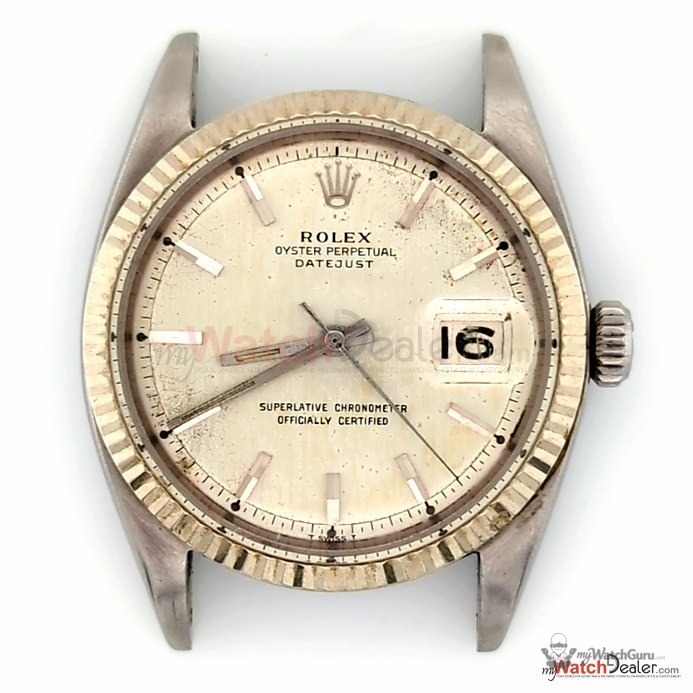
The Rolex Datejust ref 1601 is a four-digit reference, immediately placing it in vintage territory. This example dates to 1959: a steel 36mm case with a silver index dial and fluted white gold bezel, sold as a head only with no box or papers, which is typical at this age. Four-digit Datejust references predate the quick-set date mechanism, so setting the date means pulling the crown and advancing manually. The reference communicates that before any listing description does.
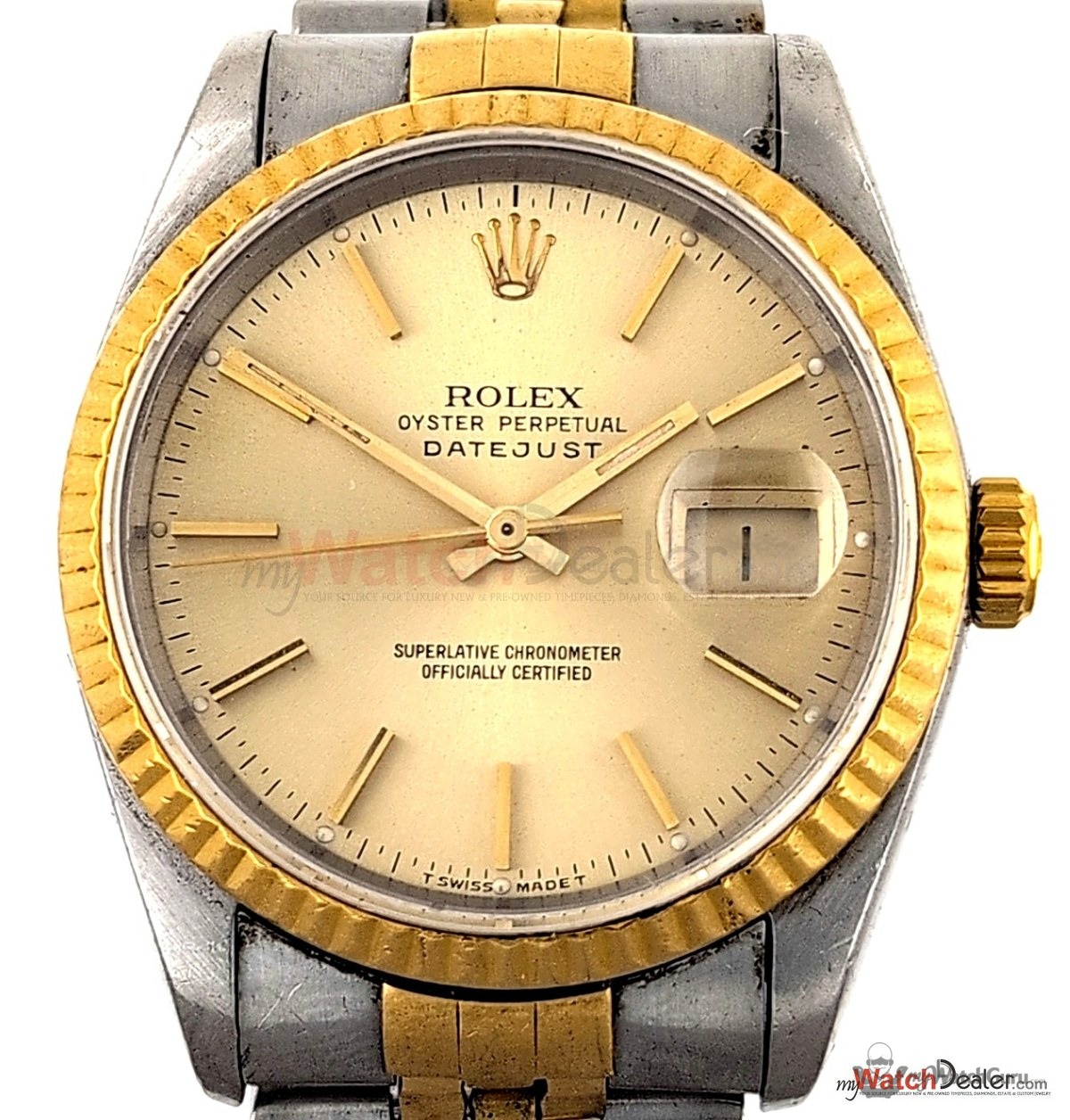
Ref 16233 is a five-digit reference, putting it squarely in the middle generation. The Rolex Datejust ref 16233 is a 1991 example in steel and yellow gold, 36mm, with a champagne stick dial, fluted yellow gold bezel, and a Jubilee bracelet. The 162 prefix encodes the two-tone construction, distinguishing it from all-steel Datejust references of the same era. It has the quick-set date function the earlier 1601 lacks and comes used, no box or papers.
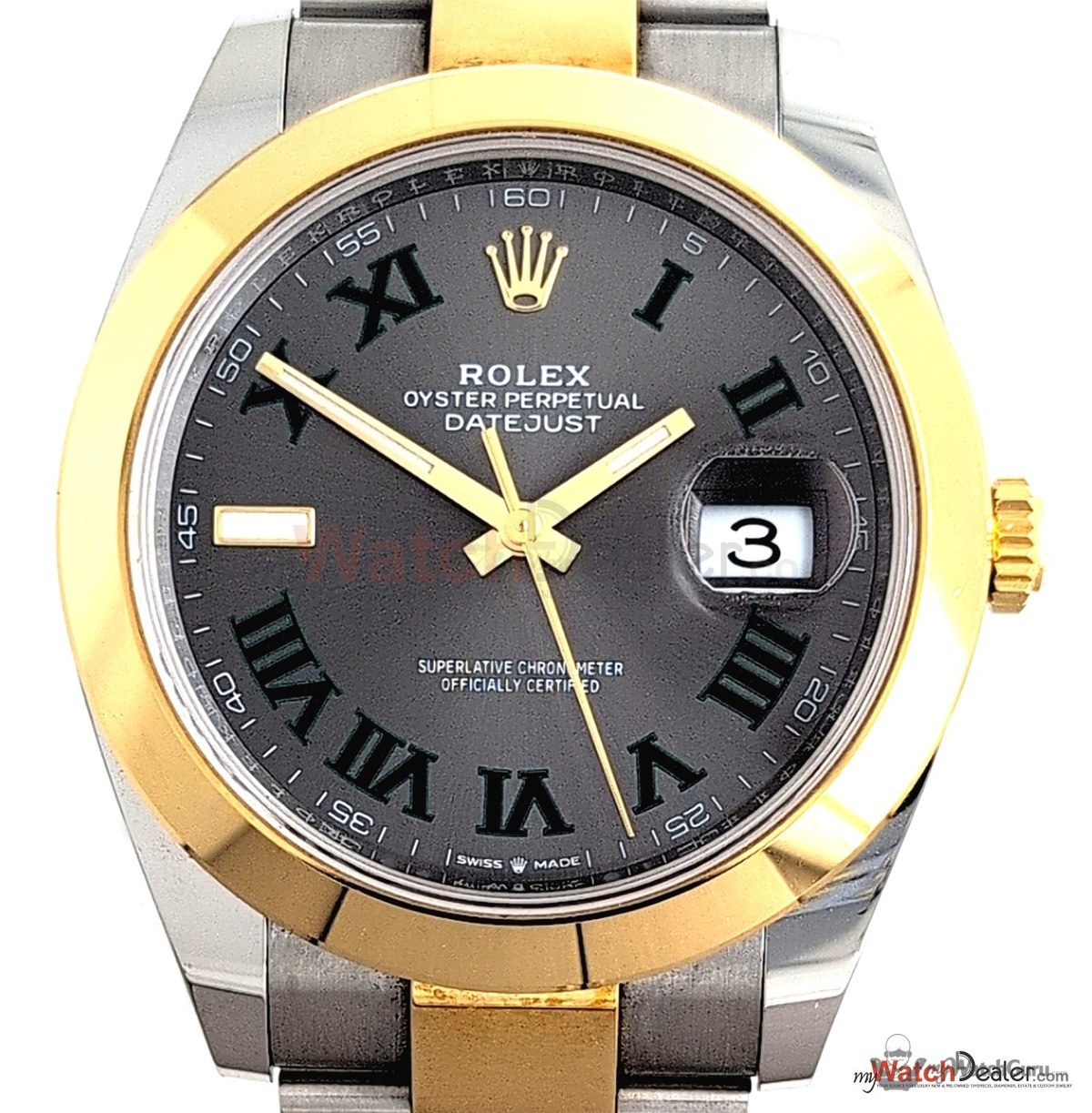
For the current generation, the Rolex Datejust ref 126303 is a six-digit reference. This 2023 example runs 40mm rather than 36mm, in steel and yellow gold with a slate green roman dial, smooth yellow gold bezel, and an Oyster bracelet. It is listed as unworn with papers present. The six-digit format marks the generational boundary clearly, and the 40mm case makes this a noticeably different watch on the wrist than either of the two older pieces above.
When a listing says "Datejust" with no reference number, ask for it. A two-tone Datejust could be a 16233 or a 126303: same rough description, different size, different generation, different market. The reference collapses that ambiguity quickly.
Cross-check what the reference implies against what the listing claims. If a listing states a 16233 but describes a 40mm case, something is wrong: that reference is a 36mm watch. Spotting that kind of mismatch takes under two minutes and reveals either a listing error or a misrepresented piece. Either way, you want to know before money changes hands.
Sold through My Watch Dealer, our retail desk — full details, current price and purchase all happen there.
View this piece at My Watch Dealer ›