Values & guides
On the two-tone 36mm 16233, the dial you choose shapes price, rarity, and how the watch fits into daily life.

The Rolex Datejust 16233 is a reference with a narrow set of constants and a surprisingly wide range of expression. The case is always 36mm. The metal is always steel with yellow gold. The bezel is fluted gold, and the bracelet is most often a Jubilee. The dial, though, is where buyers actually diverge, and where secondary market prices split in ways that matter before you commit.
Knowing what each dial option actually delivers can save you from owning the right reference in the wrong configuration.
Rolex built the 16233 as the two-tone entry in its 36mm Datejust lineup, pairing a steel Oyster case with yellow gold details throughout: the crown, the fluted bezel, and the center and outer links of the Jubilee bracelet. Quick-set date adjustment and a sapphire crystal make it more practical than the older Datejusts it followed, and those features hold up well in daily use. At 36mm it reads as a dress watch on a smaller wrist and casual-elegant on a larger one. That range is why these sell steadily in the pre-owned market even decades after they were made.
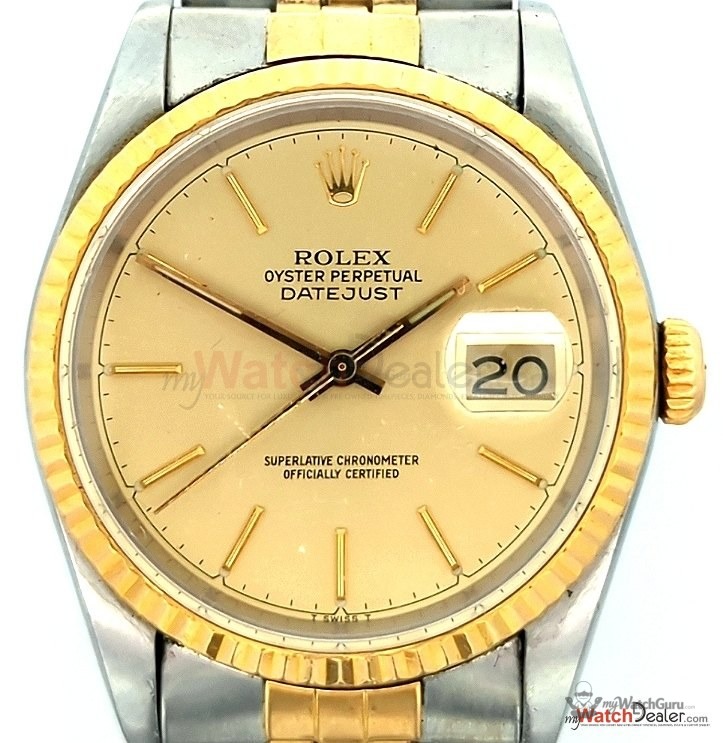
Stick indices, applied baton markers at each hour, are the default Datejust look. On a champagne background they give the watch a warm, restrained character that pairs with a suit just as easily as it does with weekend clothes. The dial does not ask for attention, which is exactly what a daily wearer needs. Champagne stick examples are also the most commonly available configuration of the 16233 in the pre-owned market, and that availability tends to keep their prices below Roman and diamond variants. For a buyer who wants maximum wearability across varied settings, this is the practical starting point.
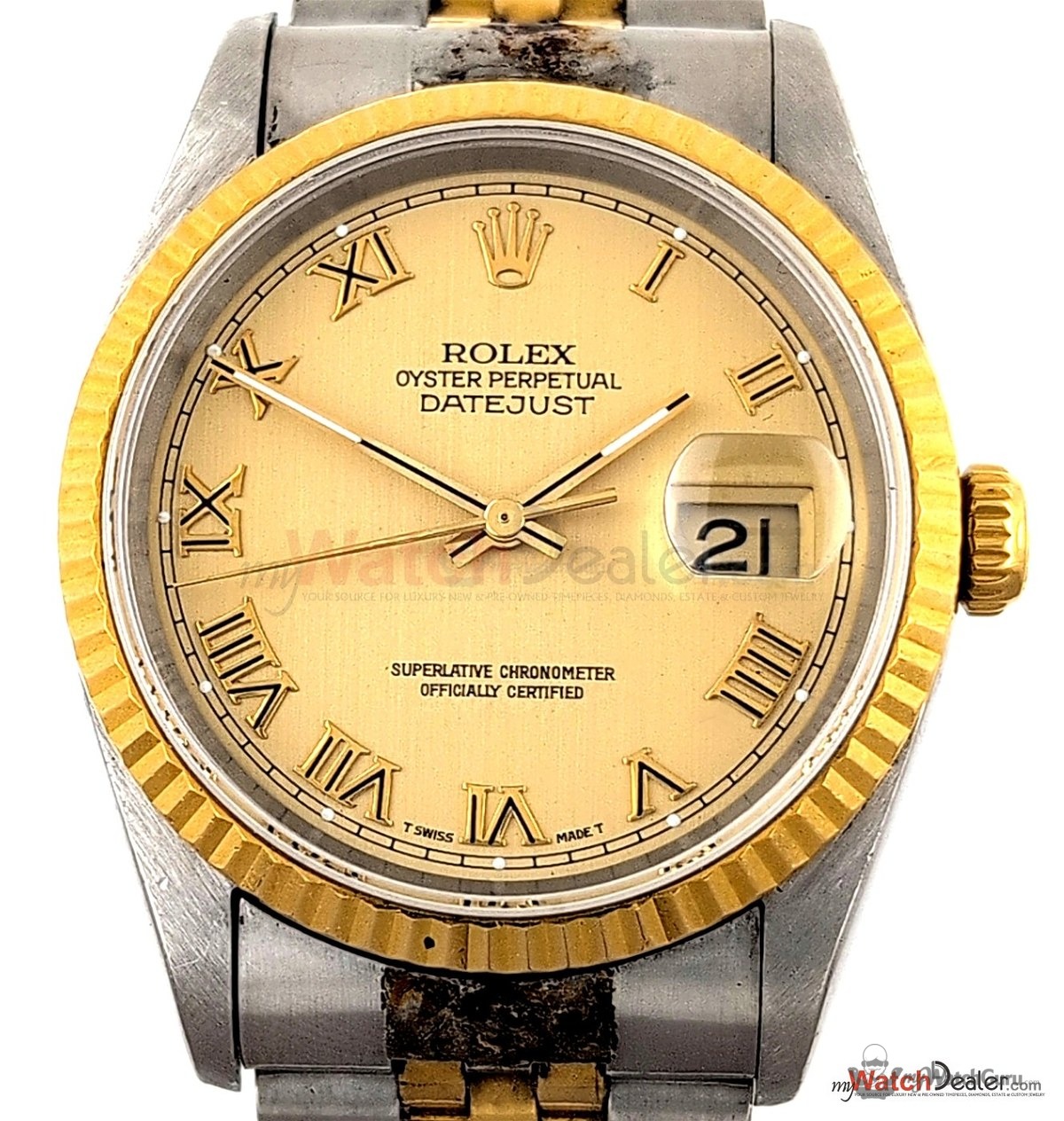
Roman numerals shift the 16233's character noticeably toward the formal end. The numerals are larger visual elements than stick indices and give the dial a classical, older quality that works well in business and evening settings but can feel slightly overdressed in casual ones. Among the three main dial configurations, Roman numeral versions occupy the middle of the rarity scale, a factory option, but less common than stick dials. Papers matter more with this variant than many buyers expect. Dial swaps do occur in the pre-owned market, and documentation tying a specific dial to a specific watch adds meaningful confidence when the applied quality of the Roman numerals is in question.
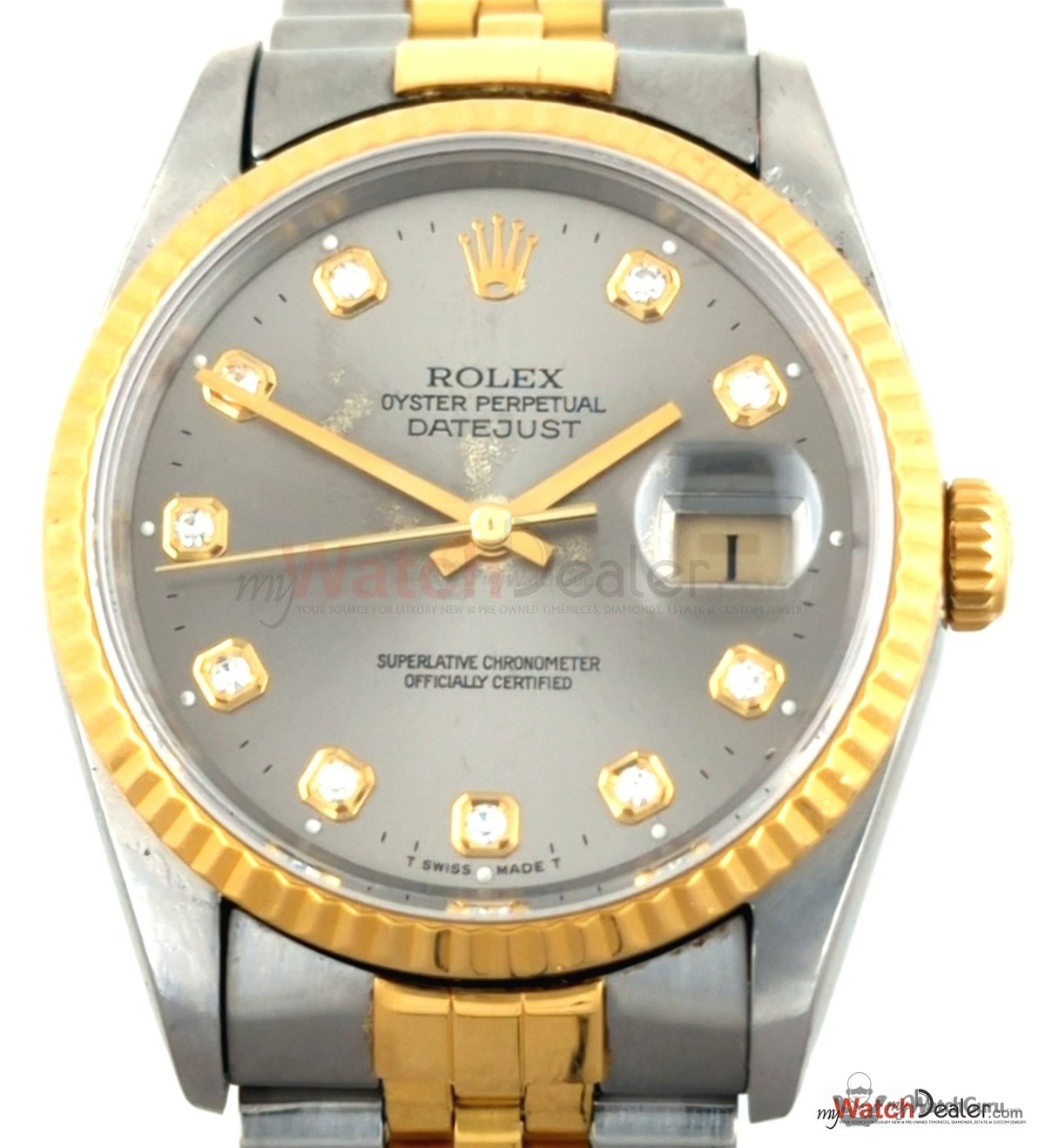
Factory diamond dials place the 16233 in a different price tier altogether. The gap between a diamond-dial example and a stick-dial example of the same reference is real and consistent across the market. Diamond dials were available as a factory option, but the secondary market carries a mix of factory and aftermarket pieces, and that distinction affects value considerably when no papers are present to confirm originality. Wearability deserves honest consideration here too. A diamond dial is an asset at formal occasions and dressy evenings. In everyday casual settings it can feel like the wrong tool for the job. Buyers who wear one watch everywhere sometimes find they reach for a simpler dial more often than they thought they would.
The Rolex Datejust 16233 with Champagne Stick dial is a 1989 example on a Jubilee bracelet with a fluted yellow gold bezel, the foundational 16233 configuration in every respect. Used condition, no box or papers, which is entirely typical for a watch of this age and not a meaningful obstacle to daily wear. The champagne stick dial gives it a clean, versatile read that asks nothing of its context and works equally well dressed up or down. For a buyer who wants the reference without paying a premium for dial complexity, this is where the math makes the most sense.
Coming from 1996 with original papers included, the Rolex Datejust 16233 with Champagne Roman dial is the most documented piece of the three. That documentation matters specifically here: a Roman numeral dial on a pre-owned 16233 raises legitimate questions about originality, and papers help answer them. The watch wears a Jubilee bracelet and fluted gold bezel in the standard two-tone configuration; the classical numerals shift the dial's register toward dress occasions without making it impractical the rest of the time. Papers on any 16233 are relatively uncommon, making this example stand out on that point alone.
A 1991 piece, the Rolex Datejust 16233 with Silver Diamond dial carries diamond hour markers on a silver background, a cooler and more formal tone than either of the champagne examples. Used condition, no box or papers. The silver dial reads particularly well against the steel-and-gold case, and the diamond markers push the overall character firmly toward evening and business-formal territory. Anyone considering this one should think honestly about how often their actual life calls for that level of formality, because when the occasion fits, it fits well.
The movement, the case, the bracelet construction, all of it is identical across dial variants of the 16233. What changes is the face you look at every time you check the time, and how well that face fits the places you actually go. A stick dial is the daily-wear default, versatile almost by definition. A Roman dial tilts toward dress occasions but remains broadly wearable. A diamond dial is specialized, and the buyers who are happiest with one are those who are clear-eyed about what they want before they buy it.
Sold through My Watch Dealer, our retail desk — full details, current price and purchase all happen there.
View this piece at My Watch Dealer ›