Values & guides
The 6917 came in three distinct metal configurations, and knowing which is which keeps you from confusing the common version with the rare one.

The Rolex Datejust ref. 6917 ran through the 1970s and into the early 1980s as the standard 26mm ladies' Datejust. Three distinct metal configurations exist across its production: full yellow gold, steel-and-yellow-gold two-tone, and steel-and-rose-gold two-tone. Getting that distinction straight before you shop is the whole point of this guide. The gap in desirability between these versions is real, and confusing one for another is easy when browsing listings at speed.
Across the run, the 6917 uses a non-quick-set movement and, on earlier examples, a plastic (acrylic) crystal rather than sapphire. Both details matter at inspection. A non-quick-set means setting the date requires pulling the crown to the middle position and advancing the hands through midnight, a minor inconvenience by modern standards but worth knowing going in.
Full yellow gold is the rarest of the three configurations and the most sought-after. Steel-and-yellow-gold two-tone is the most common version you'll encounter on the secondary market. Steel-and-rose-gold is the configuration that trips up the most buyers: it can look similar to two-tone yellow gold in dim light or low-resolution photos, but the rosy tone of the case metal is unmistakable in person.
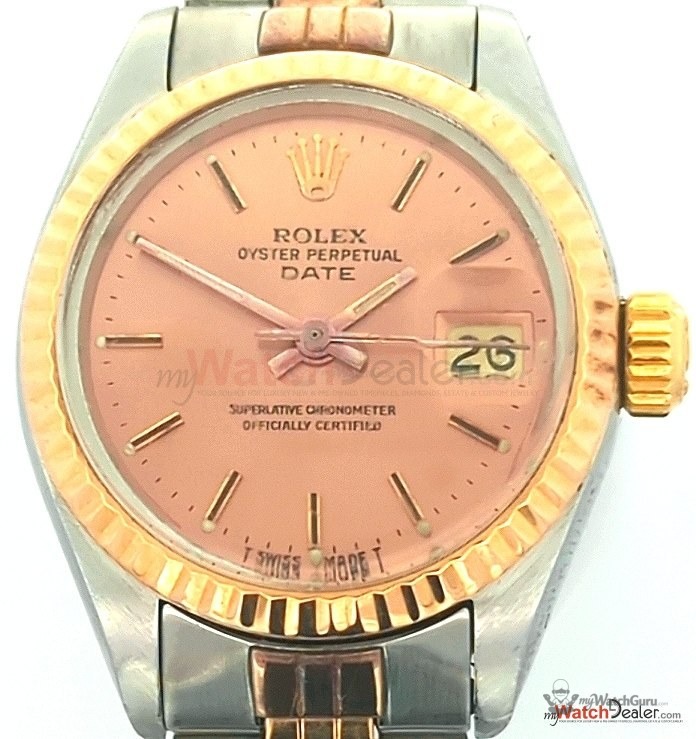
Rose gold on a 6917 reads warmer and softer than the yellow-gold two-tone. Some buyers seek it out specifically. Others discover the difference only after handling both versions side by side. Knowing which one you're looking at before you commit saves real time.
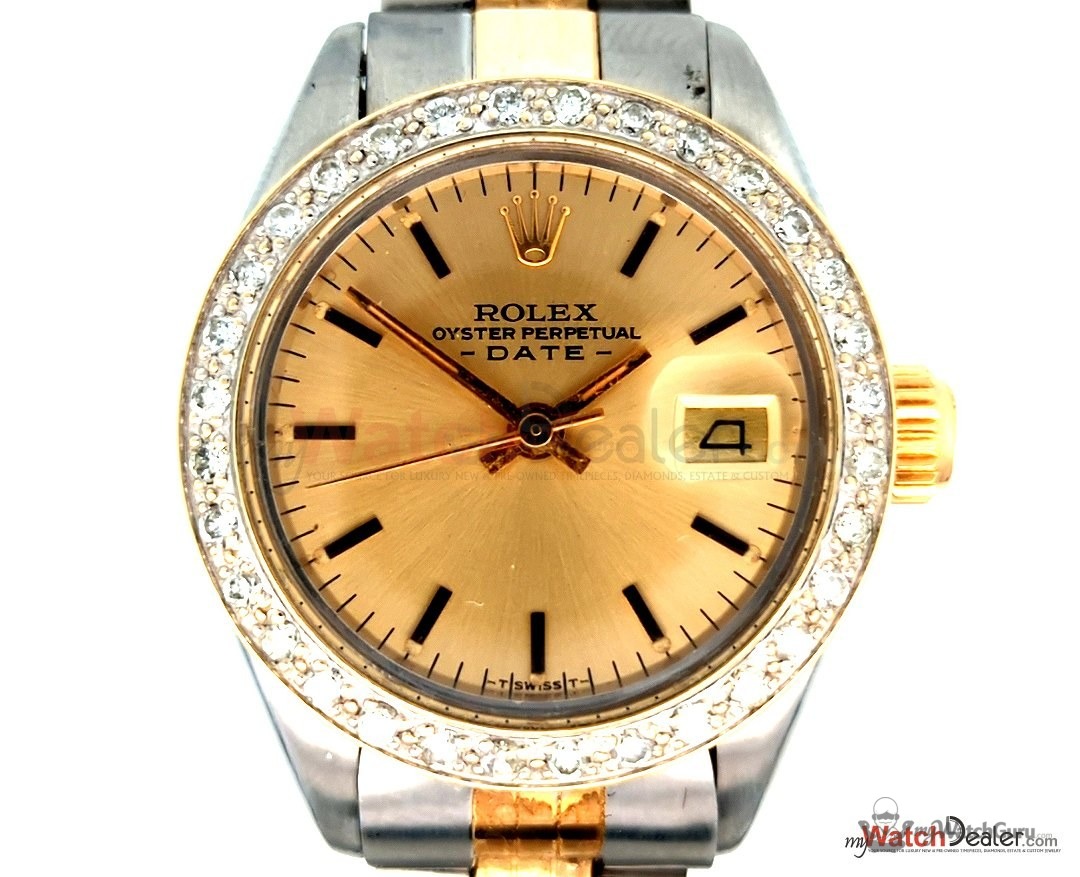
Dial and bezel combinations on 6917 examples vary considerably. Original fluted bezels are common on both all-gold and two-tone examples. Some watches that have passed through multiple owners carry aftermarket diamond bezels, a modification that changes the character of the piece and should be disclosed in any honest listing.
Stick indices are the original Datejust configuration for this reference and appear on the majority of examples. Original dials in good condition carry a premium over refinished or replaced ones, so it's worth asking directly about dial originality before committing to a purchase.
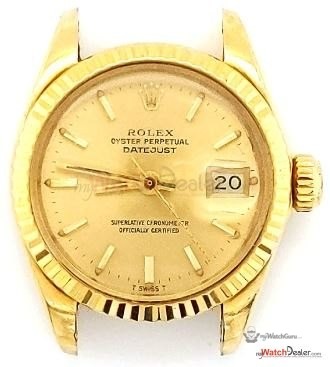
The Rolex Datejust ref. 6917 in full yellow gold from 1977 is the rarest configuration of the three listed here. Full yellow gold throughout, case and fluted bezel, with a champagne stick dial, no box or papers, and no aftermarket modifications. At 26mm with the non-quick-set, plastic-crystal setup typical of the era, this is a clean and unmodified example of the hardest 6917 configuration to source. If full yellow gold is the target, this is the benchmark against which other examples should be measured.
Also from 1977, the Rolex Datejust ref. 6917 two-tone in steel and yellow gold is the most common 6917 configuration but carries a notable modification: the bezel has been replaced with a custom diamond setting, flagged clearly in the listing. It comes on a Jubilee bracelet with the original champagne stick dial intact. For a buyer who wants the steel-and-yellow-gold version in a more dressed-up form and doesn't require an all-original example, this represents that segment of the market honestly.
Dating to 1972, the Rolex Datejust ref. 6917 in steel and rose gold is the earliest of the three and the configuration that confuses the most buyers. Steel-and-rose-gold throughout, with a pink champagne stick dial and a fluted rose-gold bezel. The color of the case metal and dial work together in a way that reads quite differently from the yellow-gold two-tone. It comes on a Jubilee bracelet with no aftermarket modifications. For a buyer specifically hunting the rose-gold variant, an unmodified 1972 example with a matching-tone dial is a genuine find.
Case sharpness is a major factor on any watch of this age. Over-polished cases lose definition in the lugs and edges quickly, and that's a common issue on 6917s that have changed hands multiple times. Crystal condition is a secondary concern: a scratched acrylic crystal is an easy fix, but a damaged dial underneath is not.
Ask about movement service history before buying. Box and papers rarely survive from this era, so their absence across these examples is typical rather than alarming.
At 26mm and built to handle everyday wear, the 6917 delivers exactly what Rolex intended for a ladies' Datejust. Which metal configuration you choose comes down to what you actually want on your wrist, and having all three configurations laid out side by side makes that call considerably cleaner.
Sold through My Watch Dealer, our retail desk — full details, current price and purchase all happen there.
View this piece at My Watch Dealer ›