Values & guides
Vignette dials graduate from one shade to another, and that graduation is exactly what makes condition harder to read on a used example.

The Datejust has carried dozens of dial variants over the decades, and the vignette is one of the more visually distinctive. A vignette dial graduates in color across its surface, typically running darker at the outer edge and lightening toward the center, or sometimes the reverse. The transition is intentional and part of the design. On a blue vignette, the outer zone is a rich, deep blue that fades toward a cooler, paler tone as it moves inward.
"Vignette" comes from the photographic and printing term for a gradual fade at the edges. On a watch dial, the effect is achieved during lacquering or printing, and when it's done right, the graduation looks smooth and controlled. A blue vignette works particularly well on a two-tone case because the deep outer tone echoes the steel while the paler center interacts with the yellow gold elements of the case and bezel.
Solid-color dials are relatively forgiving to assess. A champagne dial that has lightened unevenly looks obviously wrong. With a vignette, the challenge is that aging and the intentional gradient can look similar at first glance. Light fading toward the center can be hard to separate from the dial's original design intent. Patchy color, uneven graduation, a washed-out outer zone, or any break in the transition pattern are the real flags, but spotting them requires knowing what an original, unfaded example looks like.
Sun damage and UV exposure are the main culprits on aged vignette dials. A dial that spent years near a window may show a bleached patch on one sector that has nothing to do with the graduation. Moisture can also affect the lacquer unevenly. The key is the graduation itself: on a well-preserved original, the transition is smooth and continuous. Any area where the color jumps, thins out inconsistently, or breaks the pattern deserves closer attention.
Lume plots matter too. On diamond-dial versions, the hour markers are replaced with stones, which changes what you're reading for, but the overall dial surface condition still applies. Check for cloudiness in the lacquer, which can sit on top of the gradient and make the color look flat or inconsistent. Look at the text printing as well: the "Datejust" signature and the Rolex crown should be crisp, not faded or smeared.
Paper and service history help establish provenance, but they don't tell you what happened to the dial in storage. The bigger concern is a refinished or relacquered dial. A dial that has been repainted to hide fading will often show the graduation looking too uniform or too saturated, and it may lack the fine surface depth that original Rolex lacquer has. Minor texture differences under magnification can also signal intervention.
Both watches currently available are ref 16233 examples, the 36mm two-tone Datejust with a steel and yellow gold case, fluted yellow gold bezel, and sapphire crystal, each fitted with a blue vignette diamond dial.
Coming with papers, the Rolex Datejust 16233 from 1997 is a head-only piece on the 36mm steel and yellow gold case with fluted yellow gold bezel. The papers provide a useful reference point for the watch's documented history, and on a 1997 used example the blue vignette should still show good depth and clean graduation if it has been stored away from direct light. Diamond markers instead of applied indices add another visual layer to the gradient, catching light in ways that can make any surface disruption more visible. Condition on the dial is exactly what to verify closely on any used diamond-dial vignette from this period, and having papers in hand helps establish the watch's timeline.
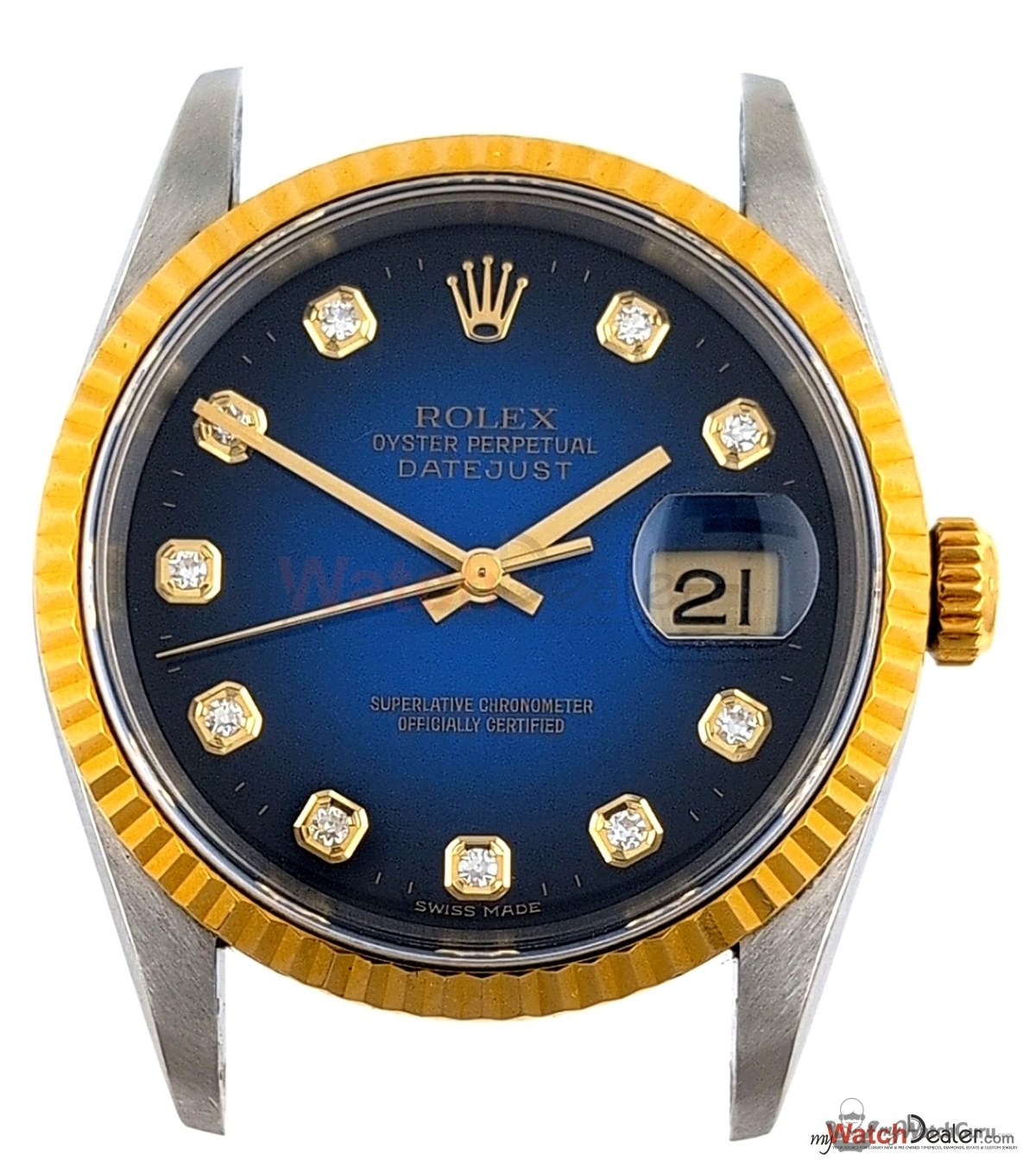
Six years older, the Rolex Datejust 16233 from 1991 carries the same blue vignette diamond dial configuration on an identical steel and yellow gold 36mm case with fluted yellow gold bezel, but ships without box or papers. At over thirty years old, this piece is a good illustration of why vignette condition matters more with age: more time means more opportunity for uneven light exposure or storage-related changes to affect the lacquer. A well-preserved example from this era can still show clean, striking graduation, with the deep outer blue reading clearly against the yellow gold bezel. Reviewing detailed photos at multiple angles before committing is a sensible step here.
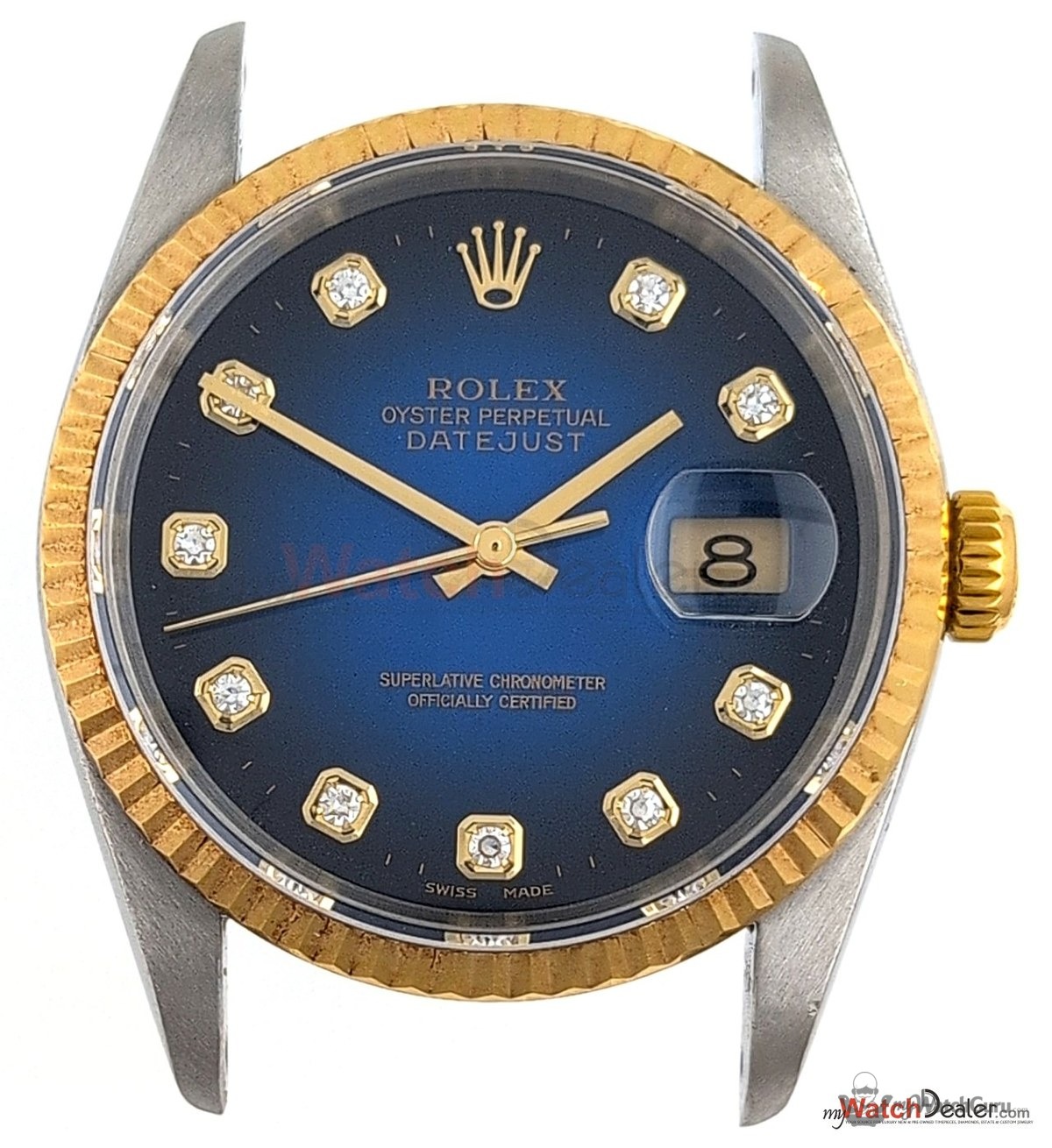
High-resolution photos at different angles are worth requesting on any used vignette dial. Flat overhead shots can flatten the graduation and make a tired dial look better than it is, while raking light shots often reveal inconsistency in the lacquer. Having two examples like these available at the same time makes it easier to calibrate what original graduation looks like alongside a slightly older piece.
Both purchases ship with a MyLuxApp-certified appraisal when bought through My Watch Dealer, and the seven-day return window gives room to verify in hand what photos can only approximate.
Sold through My Watch Dealer, our retail desk — full details, current price and purchase all happen there.
View this piece at My Watch Dealer ›