Values & guides
How the ref. 68274 and 178240 differ on movement, lug width, and bracelet compatibility, and what that means for buying either one today.
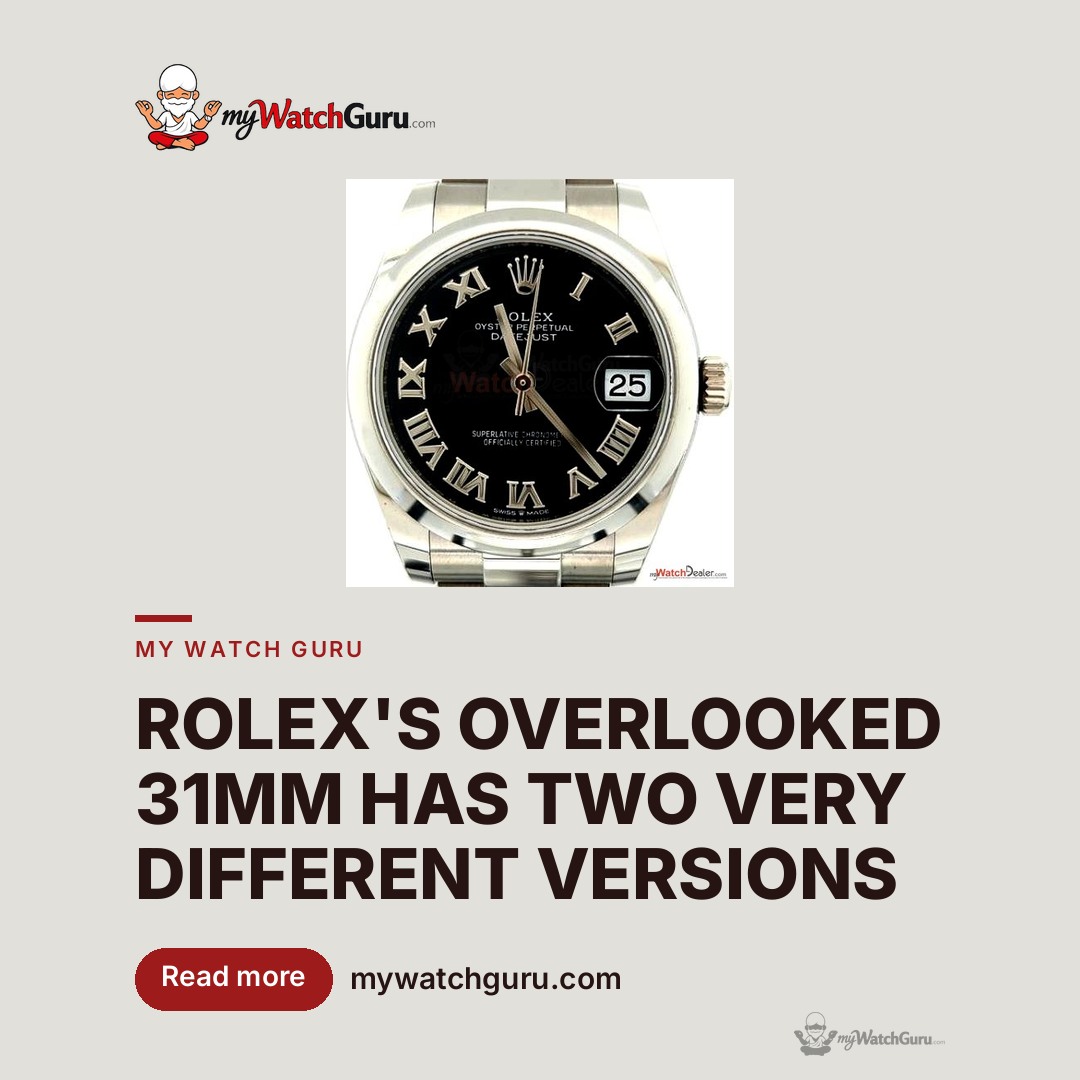
The 31mm Datejust occupies a specific position in Rolex's lineup that often gets overlooked. It's larger than the 26mm ladies' Datejust and noticeably smaller than the 36mm standard case that Rolex has built its calendar watch reputation on. For buyers who wear smaller watches but don't want the delicacy of a 26mm dial, or who simply prefer 31mm as a proportional fit, this reference fills a real gap.
The case hasn't always been called the "31mm Datejust." For a long time Rolex referred to watches in this size range as midsize, and the ref. 68274 was one of those midsize references. It ran with a quickset-date movement and typically offered an 18mm lug width standard for that generation. Bracelet options were more constrained as a result, and finding period-correct bracelets or replacement bracelets today takes more effort than it does with the wider-lug 178240.
When Rolex introduced the 178240, the lug width widened to 20mm, and that matters for bracelet compatibility. The Oyster bracelet the 178240 ships with belongs to the same family used across a much broader range of modern Rolex references. Replacement endlinks, service bracelets, and aftermarket strap options are far easier to source. The movement also changed: the 178240 runs the cal. 2236, which Rolex introduced with a Syloxi silicon hairspring for improved magnetic resistance and better long-term accuracy between services. That's a practical difference, not just a spec-sheet one.
The dial side stayed consistent in spirit. Roman numeral indexes appeared across both generations, the date window sits at three o'clock under a cyclops lens, and the basic visual identity of the watch didn't shift dramatically when Rolex transitioned references. That's part of why buyers sometimes assume the two watches are more interchangeable than they actually are, until they get into bracelet fitting or movement service questions.
Papers matter more on the 178240 than on the 68274 in most cases, mainly because the 178240 is recent enough that a full set still adds a meaningful premium. With a 68274 from the mid-1990s, original box is rare and papers help but don't always move value as sharply. Condition of the case and bracelet tends to carry more weight on older pieces. On either reference, a watch that has been aggressively polished loses the original case sharpness that careful buyers look for, and that's worth asking about specifically before buying any pre-owned Datejust.
Three 31mm Datejust pieces are currently available through My Watch Dealer, spanning both references and enough variation in year and condition to illustrate the buying decision directly.
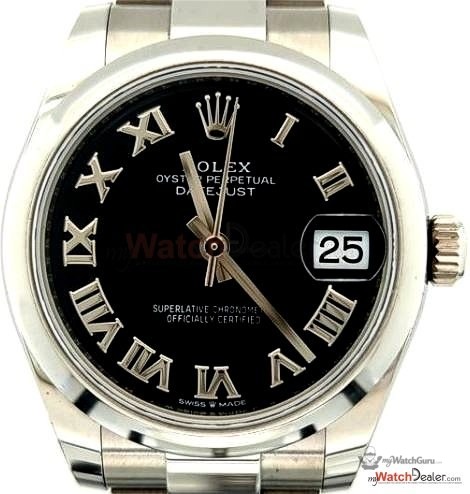
The Rolex Datejust 178240 with a black Roman dial is a 2021 example in like-new condition. Steel case, smooth bezel, Oyster bracelet, and papers present without box. The black Roman dial on a 31mm case reads cleanly and skews slightly dressier than a plain index dial. Being a recent 178240, it carries the cal. 2236 movement and the 20mm lug width that makes bracelet swaps and future service straightforward. Like-new condition from 2021 means the case geometry should be intact, with no significant wear to the lugs or bracelet center links.
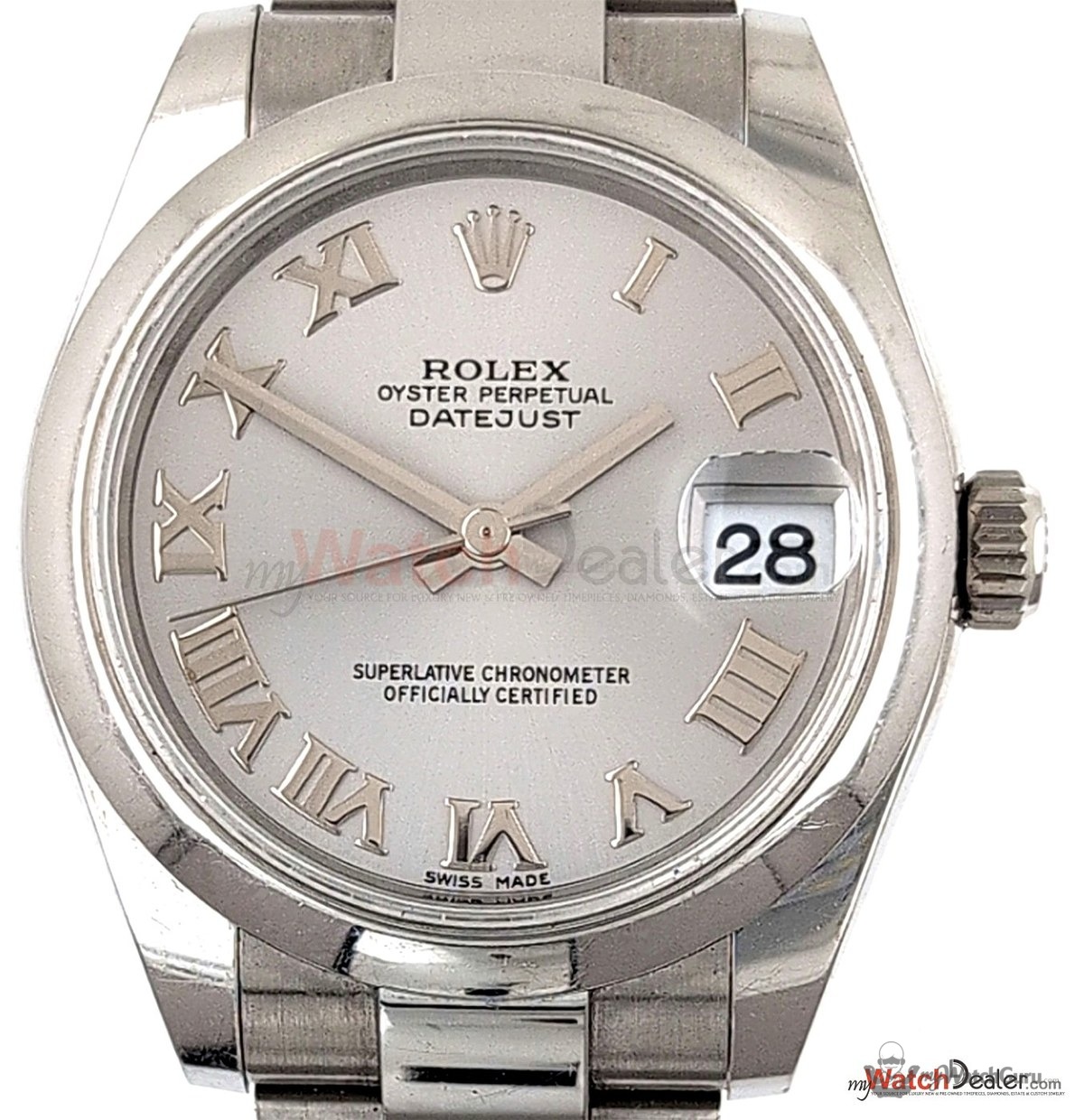
If the same reference at a different price point is the goal, the Rolex Datejust 178240 with a silver Roman dial from 2017 is worth examining closely. Used condition, papers present, no box, the silver dial on a smooth-bezel steel Oyster is about as versatile a 31mm configuration as exists. The 2017 production year means the cal. 2236 is still in play and the 20mm lug width still applies. Used condition can mean anything from lightly worn to more significant wear, so asking for detailed photos of the case and bracelet before committing is a sensible step.
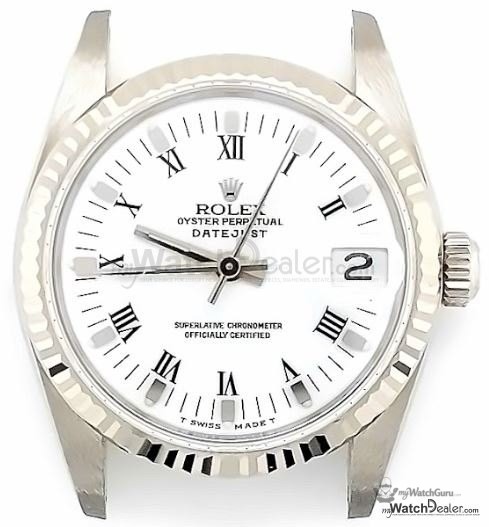
The Rolex Datejust 68274 with a white Roman dial is the older-generation piece in the group. A 1995 example with a fluted white gold bezel, steel case, white Roman dial, and no bracelet, listed as head only. No box, no papers. The fluted WG bezel is a detail that the steel 178240 doesn't carry in quite the same way, and the 1995 date pushes this into genuine vintage territory. The 68274's 18mm lug width is the key practical constraint: bracelet options are narrower, and anyone planning to strap-swap or source a period bracelet should verify compatibility before buying.
The 178240 is the easier watch to live with long-term. Bracelet availability is better, the movement is newer, and papers are more likely to be present at the price points this reference trades at. The 68274, particularly a head-only example from 1995, is a different kind of purchase, one that suits buyers who already know what bracelet they'll source and are comfortable with a watch that may be due for movement service if it hasn't had one recently. Both references share the same 31mm case diameter and the same fundamental Datejust character. The decision comes down to which generation's trade-offs fit the buyer's situation and how much bracelet sourcing they're willing to take on.
Sold through My Watch Dealer, our retail desk — full details, current price and purchase all happen there.
View this piece at My Watch Dealer ›