Values & guides
The hour marker is the most personal decision on a Datejust dial. Here is what separates Roman numerals from applied indices in feel, formality, and legibility.
Roman numerals and applied indices are both correct answers on a Datejust. They are not competing for the same buyer. They ask different things of the dial, and understanding what each one actually does helps you pick the version you will still be glad you bought years from now.
An applied index is a piece of metal, physically attached to the dial surface, that sits proud of the dial and catches light from the side. The appearance shifts as your wrist moves. At a distance the effect is clean and geometric. Up close, the depth becomes visible. On a Datejust, applied indices tend toward baton or stick shapes, though other forms exist. The overall read is modern and direct: a professional marker that fits as well in a casual setting as it does in a formal one.
Roman numerals on a Datejust are part of the dial's finished surface rather than raised hardware. That keeps the dial flatter visually, quieter in the way it reflects light, and distinctly more traditional in character. The numeral tells you it is a dress watch before you read the date. There is a quietness to a Roman dial that an index dial does not replicate, and a formality that some buyers find exactly right and others find slightly stiff.
Legibility is one area where the two approaches part ways clearly. Applied indices, particularly baton types, are designed to be read fast. The geometry is simple and the luminous fill (where present) is easy to locate at a glance. Roman numerals ask slightly more of the eye. After years of wearing the watch that difference disappears because you read the dial without thinking, but it matters most in low light or on a moving wrist. Buyers who wear their watch in active or low-light situations tend to find the index more practical day to day.
Dress codes have loosened enough that the Datejust sits comfortably across contexts regardless of dial choice. That said, the Roman numeral still carries a signal. It reads as a deliberate, considered choice in a way the index does not. Index dials are easier to pair across different situations. Roman dials make a specific statement about taste, and some buyers want exactly that statement. Neither is more correct. But they attract different personalities, and the buyer who is still pleased with a Roman dial a decade from now tends to be someone who valued that traditional reference from the start.
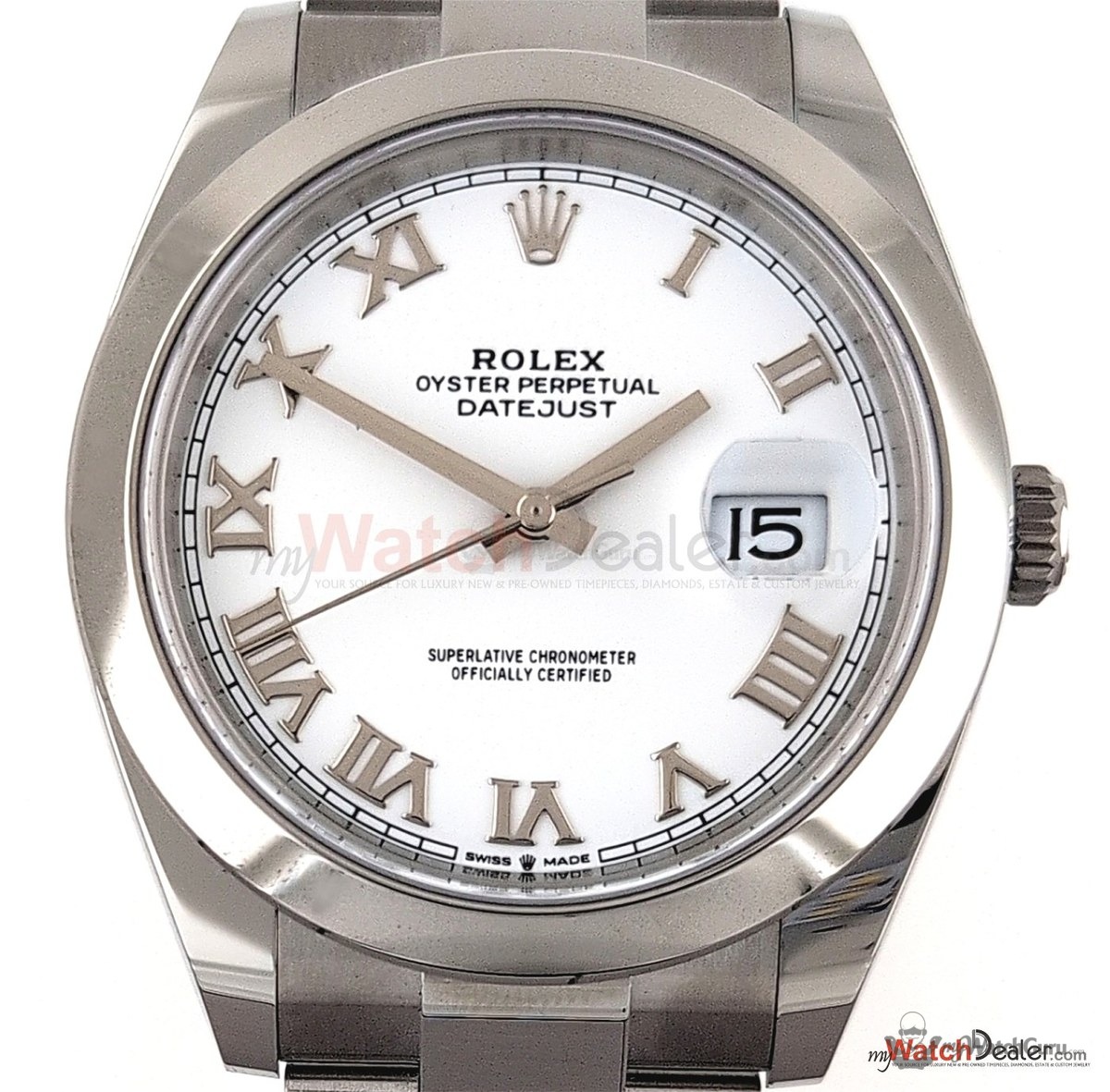
The Rolex Datejust 126300 is a 40mm steel Datejust in like new condition with a white Roman dial and smooth bezel on an Oyster bracelet. The white dial keeps things clean and bright, and the Roman numerals sit against that background with real clarity. Papers are included and the year is 2022. The combination of a contemporary 40mm case with a traditional white Roman dial is precisely what this article is about: a dress-leaning choice in a modern-size case, where the marker style does most of the work.
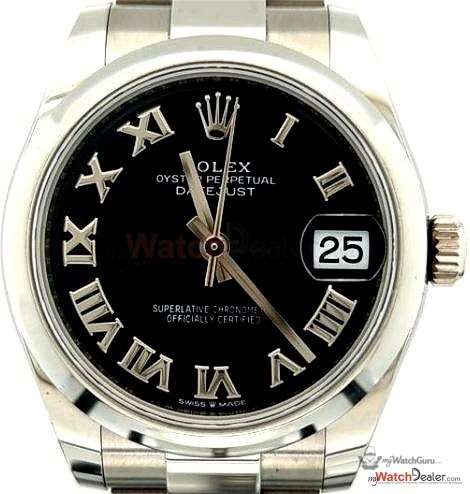
At 31mm, the Rolex Datejust 178240 puts the Roman numeral argument into a more compact format with a black Roman dial, also like new with papers from 2021. The black dial changes the character considerably: deeper, more formal after dark, and different in feel from the white version even though the numeral style is the same. The smooth bezel and Oyster bracelet keep the overall look consistent. For a buyer drawn to Roman numerals who also wants a more refined fit on the wrist, this reference is worth a close look.
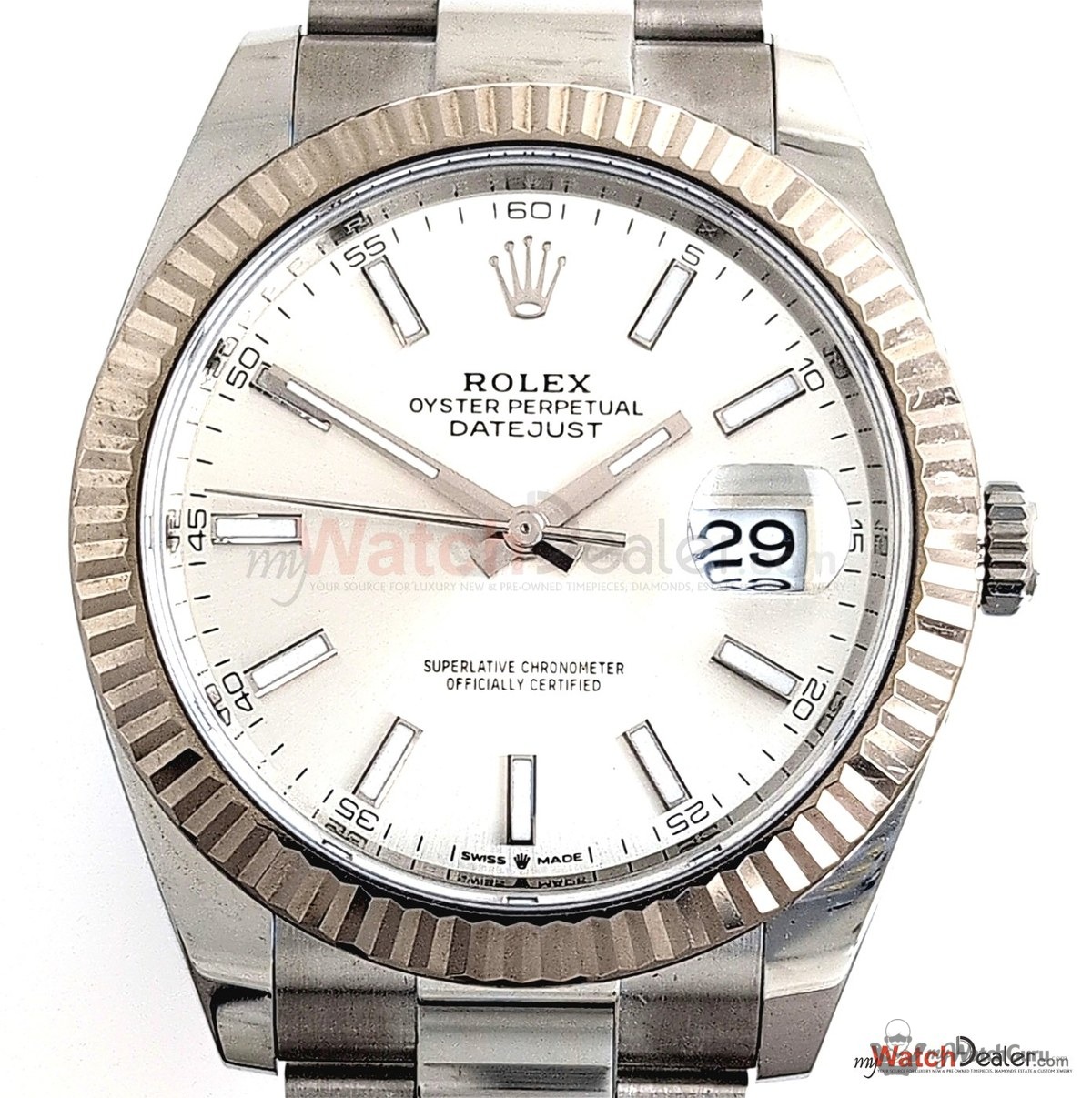
For the index side of the argument, the Rolex Datejust 126334 is a 40mm steel case with a silver index dial, fluted white gold bezel, and Oyster bracelet, dated 2021 with papers and in used condition. Where the Roman dials in this group sit quiet and traditional, the silver index dial with the fluted bezel reads as geometric and dressed-up in a different direction entirely. The indices catch light differently than Roman numerals do, and the fluted bezel reinforces that architectural quality.
Hold both side by side if you can. The difference in feel is real and not subtle once you are looking for it. People who respond immediately to the Roman numeral version are usually right to go with it. People who find the index cleaner and easier to read quickly are also right. What the index and the Roman numeral share is the same Datejust movement, the same case quality, and the same date function. The only variable is which face you want to look at every morning for the next ten years, and that is a decision only you can make.
Sold through My Watch Dealer, our retail desk — full details, current price and purchase all happen there.
View this piece at My Watch Dealer ›