Values & guides
Knowing which crystal type a watch carries tells you what wear is normal, what damage is reversible, and where to focus your inspection.
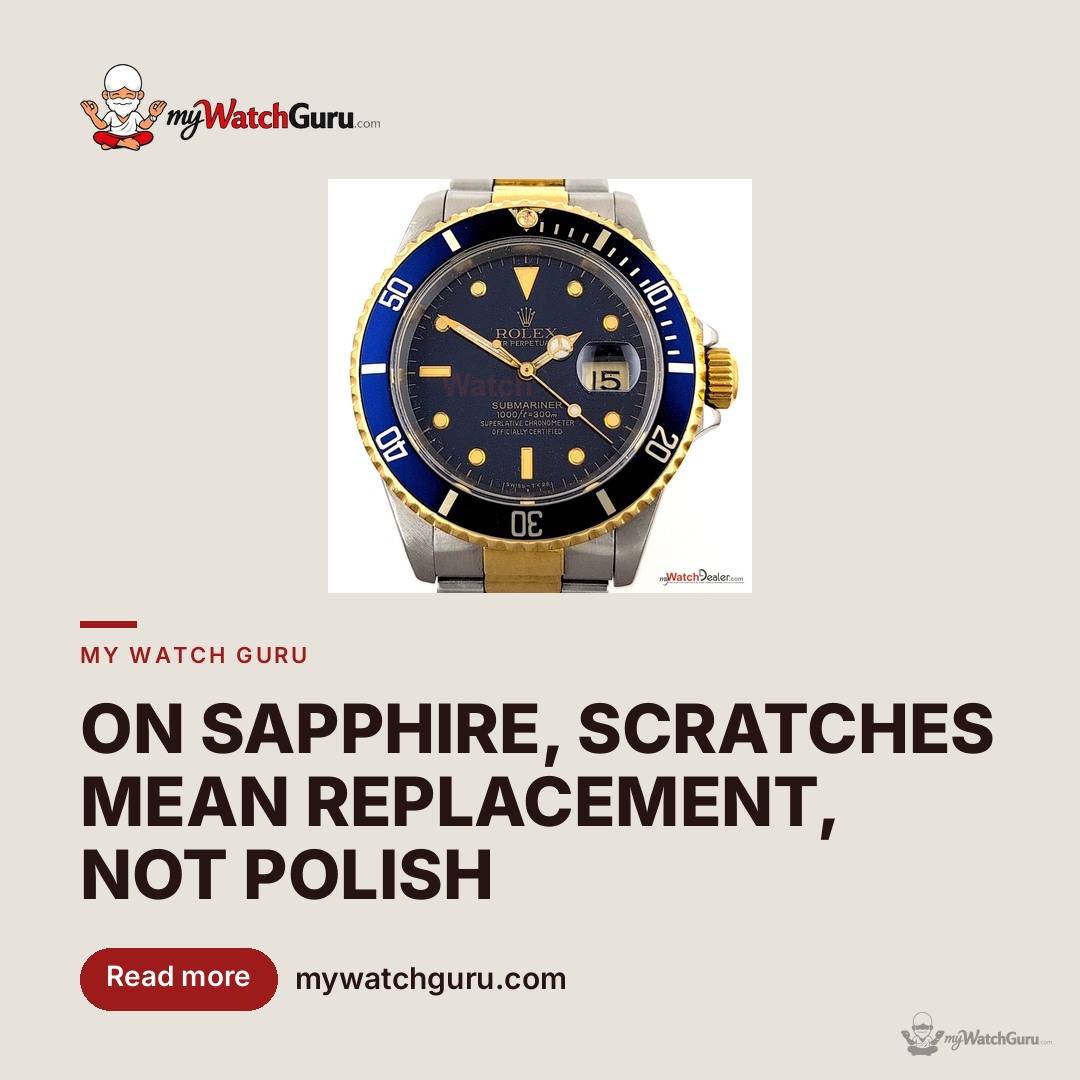
The crystal sitting over the dial is one of the first things you look at on a watch and, on a pre-owned piece, one of the most revealing. Sapphire and acrylic behave completely differently when they meet the world. Getting those two straight before you inspect anything is worth your time.
Sapphire crystal is synthetic corundum, which sits near the top of the hardness scale. In practical terms, everyday objects like keys or a desk edge don't leave marks the way they would on softer materials. That's the main reason the industry moved toward sapphire decades ago.
Brittleness is the trade-off. A hard, direct impact like a corner of a countertop or a sudden knock on concrete can crack or chip sapphire where acrylic might just flex and survive. Scratches that do appear on sapphire don't polish out easily. A surface scuff deep enough to feel with a fingernail usually means crystal replacement, not a tube of polish.
When you're looking at a pre-owned watch with a sapphire crystal, run your eye around the edge where the crystal meets the bezel or case. That junction is where chips show up first. Then look straight through the crystal at a light source. Cracks tend to catch and scatter light in a way that's obvious once you know what to search for. A few faint surface marks can be acceptable depending on age, but deep scratches or any visible crack are not.
Acrylic, sometimes called hesalite or plexiglass, is far softer. Routine daily contact and brushing against harder surfaces leave marks quickly, which is why pre-owned watches with acrylic crystals often show a light haze. That haze is completely normal and, crucially, reversible. A watchmaker can buff out surface scratches with polishing compound and restore clarity. That's a genuine advantage over sapphire on that specific point.
What acrylic doesn't handle well is a sharp, direct impact. It tends to crack rather than shatter into fragments, but significant damage is harder to address than a light polish. When inspecting an acrylic crystal, haze and light surface marks tell you almost nothing about the watch's real history. Cracks and any deformation are what actually matter.
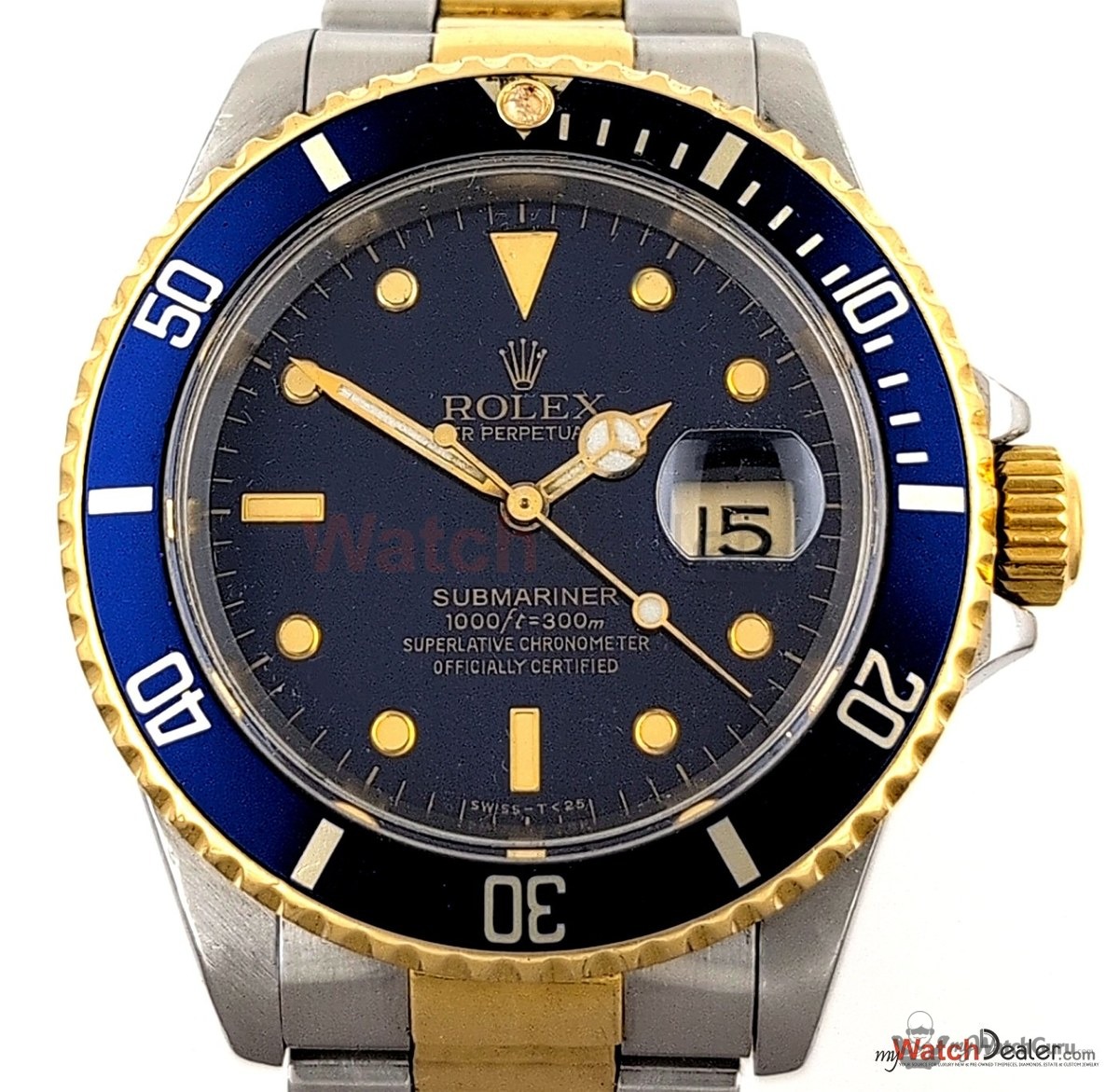
A 1991 40mm two-tone steel and yellow gold piece, the Rolex Submariner 16613 carries a blue dial, Oyster bracelet, and a used condition grade, with no box or papers. By 1991, Rolex had long been fitting sapphire crystals to the Submariner line. On a used watch of this age, the crystal is the place to spend extra time during inspection. Look at the bezel-crystal junction for chips and check the surface under direct light for anything beyond faint surface marks.
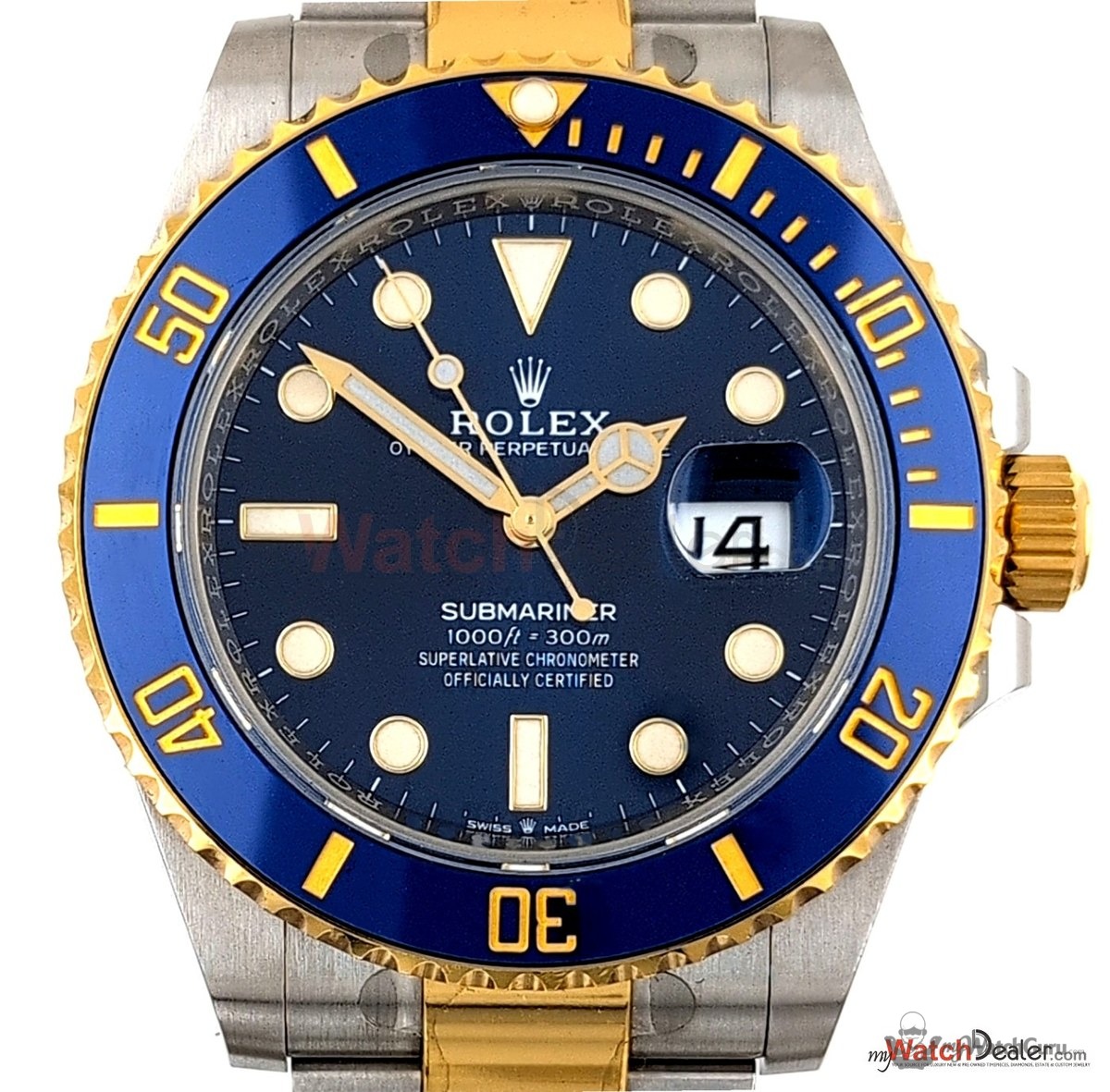
Coming in like-new condition with papers, the Rolex Submariner 126613LB is a 2021 41mm two-tone steel and yellow gold Submariner with a blue ceramic bezel and blue dial. A 2021 production date and a like-new grade mean this crystal should show nothing of concern, but a quick look at the edges before you commit is still worth doing. Sapphire holds up well in normal use, but even a like-new watch can pick up a chip from a single unlucky knock.
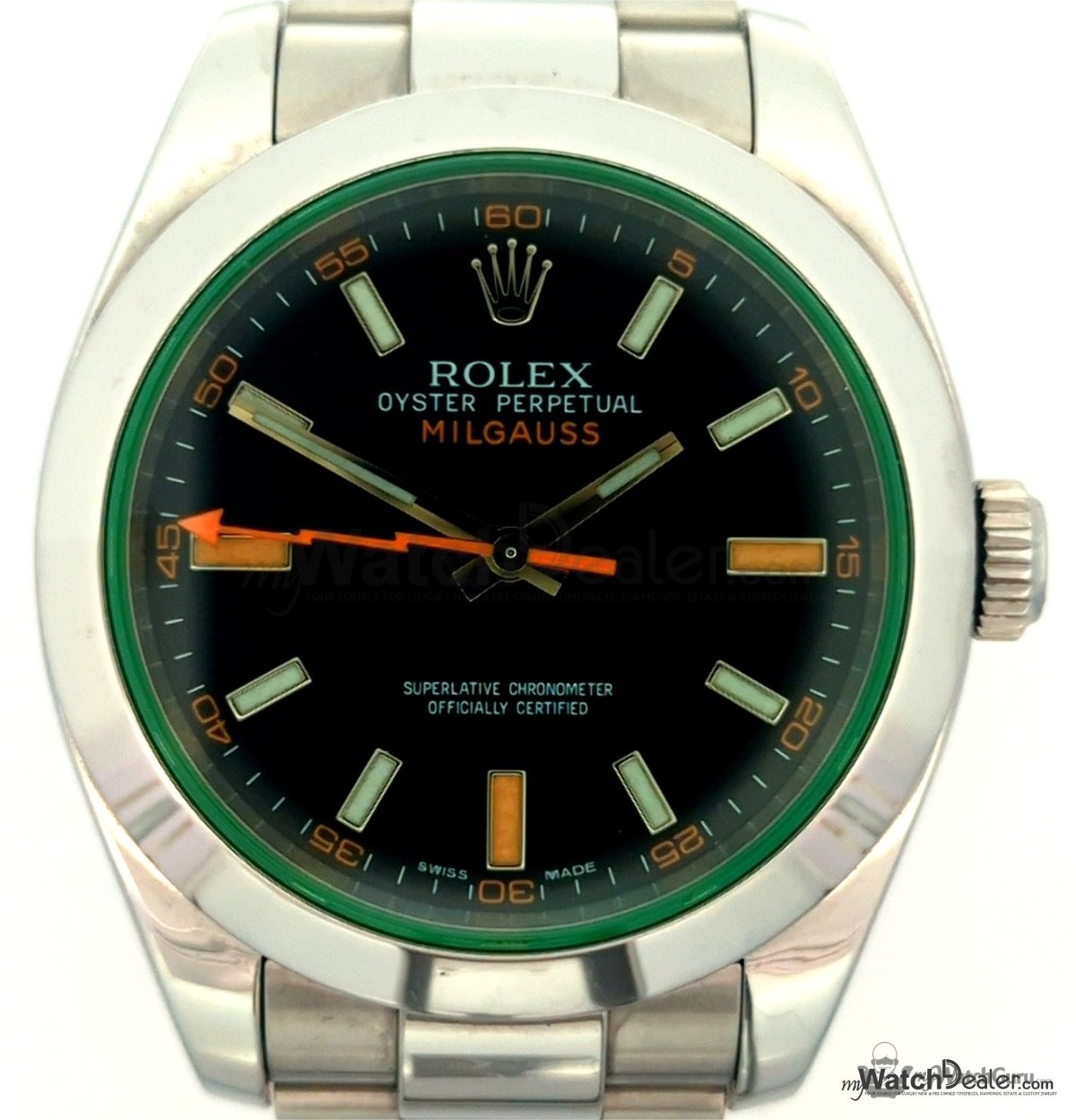
Worth calling out separately is the Rolex Milgauss 116400GV, a 2011 40mm steel Milgauss with a black dial, smooth bezel, and papers, graded used. The "GV" in the reference designates the green-tinted sapphire crystal that is specific to this variant, one of the details that distinguishes the 116400GV visually from the standard 116400. Being sapphire, the same inspection logic applies: the tint doesn't change the material's properties, so check for chips around the perimeter and any crack that catches light during inspection. This is a used piece, so requesting angled crystal shots before committing is a reasonable ask.
Crystal condition is a useful proxy on pre-owned watches. Sapphire that arrives heavily scratched or chipped tells you the watch has seen real impact, and that's worth asking about before any money changes hands. Acrylic that's cracked or deeply gouged says something similar. Neither crystal tells you everything about service history, case condition, or movement health, but both give you a fast read on how carefully the watch was kept.
If you're buying remotely, ask for photos taken in natural light with the crystal angled toward the light source. That catches chips and cracks that straight-on shots under artificial light tend to miss entirely.
Sold through My Watch Dealer, our retail desk — full details, current price and purchase all happen there.
View this piece at My Watch Dealer ›