Values & guides
Rolex's Everose alloy isn't standard rose gold, and the bracelets and dials paired with it change how the watch reads entirely.
Rolex developed Everose gold as its own proprietary rose-gold alloy. The formula includes platinum, which Rolex says helps the alloy resist fading over time. That's a meaningful distinction from standard rose gold, which can shift color after years of wear. On a two-tone Datejust, Everose components sit alongside Oystersteel, Rolex's designation for the 904L stainless steel it uses across its sport and dress lines. The pairing is engineered to stay consistent rather than diverge with age, which matters if you plan to wear the watch for years before giving it much thought.
Classic yellow-gold two-tone Rolex pieces carry a particular look: warm, bold, and closely associated with watches produced through the 1980s and into the 1990s. Steel-and-Everose lands differently. The rose tone is softer and sits closer to steel in overall warmth, so the contrast between the two metals is subtler. You get a two-tone effect without the sharp visual jump that yellow gold creates, and the result reads as contemporary rather than retro even on a design as established as the Datejust.
Bracelet choice does considerable work on a steel-and-Everose piece. An Oyster bracelet, with its broader and flatter links, keeps the watch feeling direct and solid. A Jubilee bracelet, with its five-piece links, dresses the watch up and softens the overall silhouette. The Everose elements on whichever bracelet you choose tie back to the case and bezel, pulling the whole look together. On the same reference, the two bracelet options read as genuinely different watches on the wrist.
With a material combination as muted as steel and Everose, the dial color does more work to set the register of the watch than it might on a busier or more contrasting configuration. A warm-toned dial reinforces the rose gold and pushes the piece toward dressy. A cooler or neutral dial creates contrast and stretches versatility. Darker dials move the whole watch toward evening. The interplay of dial color, bezel metal, and bracelet style is where the real differentiation happens across Everose configurations.
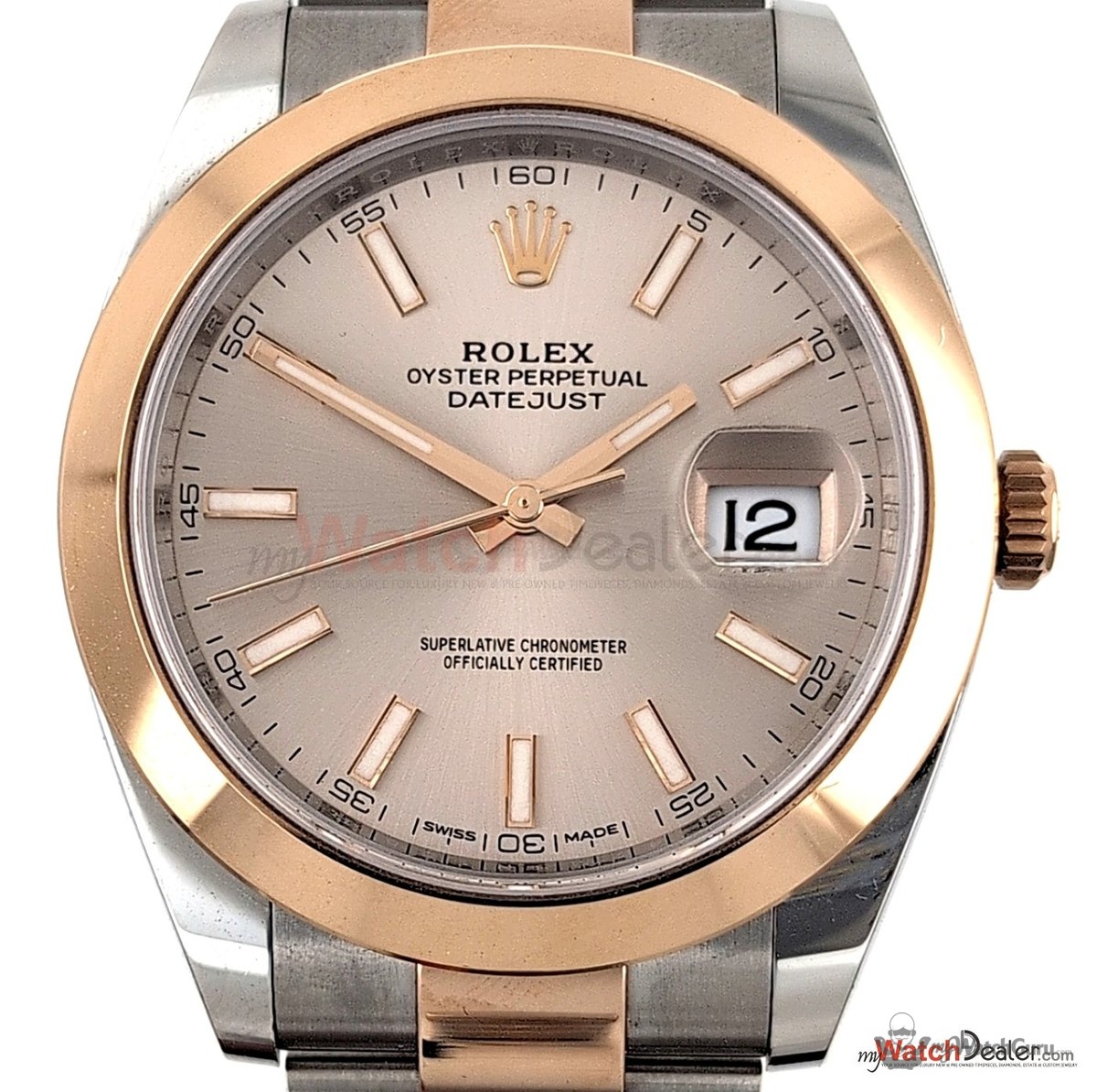
The Rolex Datejust 126301 with Sundust dial is a 40mm unworn piece in steel and Everose with a smooth bezel and Oyster bracelet, from 2021, with papers present. The Sundust dial, a warm sand-adjacent color, works with the Everose components to build a cohesive warm palette across the entire watch. Nothing in the configuration pulls against the rose tone. For a buyer who wants the steel-and-Everose combination to read as a unified warm statement rather than a two-tone contrast play, this is the more direct route.
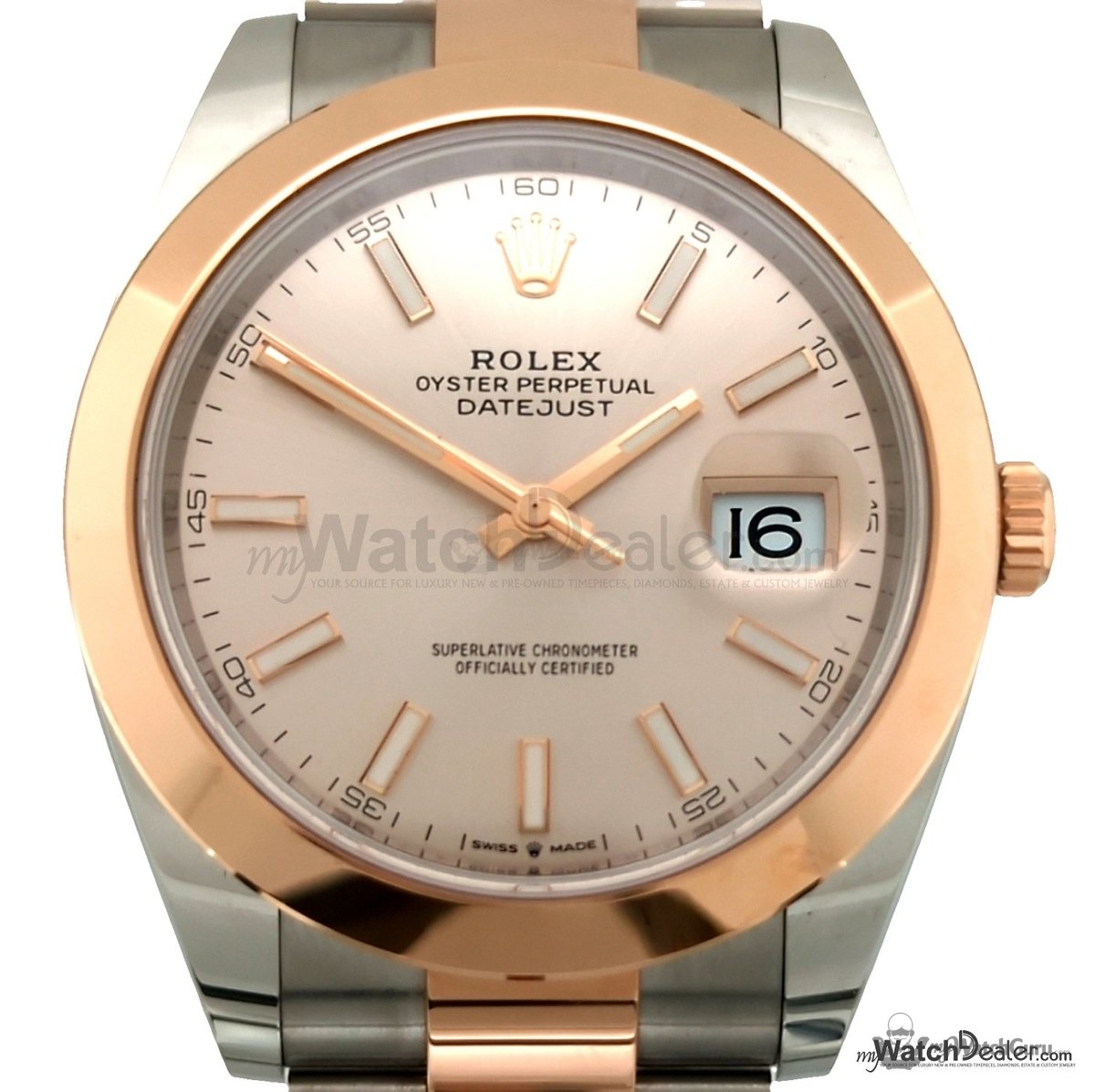
Configured with a Jubilee D bracelet and a pink index dial, the Rolex Datejust 126301 with Pink dial is also 40mm, unworn, 2021, with papers. The Jubilee bracelet shifts the personality of the watch considerably relative to an Oyster configuration: the five-piece links dress it up, and the pink dial brings the rose-gold accent color into the face of the watch itself. This is the version for someone who wants the Everose combination to lean clearly into its warmer and more formal potential.
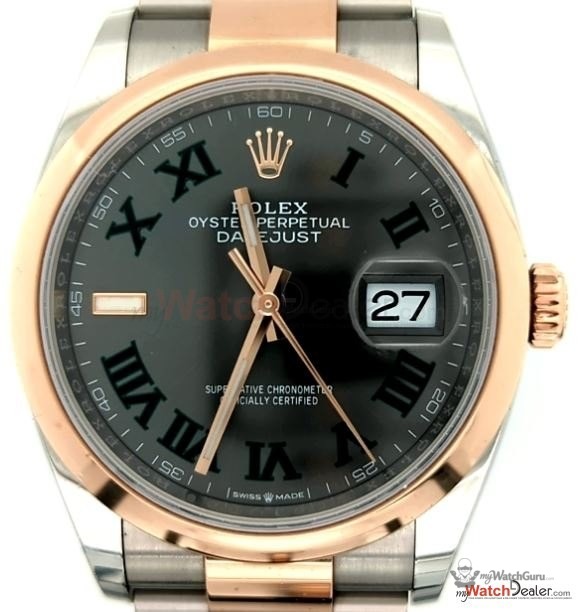
At 36mm, the Rolex Datejust 126201 with Slate Roman dial is the smaller-cased option here. It's a used 2021 piece with papers, an Oyster bracelet, and a standard rose-gold bezel. The slate dial with Roman numerals is a cooler, darker tone that plays against the warmth of the Everose in a way the warmer dials above don't, keeping the watch from reading as overtly warm. The 36mm case fits a wider range of wrists than the 40mm, and arriving in used condition means some wrist patina is already present on the case and bracelet surfaces.
Steel-and-Everose occupies a middle register that all-steel and full-gold don't cover the same way. It's dressier than plain steel without the formality of full gold, and the subdued contrast between metals means the watch moves between settings more easily than either extreme. A 40mm Oyster configuration handles business and smart-casual without effort. A 40mm Jubilee configuration moves comfortably toward cocktail dress. The 36mm case reads slightly more understated at that diameter and fits a wider range of wrists. These aren't watches that demand a suit or require a sport context, and the range of dial and bracelet pairings available across the Datejust line means buyers can land on a configuration that suits daily wear without much compromise.
Sold through My Watch Dealer, our retail desk — full details, current price and purchase all happen there.
View this piece at My Watch Dealer ›