Values & guides
Your metal choice commits you to a look, a maintenance reality, and a resale market, here is how to think it through before you buy.
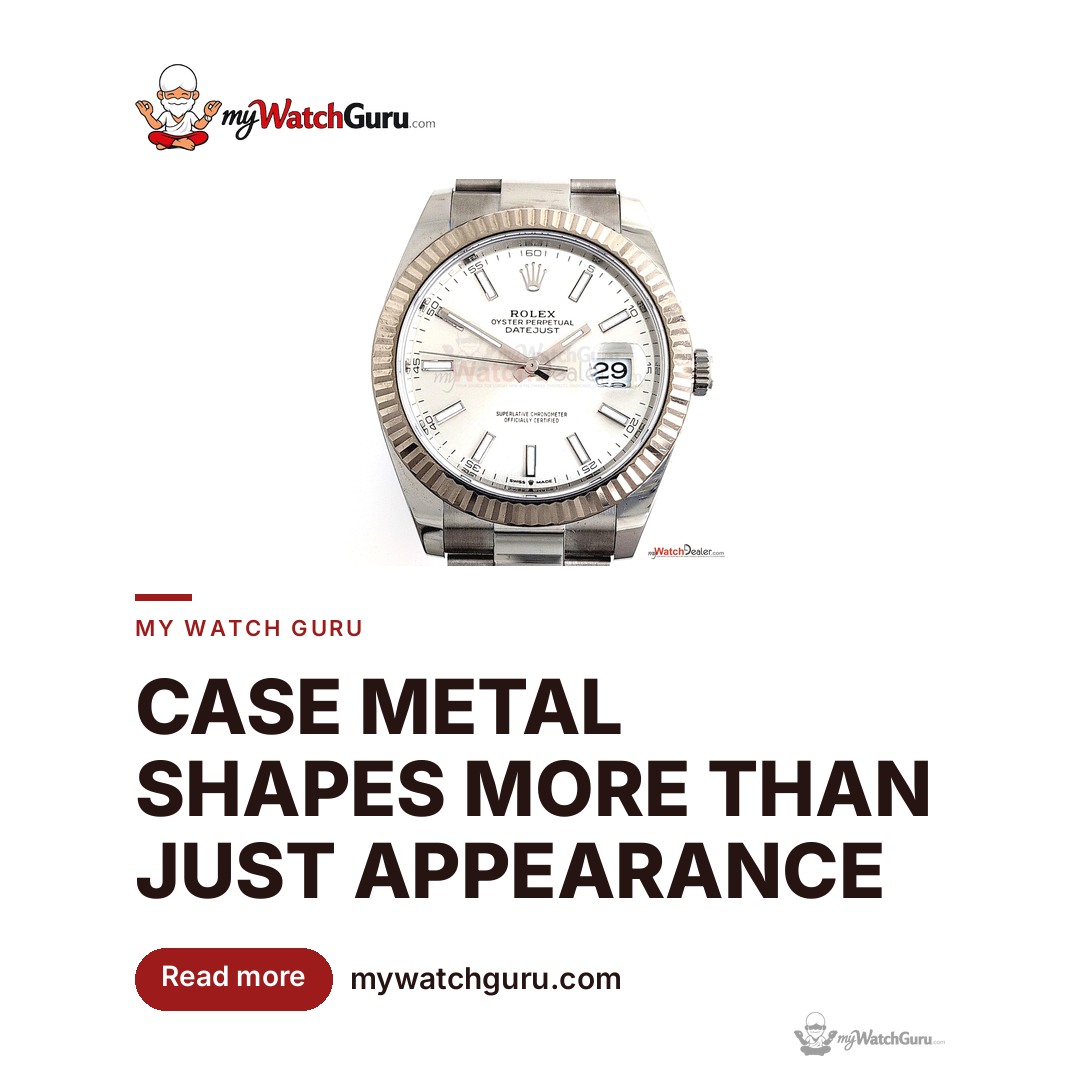
What metal you pick matters more than most buyers expect. It settles how the watch reads on your wrist day to day, what kind of care it asks for, and what kind of buyer is waiting on the other end when you eventually sell. Steel, yellow gold, rose gold, and two-tone each bring different trade-offs. None of them is wrong, but some of them are wrong for certain people.
Stainless steel is harder than gold alloys. It resists scratching better over daily wear, and when it does pick up marks, a light polish brings it back without removing meaningful metal. For a watch you plan to wear five or six days a week, steel is simply the easier choice to live with. That resilience shows up in the pre-owned market too: buyers shopping steel dress watches can often find a clean example more readily than a comparable gold watch in the same age range.
Steel's secondary market is also deep and liquid. Buyers are plentiful, pricing is transparent, and condition plays a significant role in what you recover, which rewards buyers who actually look after their pieces.
Solid gold cases are softer than steel, and that shows in wear. Yellow gold and rose gold pick up fine scratches more readily, and a full polish removes more material over time than the same treatment on a steel case. That matters less if you wear the watch rarely, or if you are buying a smaller dress piece rather than a daily driver.
What you gain is immediate visual weight. Gold reads differently in person than any photograph conveys, and the warmth of rose gold and the presence of yellow gold both signal a deliberate choice. You are not defaulting to a safe option when you go full precious metal.
Two-tone, meaning a steel case and bracelet combined with gold elements, gives you some of each material's character. The steel components handle daily wear reasonably well, and the gold elements contribute warmth and visual contrast without the full softness of an all-gold case. It is a look that was extremely popular through the 1980s and 1990s, and that history is baked into how two-tone pieces read stylistically. Some buyers love that association. Others find it dated. There is no neutral take on two-tone.
Whatever metal you choose, condition at resale matters. Gold watches, because of their softness, often show more wear than comparable steel examples of the same age. That can work in a buyer's favor when purchasing pre-owned, since heavy wear shows up visibly and tends to be priced accordingly. Selling a well-kept gold watch is perfectly achievable, but the pool of buyers is narrower than for steel.
Two-tone pieces attract a more specific buyer profile. A motivated buyer pays well for a clean example, but if you need to move a piece quickly, a two-tone in average condition can sit longer than a comparable steel or full-gold reference.
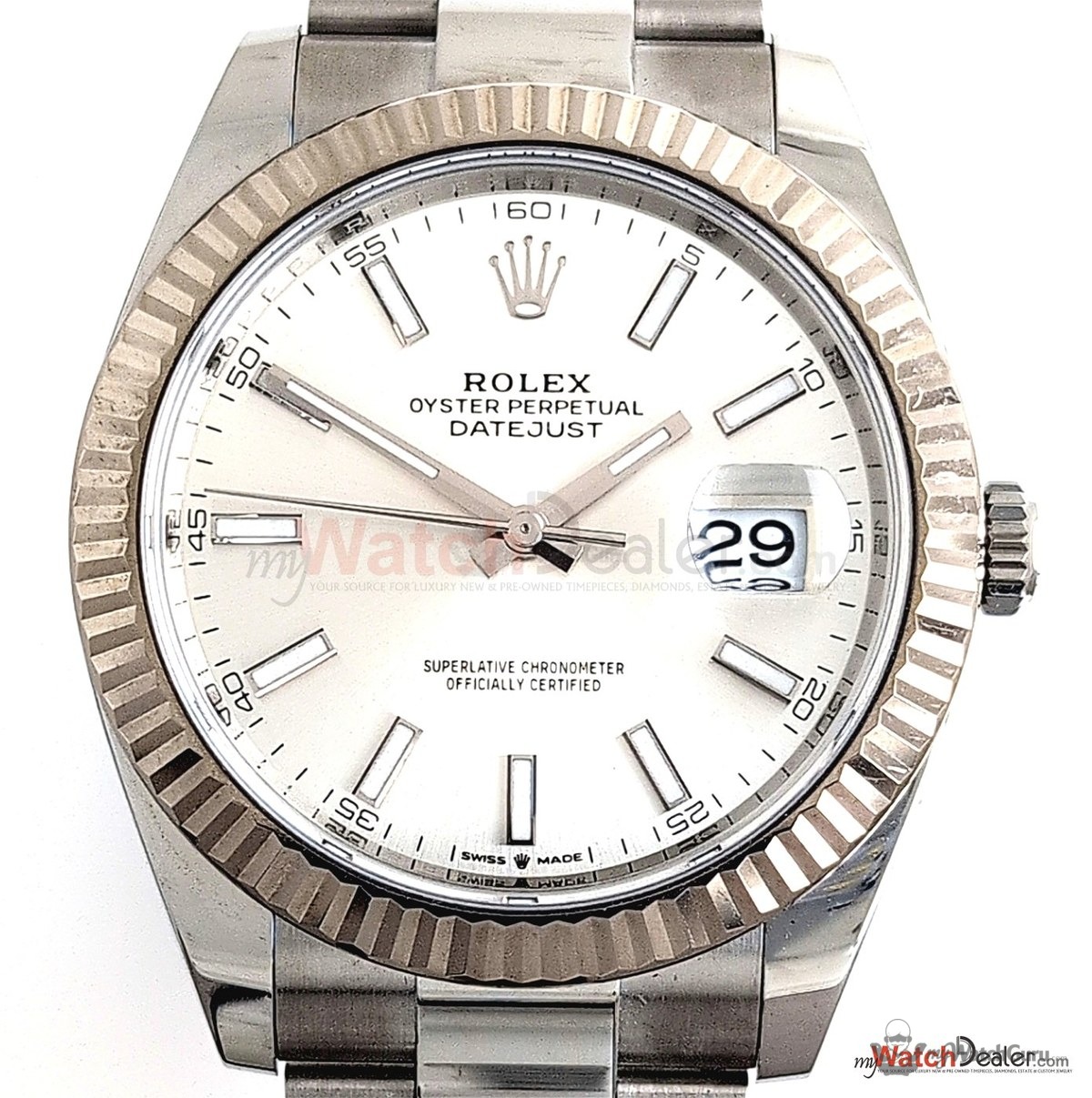
The Rolex Datejust ref 126334 is a 40mm steel Datejust from 2021, with a silver index dial, white gold fluted bezel, and Oyster bracelet, and it comes with papers. As a steel example from recent production, it puts the everyday argument in concrete terms: a dressy configuration built around a hard-wearing case, practical for daily use, and carrying documentation that strengthens its secondary market position. The white gold bezel adds refinement without committing the whole case to precious metal.
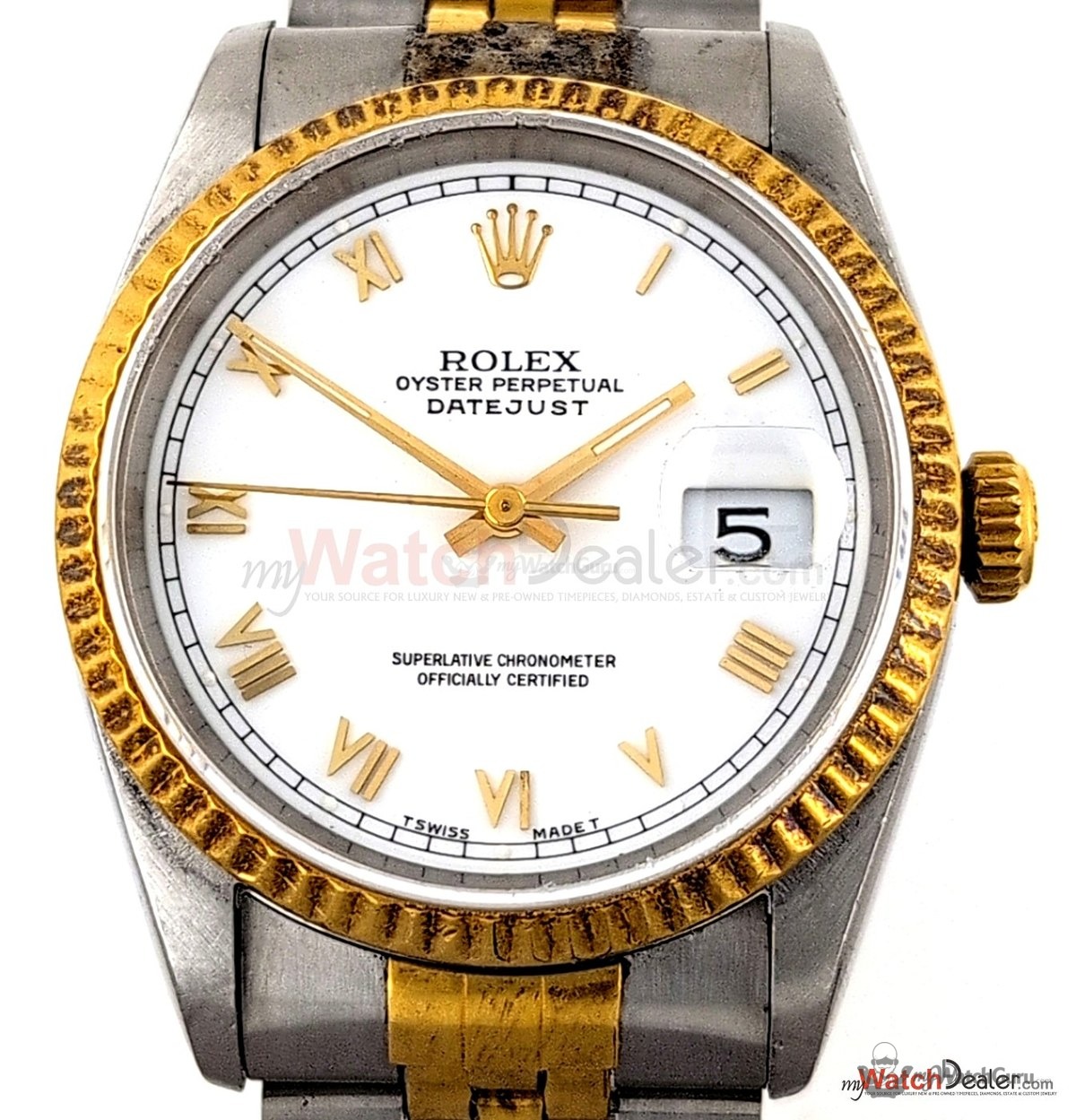
Dating to 1992, the Rolex Datejust ref 16233 is a 36mm two-tone Datejust in steel and yellow gold, with a white Roman numeral dial, yellow gold fluted bezel, and Jubilee bracelet. It is a period example of two-tone at the height of its popularity, and the Jubilee bracelet is the natural match for that combination. No box or papers, which is typical for a piece of this age. If the two-tone aesthetic is genuinely what you plan to wear, this reference shows it cleanly, without modification or aftermarket additions.
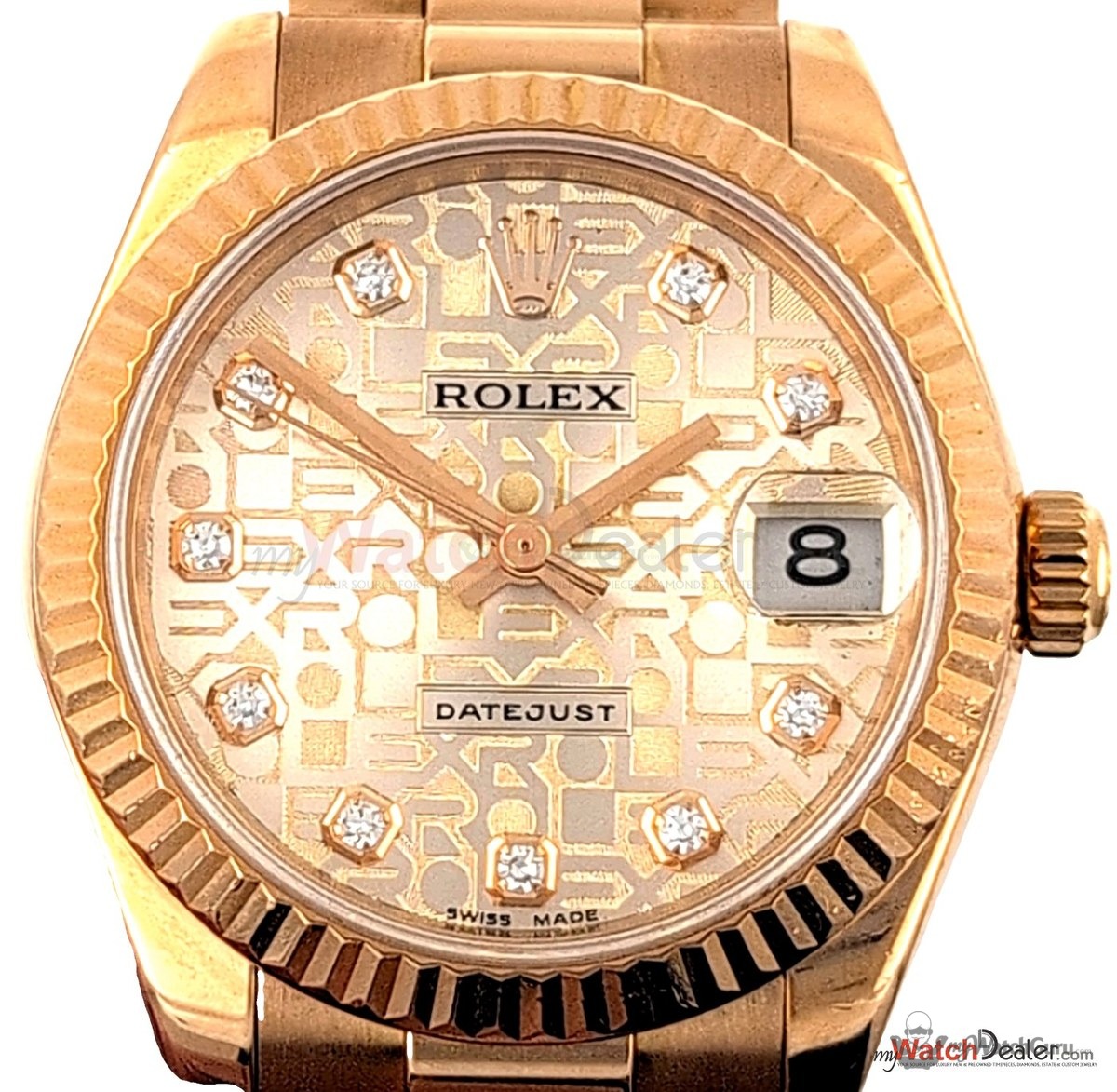
From 2003, the Rolex Datejust ref 178275 is a 31mm rose gold Datejust with a factory diamond-set silver Jubilee dial, rose gold fluted bezel, and President bracelet. This is the full precious-metal configuration: case, bezel, and bracelet all in rose gold, with a diamond dial installed at the factory. At 31mm it sits firmly in dress-watch territory, designed to be worn with intention rather than pulled out for every occasion. The softness of rose gold is a real maintenance consideration, though a piece configured this way is unlikely to be used as a daily utility watch. No box or papers, consistent with its age.
One question worth sitting with before you buy: how often will you actually wear the watch. A gold or two-tone piece that ends up sitting in a drawer because it feels too formal for most of your days is a poor trade against a steel watch you reach for every morning. The metal that fits your wardrobe, your schedule, and your honest tolerance for scratches is the right metal, regardless of what looks best in a photograph.
Sold through My Watch Dealer, our retail desk — full details, current price and purchase all happen there.
View this piece at My Watch Dealer ›