Values & guides
The ref. 6517 is a solid yellow gold Datejust from the 1940s that predates the 6917, and most buyers walk right past it.

Rolex's ref. 6517 sits at an odd position in the collector market. It is an early-era 26mm Datejust, a solid yellow gold watch from the mid-1940s that most buyers step right past on their way to the ref. 6917. The 6917 gets the attention, the forum threads, the Instagram posts. The 6517 gets ignored, which is unusual given what it actually is.
An earlier reference in production, the 6517 predates the 6917, and that matters more than most buyers realize. These are not the same case refined incrementally over time. The 6517 belongs to an earlier generation of the small Datejust, with a case profile and proportions that reflect when it was made.
Lug holes are a visible marker of the 6517's age. Early Rolex cases were drilled through the lugs to accept a spring bar, and that construction detail is specific to older references. Buyers who have only handled later Datejusts may not recognize what they are looking at when they encounter one.
Dial character from this period also differs from what later references offer. Early Datejust dials carry a quality that shows in photographs and becomes more obvious in hand: the depth of the printing, the way stick indices sit against the surface, the overall finish of a dial that belongs to an earlier era of production. This is not a later refinement of the same design.
Most buyers entering the 26mm yellow gold Datejust market search by reference number, and 6917 is the number they know. It appears in pricing guides, on auction records, in forum discussions. The 6517 appears far less often, partly because fewer examples surface and partly because most buyers do not know to look for it.
This creates a situation where the earlier reference can be evaluated without the competitive pressure that surrounds the 6917. That is not a reason to buy carelessly. It is a reason to study the reference before you decide what you are actually after.
Buying a watch from 1946 in solid yellow gold requires attention at several points. Case condition matters enormously: gold cases from this era have often been polished repeatedly over decades, and aggressive polishing rounds the lug lines and softens case edges in ways that cannot be corrected. Look at the lugs from above and from the side. The dial is equally important, since original dials from this period are fragile and many have been refinished over the years. A refinished dial changes the character of the piece and typically affects how collectors evaluate it. The movement will almost certainly need a service if it has not had one recently, and documentation of past services rarely survives for watches of this age. Beyond those points, check the crown: original crowns on early references are specific to the period, and replacements are common on watches that have passed through many hands.
Box and papers are almost never present for 6517 examples. These watches are old enough that expecting original documentation is unrealistic, and their absence is reflected in how the market treats them.
Available right now, the Rolex Datejust ref 6517 is a 26mm solid yellow gold example from 1946 with a champagne stick dial and fluted yellow gold bezel, sold as head only with no box or papers. The lug holes are present, consistent with the reference and confirming an early production case. For a buyer who wants to understand what a mid-1940s small Datejust actually looks like in hand, this piece is a direct answer. The champagne stick dial is a clean, period-correct configuration, and the fluted bezel is appropriate to the era. At roughly eighty years old, used condition is exactly what you would expect.
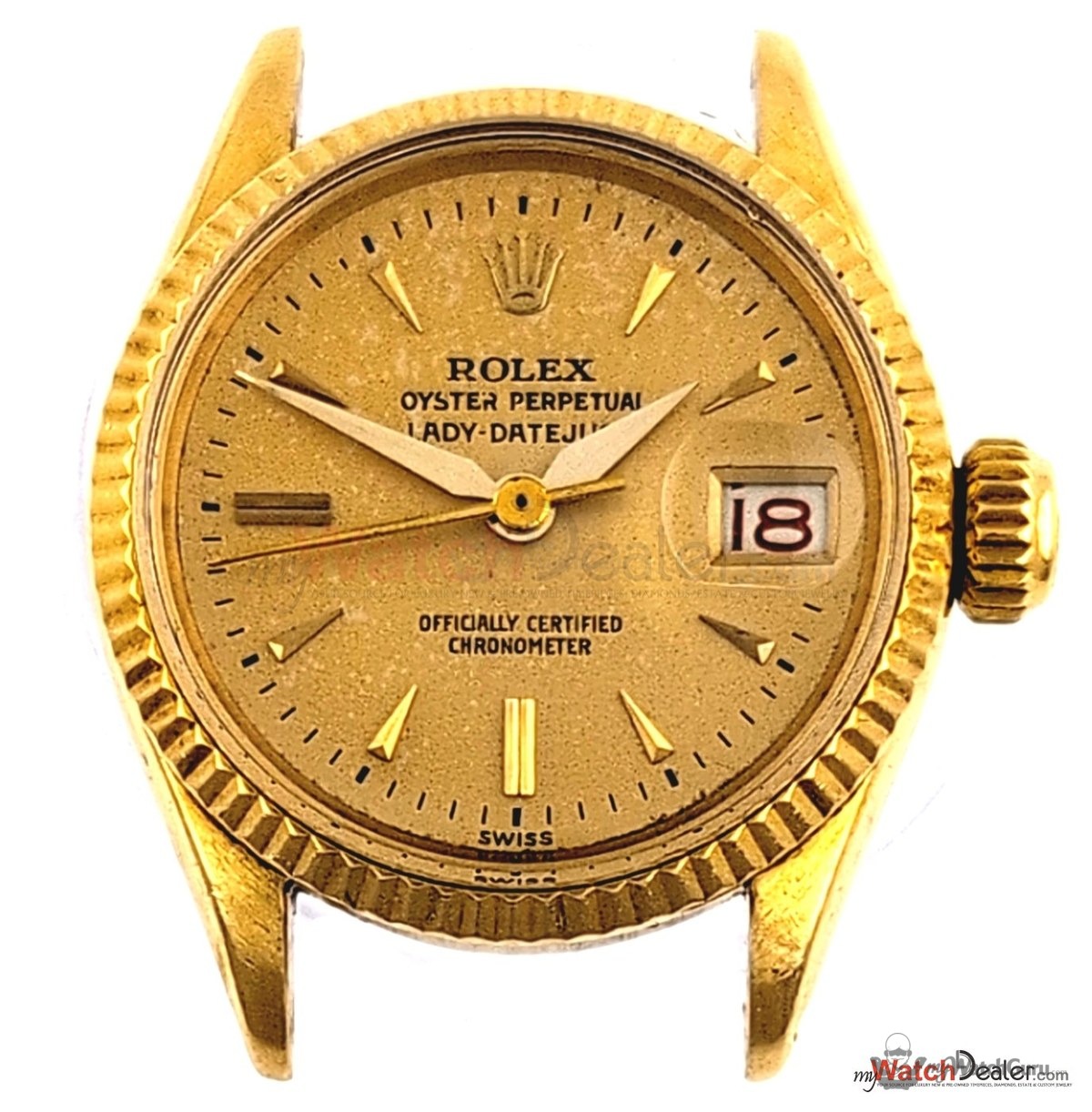
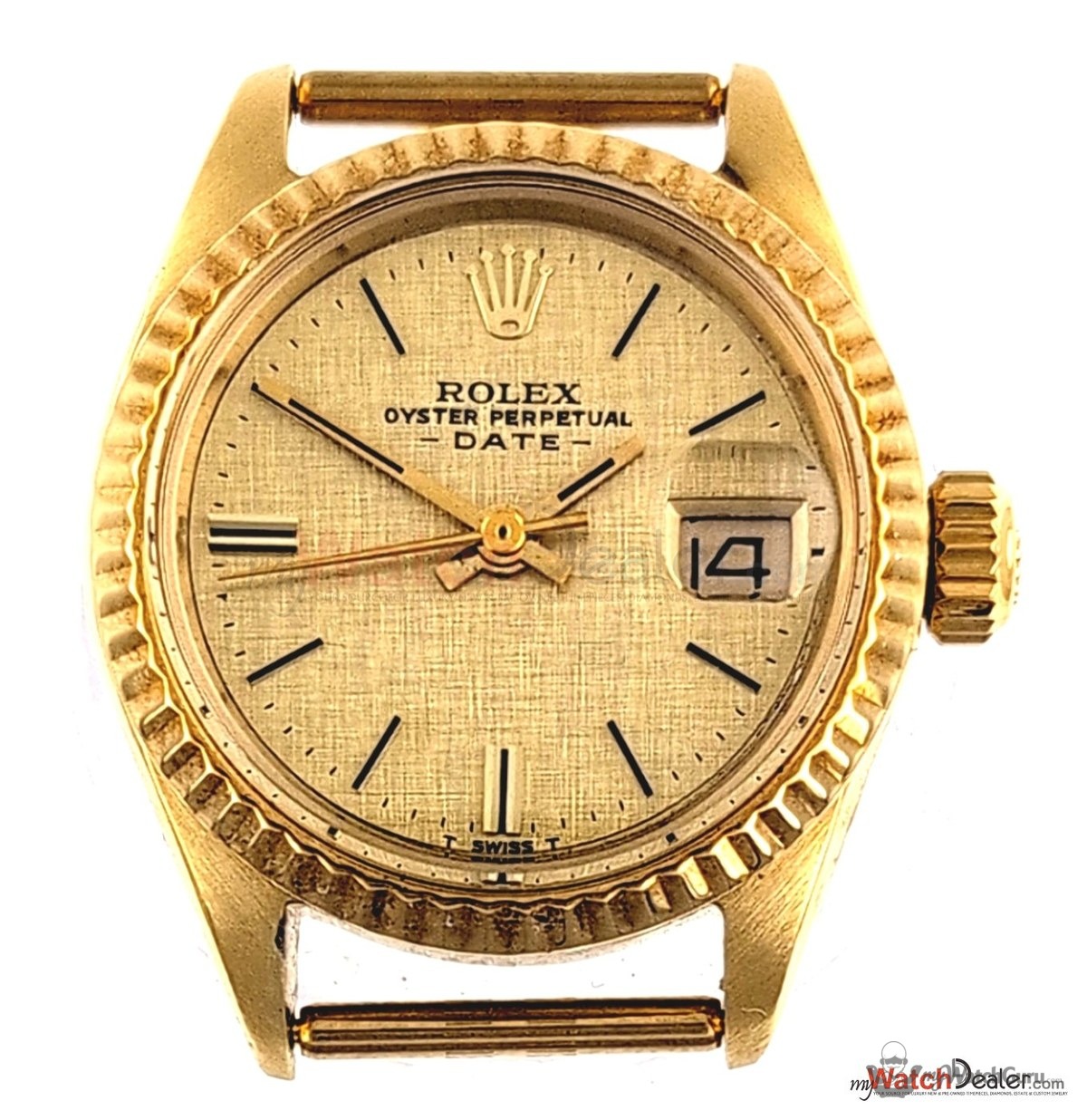
Also in stock, the Rolex Datejust 26 Non Quick from 1956 is a ref. 6917 that offers a useful point of comparison. This is also 26mm yellow gold with a fluted bezel and head only, but it carries a champagne linen stick dial. The linen texture is a specific feature of this production period and one that some collectors seek out deliberately. Placing it alongside the 1946 6517 makes the differences in dial finish and overall character visible rather than abstract.
A second 6917, the Rolex Datejust 26 Non Quick Lady President from 1978, is also in stock. Same basic configuration: 26mm yellow gold, fluted bezel, champagne stick dial, head only with no box or papers. A 1978 case is more than thirty years newer than the 6517, and that difference shows in the case proportions and finishing standards of the period. It is the same reference family across a meaningfully different era of production, and seeing it next to the earlier pieces clarifies how much the small Datejust changed over time.
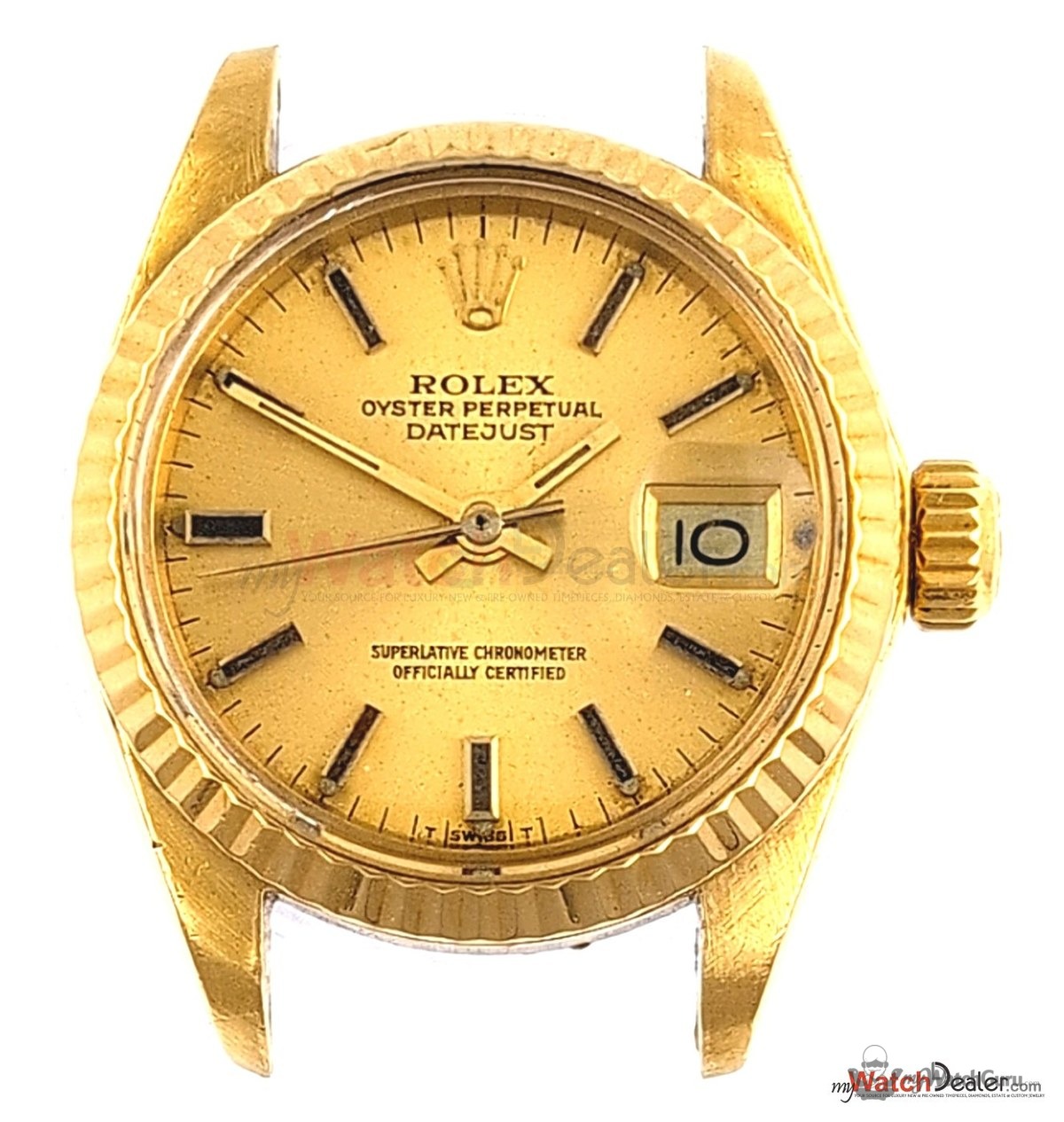
Seeing all three together makes the comparison concrete. The 6517, the early 6917, and the late 6917 represent distinct generations of what most buyers treat as one category.
Ref. 6517 is not for every buyer. It needs a service budget, it comes without documentation, and buying well requires knowing the reference in some depth before you pursue one. For the buyer who does that work, it is a solid yellow gold watch from 1946 that the market has largely overlooked relative to its age.
Sold through My Watch Dealer, our retail desk — full details, current price and purchase all happen there.
View this piece at My Watch Dealer ›