Values & guides
The ref. 1600 is the smooth-bezel Datejust that buyers keep skipping, and understanding why it trades lower than the 1601 is the whole point.

The Datejust ref. 1600 doesn't get the same conversation as its sibling, the 1601. The smooth-bezel configuration is what most people associate with the 1600, and against the fluted white gold bezel of the 1601, it reads as the plainer choice. For a lot of buyers, that's enough reason to scroll past. It shouldn't be.
Functionally, the two references differ only in the bezel. Both carry the same 36mm Oyster case, both use the same generation of non-quick-set movement, and both came on Jubilee or Oyster bracelets. Strip out the bezel and you're buying the same watch at different market levels. The 1600 has been trading lower than the 1601, not because it's inferior, but because fewer buyers know it well enough to seek it out.
That gap makes the evaluation process matter more, not less. A well-preserved 1600 that hasn't been over-polished is a genuinely good watch. A rough one that's been buffed flat and has a damaged crystal is a restoration project. Knowing which you're looking at before you pay is the whole game.
Crystal first. These watches left the factory with acrylic crystals, and the cyclops magnifier over the date is also acrylic. Scratches on the main crystal are usually polishable, but inspect the cyclops closely. Crazing, deep gouges, or a poorly-matched replacement will affect both appearance and originality. Replacement crystals are available from aftermarket suppliers, but an unmodified original in reasonable shape is preferable.
Case sharpness comes next. Vintage Rolex cases accumulate polishing over decades, and it's irreversible. You want to see lugs with some definition still present. Edges gone completely flat mean the case has been refinished aggressively, which is a meaningful loss on a watch this age. Some gentle wear and rounding is expected and honest on a piece from the late 1950s through the mid-1970s. Total obliteration of the lug profile is a different matter.
Dial integrity matters considerably on any vintage Datejust. Original dials with honest patina are worth more than refinished examples. Look for consistent aging across the surface, no lifting on the applied indices, and no evidence of touch-up work. Refinished dials trade at a discount for good reason, and a careful look under decent light usually tells the story.
Setting the date on a ref. 1600 requires pulling the crown to the first position and advancing it one day at a time. That's a generational feature, not a defect. What matters more is whether the movement has seen a service within a reasonable period. These calibers are well-understood by watchmakers and parts remain available, but a watch that has been sitting for years may need attention before it keeps reliable time.
Box and papers are absent on all three examples discussed below, which is completely normal for watches from this era. Finding a 1600 with original documentation is uncommon. The absence doesn't affect wearability or movement quality, but it does affect resale liquidity, so factor that in accordingly.
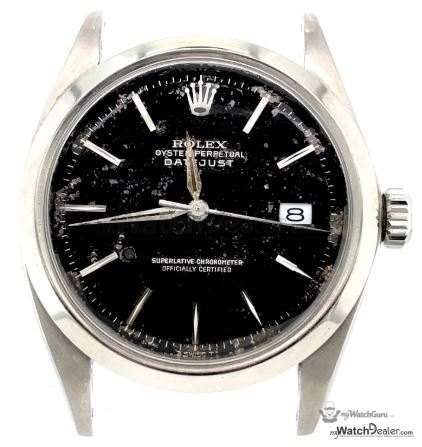
The Rolex Datejust ref 1600 from 1958 is the most direct example of what this reference is known for: a 36mm steel case with a smooth polished bezel, black stick dial, and Jubilee bracelet. Dating to 1958, it sits near the early end of the production run and carries exactly the clean, unadorned look that defines the smooth-bezel 1600. No box or papers, as expected for something this age. The smooth bezel configuration is precisely what tends to trade below equivalent 1601 examples at market, which makes checking condition details on this one especially important before committing.
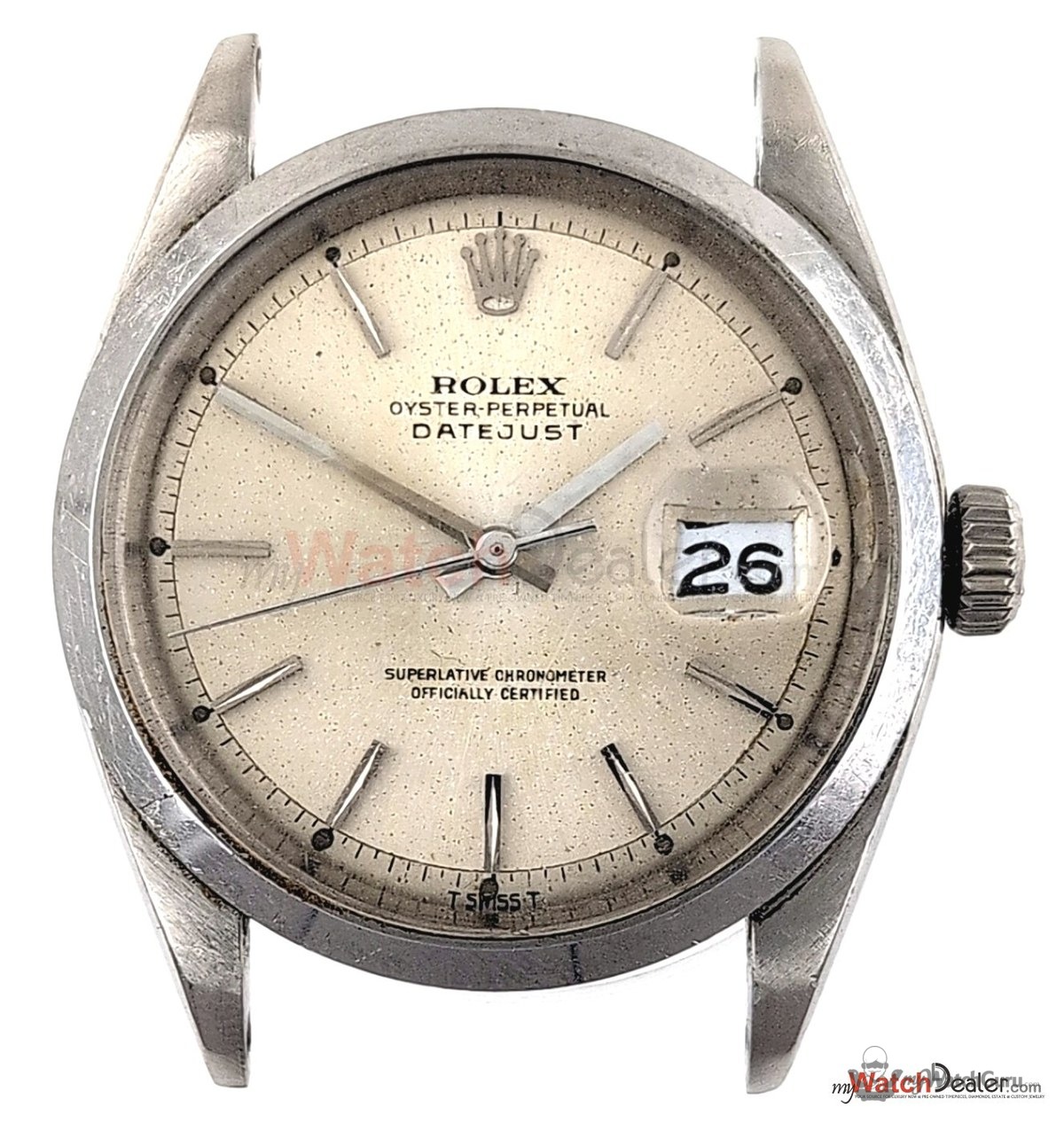
Dating to 1969, the Rolex Datejust ref 1600 with silver stick dial pairs a fluted white gold bezel with a 36mm steel case and is listed as head only, meaning no bracelet is included. That's worth pricing out separately before you commit. The silver dial gives this mid-production example a dressier tone than the smooth-bezel version, and the 1969 date places it in the well-established middle years of the reference's production run. Worth examining the dial surface carefully for any evidence of refinishing.
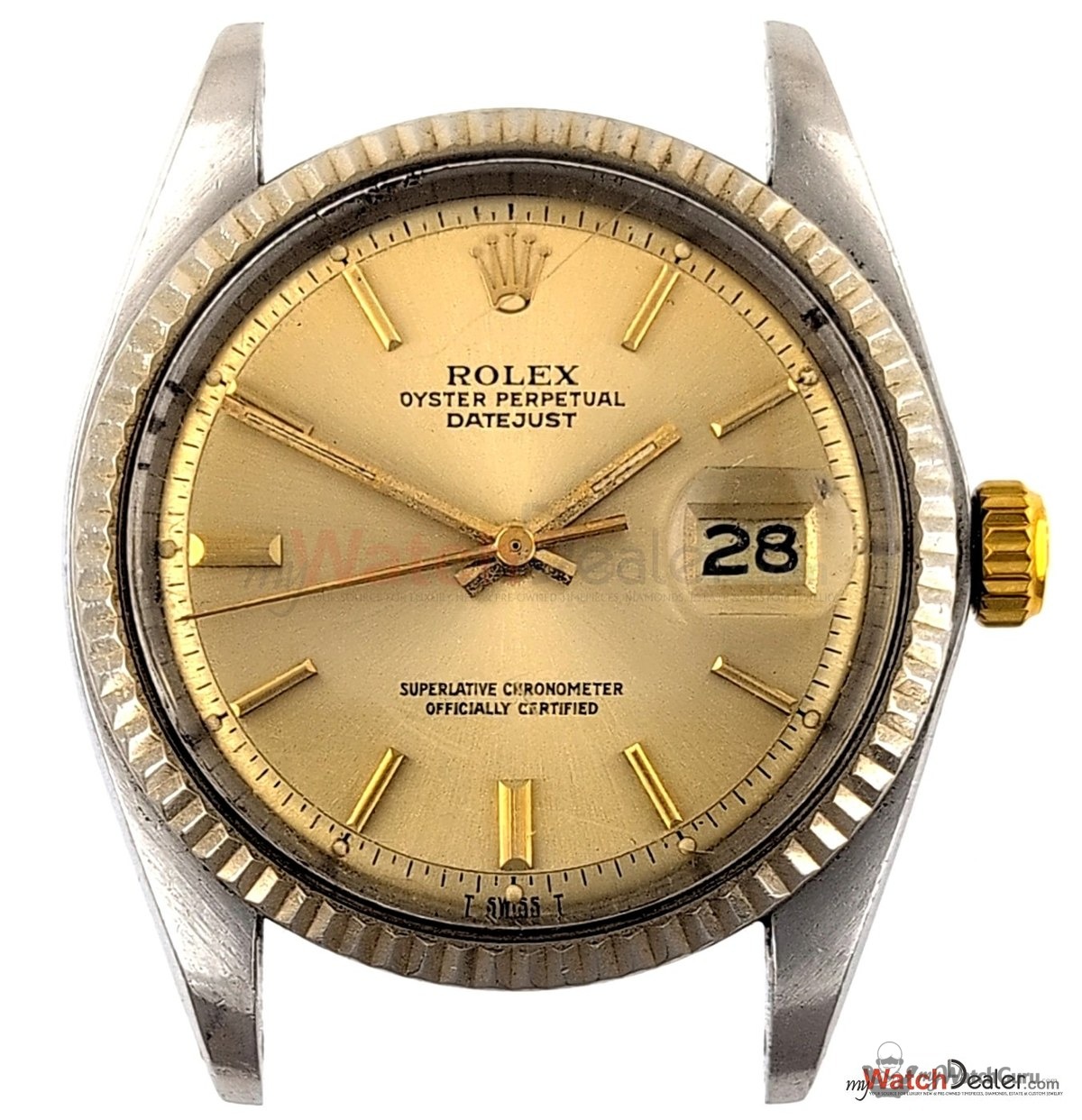
From 1974, the Rolex Datejust ref 1600 with champagne dial pairs a champagne stick dial with a fluted white gold bezel, also listed as head only. Champagne dials tend to develop more visible character with age than silver and are worth examining closely under good light to understand where this one sits in terms of patina and originality. All three watches are used condition, no box, no papers, and each one rewards the kind of methodical evaluation the checklist above describes.
Sold through My Watch Dealer, our retail desk — full details, current price and purchase all happen there.
View this piece at My Watch Dealer ›