Values & guides
The steel-and-yellow-gold ref. 1601 is rarer than its all-steel counterpart but often prices similarly. Here is what separates the two configurations.

Most buyer guides treat the Rolex Datejust ref. 1601 as a single category. They note the 36mm Oyster case, the non-quickset movement, the fluted bezel, and move on. What they tend to gloss over is that the 1601 came in a two-tone configuration, steel case with yellow gold accents, that produced a distinctly different watch in appearance and, to some degree, in collectibility. The distinction matters if you are shopping for one.
The ref. 1601 ran through the 1960s and into the mid-1970s. In its all-steel form, the fluted bezel is white gold, which reads as silvery and subtle against the steel case. In the two-tone variant, the bezel is yellow gold, and that warm contrast is the whole point of the configuration. The difference is immediately visible and entirely intentional. Some buyers find the yellow gold accent dated; others think it captures exactly what a dress watch from that era should look like.
Yellow gold on a two-tone 1601 is limited to specific components, primarily the bezel and, when the watch is on its original Jubilee or Oyster bracelet, the center links. On a head-only purchase, what you are evaluating is essentially the bezel and its relationship to the case and dial. The fluted pattern on a yellow gold bezel shows wear differently than white gold. It can develop a soft, slightly burnished look over decades, and well-preserved examples with crisp fluting are less common than the worn versions that circulate regularly.
Condition of the bezel matters considerably. Heavy polishing flattens the flutes and removes the visual detail that makes the bezel worth having in the first place. When evaluating any two-tone 1601, the bezel is the first thing to examine carefully.
Champagne dials and silver dials were both available across the production run, and they age differently. Champagne dials tend to deepen slightly over time, which can work in their favor visually. Silver dials can develop patina or show fading that reads as uneven. Neither outcome is universal. Storage conditions, exposure to light, and humidity all play a role, which is why examining actual photographs matters more than reading a description.
Three two-tone ref. 1601 examples are currently at My Watch Dealer, spanning a meaningful portion of the reference's production run.
A Rolex Datejust ref. 1601 from 1962 in steel and yellow gold, with a silver stick dial and fluted yellow gold bezel, is the earliest of the three. This is a head-only example without box or papers, which is standard for a watch of this age. The silver dial on a piece from 1962 is worth examining closely for patina and any signs of uneven aging. Finding a confirmed two-tone 1601 from this early in the reference's production is genuinely uncommon, and the combination of silver dial against yellow gold bezel gives it a cooler, more restrained character than the champagne-dialed examples.
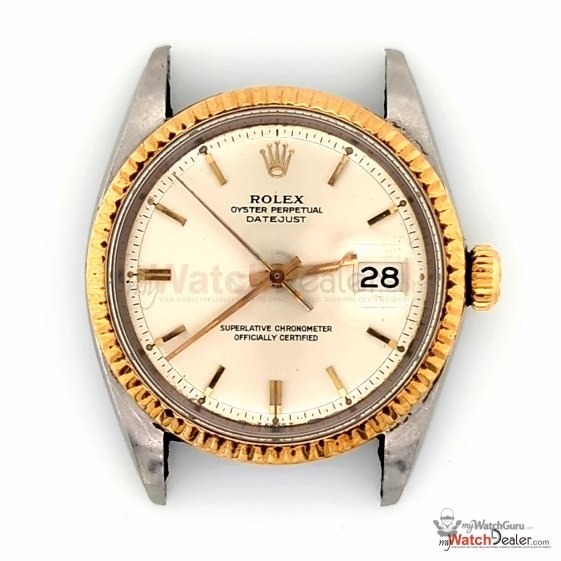
From 1968 comes a Rolex Datejust ref. 1601 in steel and yellow gold with a champagne stick dial and fluted yellow gold bezel. This one comes with original papers, which is notable for a watch approaching 60 years old. Documentation of this kind almost never accompanies a 1601 from this period, and its presence adds a layer of provenance that the other examples here cannot offer. Listed as head only, the focus is on the case and dial. The champagne dial pairs naturally with the yellow gold bezel, and the plastic crystal typical of this era is period-correct rather than a shortcoming.
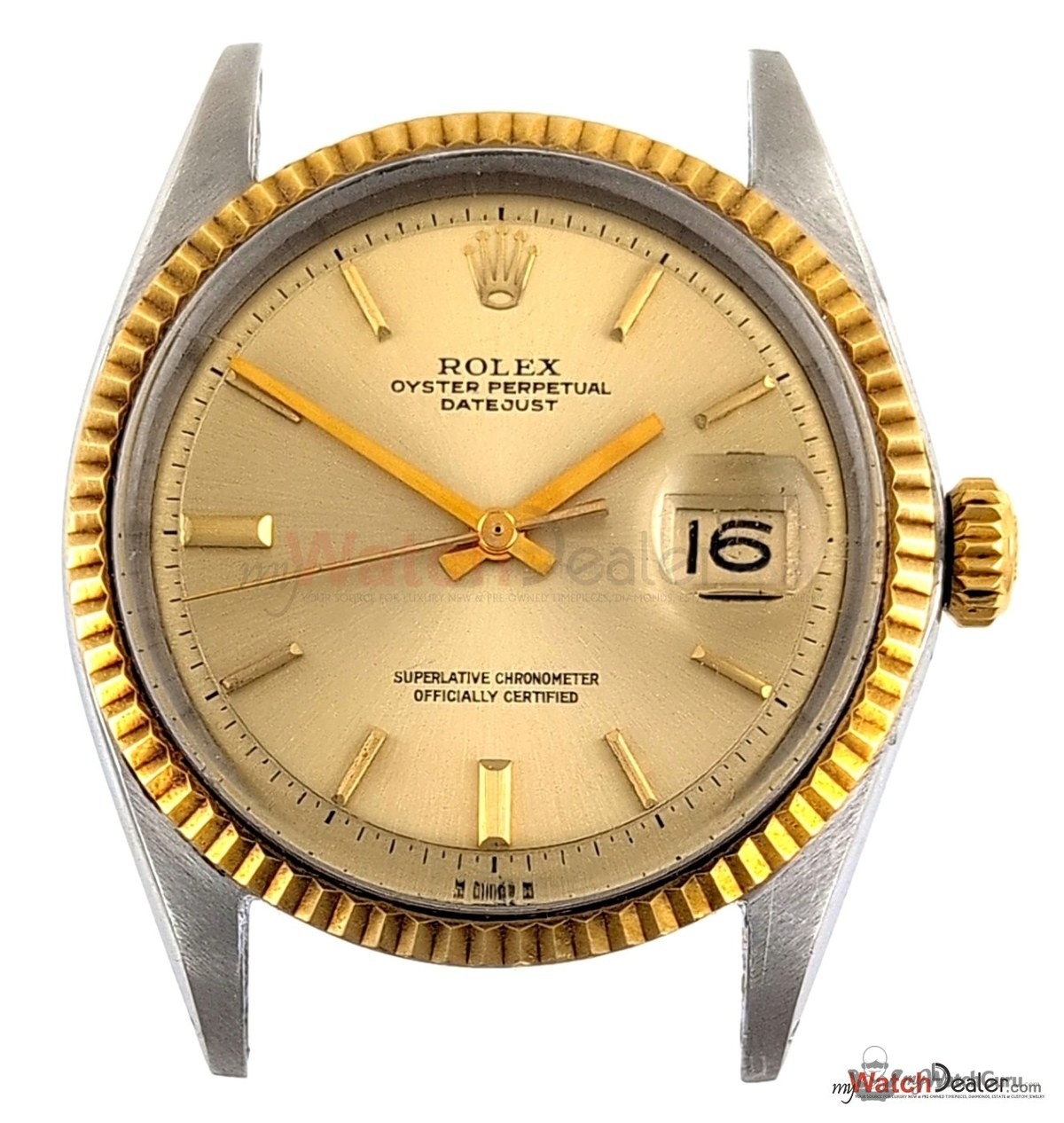
Rounding out the group is a Rolex Datejust ref. 1601 from 1970 in steel and yellow gold with a champagne stick dial and fluted yellow gold bezel. No box or papers, head only. The 1970 date places it in the later portion of the reference's run, when the specification was well established. A champagne dial from this period typically holds its color evenly, and paired with the yellow gold bezel, the overall presentation is coherent and intentional in the way that two-tone watches from this era tend to be when they have not been over-polished or altered.
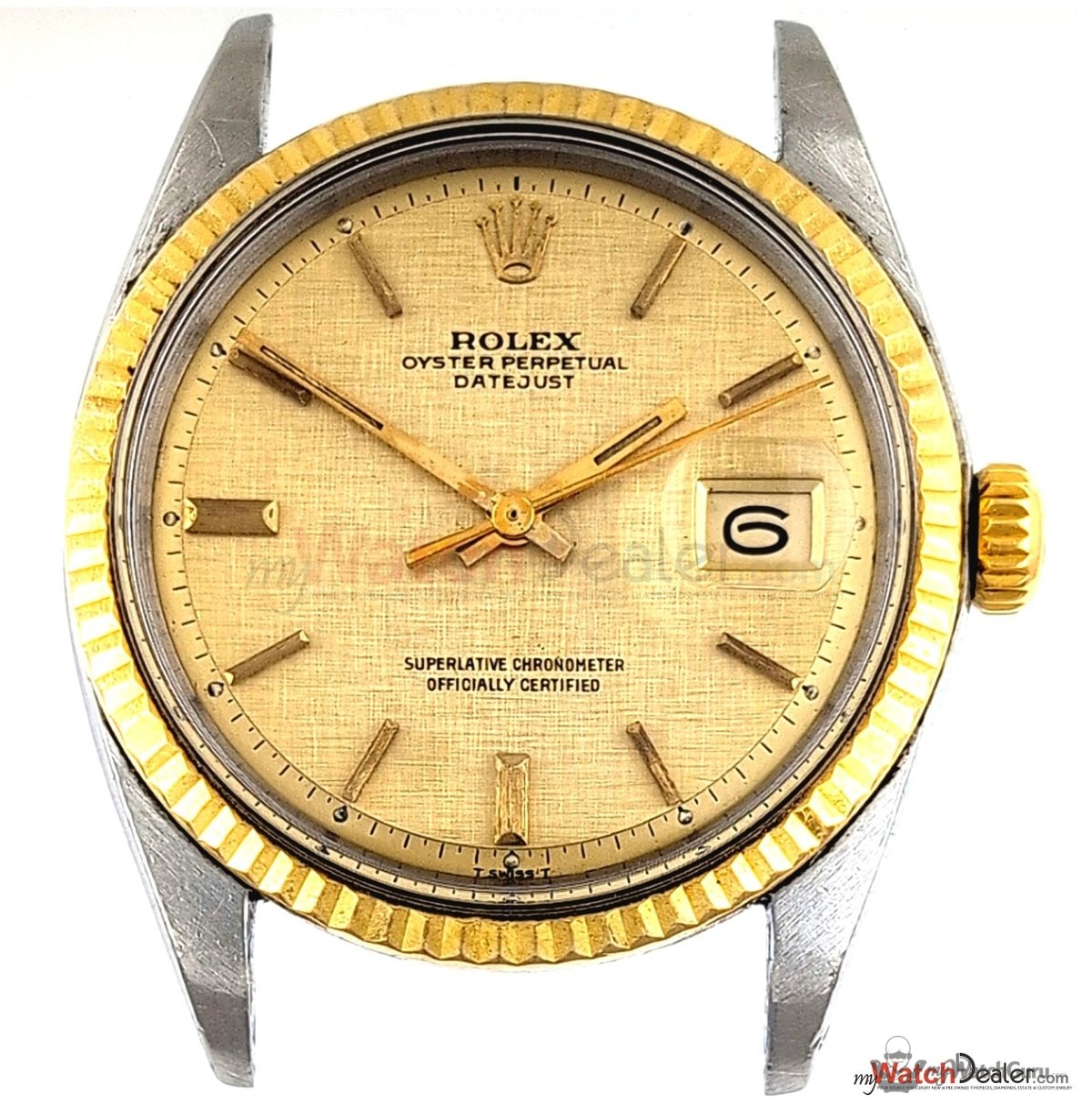
Part of it is taste. The yellow gold accent appeals to a specific buyer, and the pool of collectors actively seeking a two-tone 1601 over an all-steel version is smaller than the market for the plainer configuration. That narrower demand keeps prices from reflecting the relative scarcity. For a buyer who genuinely wants the look, the two-tone 1601 can represent reasonable value at market. For a buyer indifferent to the gold or who mildly prefers steel, there is no reason to seek it out.
The watch was designed to be worn, and the gold accent is an aesthetic decision made at the factory, not an upgrade applied later. Whether it is worth seeking out depends entirely on whether you actually want it on your wrist.
Sold through My Watch Dealer, our retail desk — full details, current price and purchase all happen there.
View this piece at My Watch Dealer ›