Values & guides
Steel and gold age at different speeds. Here is what that means for a two-tone Rolex, with three real examples from stock.
A two-tone Rolex pairs stainless steel with gold. Rolex calls the combination Rolesor, and it comes with yellow gold or with rose gold, which Rolex names Everose. The gold usually sits on the bezel, the crown and the center links of the bracelet, while the case and the outer links stay steel.
The mix is practical as much as it is decorative. Steel takes daily knocks well. The gold adds warmth and a dressier look without turning the whole watch into a solid-gold piece that you would be nervous to wear to the grocery store. On a genuine piece the gold sections are solid gold, which is worth confirming on any listing you are considering.
Gold is softer than steel. That is basic metallurgy, and it shapes how a two-tone watch looks after years on a wrist. Fine scratches gather on a fluted bezel and on polished gold links faster than they do on the steel around them. Steel scratches too, but it takes longer, and a brushed steel surface hides marks well.
None of that makes two-tone a poor choice. It means the watch wears at two speeds, and the gold parts tell the story first. Some owners like the lived-in look. Others send the watch for a refinish, and the trade-off is that polishing removes a small amount of metal each time. So ask what has been done to a watch before you buy it, and look at how sharp the edges of the fluting still are.
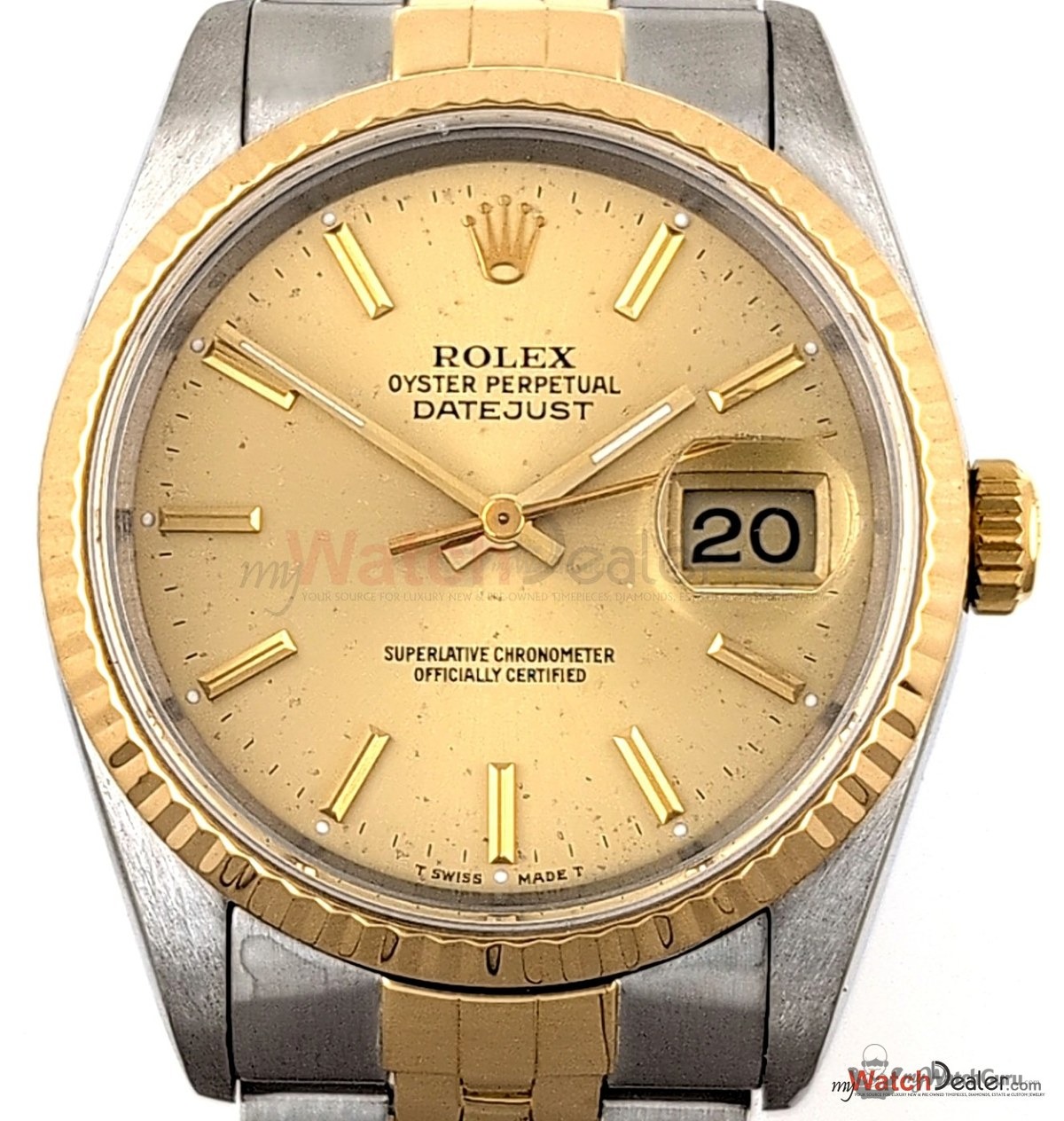
The Rolex Datejust 36 ref. 16233 is a 1990 steel and yellow gold watch with a champagne index dial and a Jubilee bracelet. This reference has a sapphire crystal, which resists scratches far better than the acrylic used on older Datejusts. At 36mm it wears the way most people picture a classic Datejust.
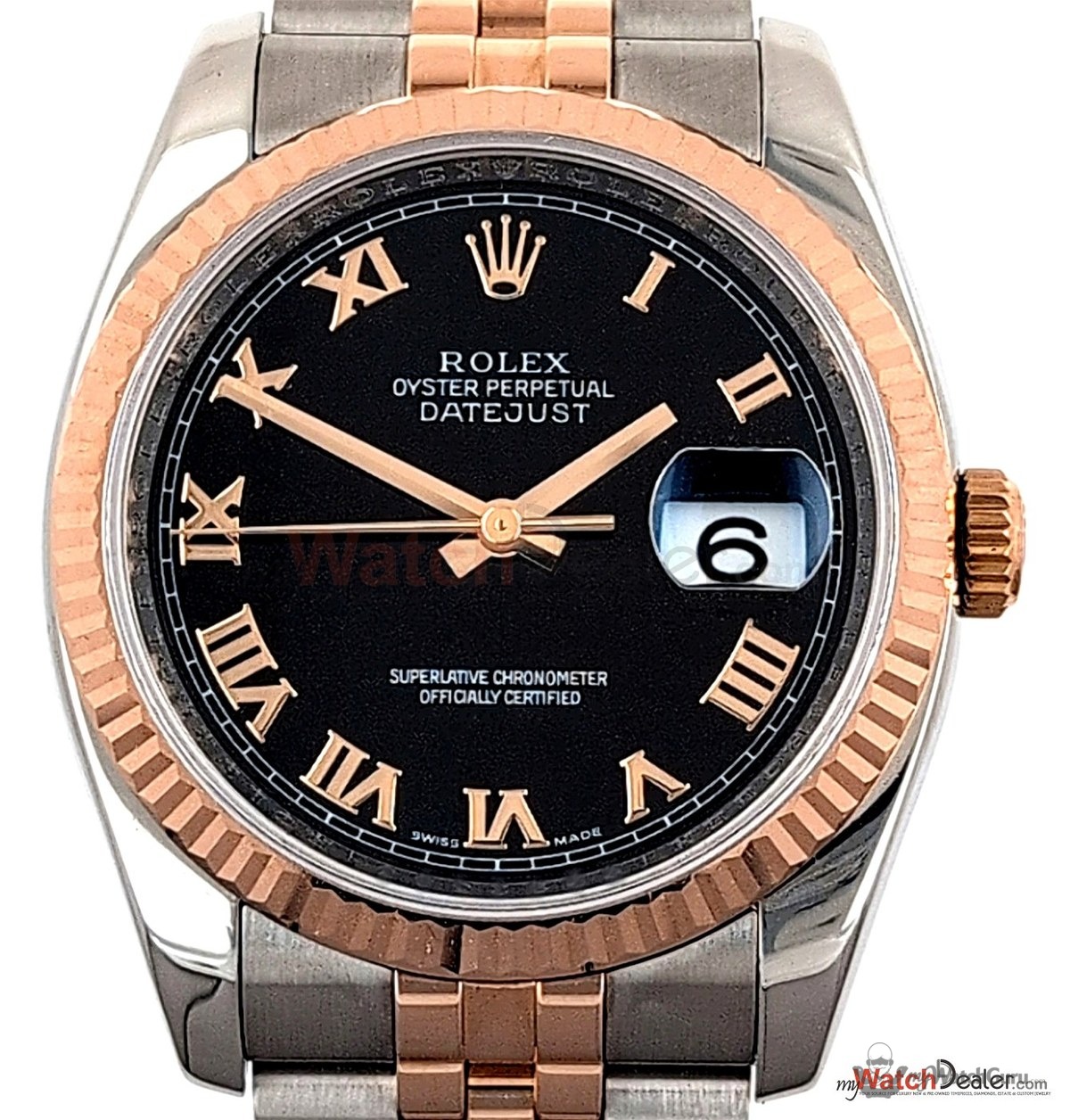
The Rolex Datejust 36 ref. 116231 dates from 2008. It swaps yellow gold for rose gold and pairs it with a black dial and Roman numerals. Rose reads warmer and a little less obvious than yellow, which suits buyers who like the idea of two-tone but not the traditional look. It is listed as used, and the condition notes on the page are the place to see what that means for this specific watch.
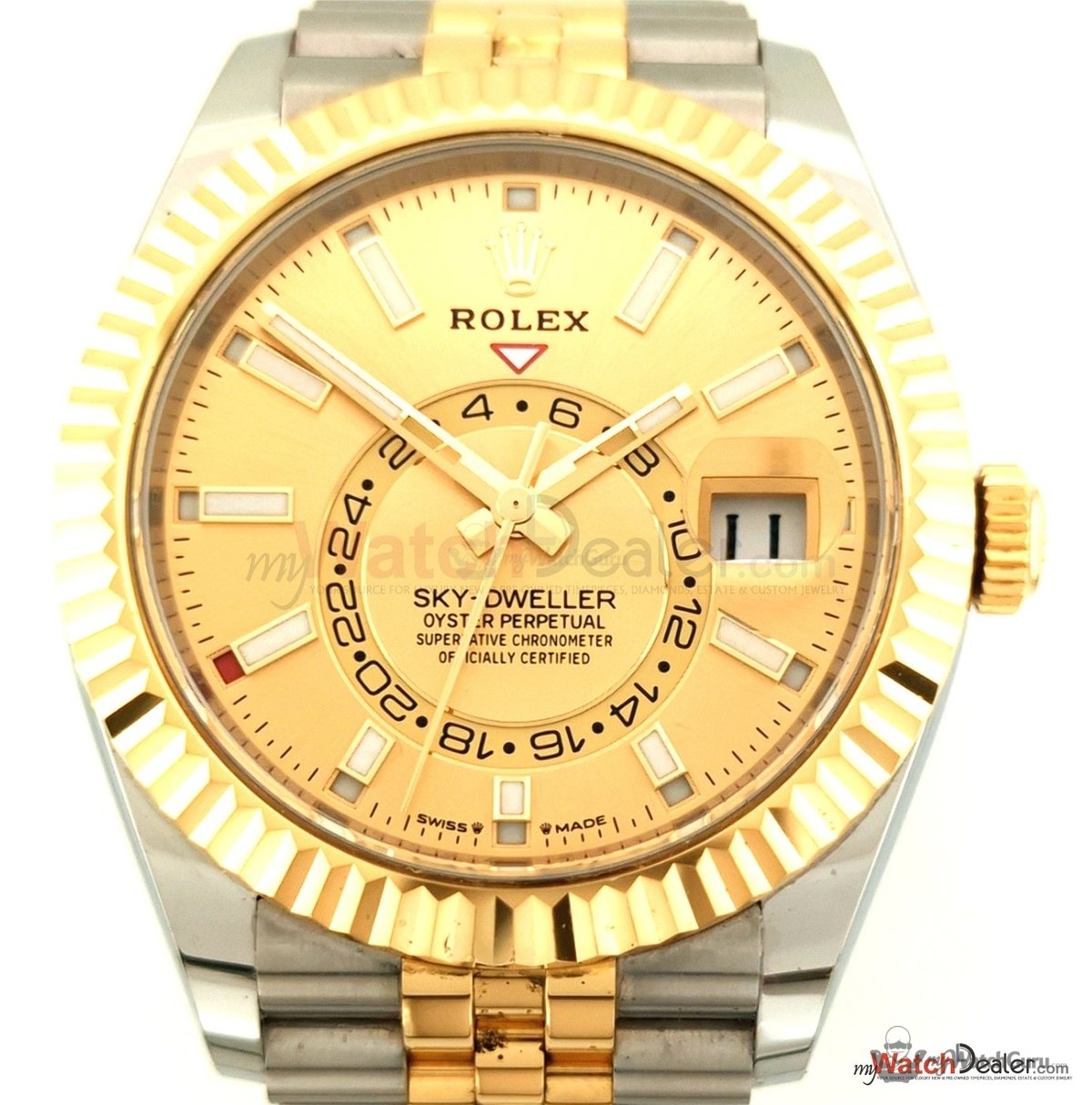
The Rolex Sky-Dweller 42 ref. 336933-0002 sits at the other end. It is a 2025 watch in like-new condition, with box and papers, in steel and yellow gold with a champagne dial. The fluted bezel on a Sky-Dweller is part of how you set the watch, so it is a working component and not only trim. At 42mm it has far more presence than the two Datejusts, and that is worth testing on your own wrist.
If one watch has to go to the office and to dinner, two-tone covers both without a change. If your days are rough on a watch, with tools, gym sessions or small children, steel will keep looking newer for longer, and an all-steel model may suit you better. If you rotate through several watches, a two-tone earns its place as the dressed-up one and takes less abuse anyway.
Size and dial matter as much as metal. A 36mm case with a champagne dial reads classic and formal. A 42mm case in the same metals reads sportier and heavier. Try the size before you settle on the shade of gold.
Start with the bezel. The flutes should have crisp edges, and rounded ridges usually mean the piece has been polished more than once. Move to the bracelet next. Stretched links rattle and sag, and the gold center links are where wear tends to show first. If box and papers come with the watch, check that the reference on the papers matches the reference on the watch. Ask for any service history, and ask the seller to put the condition grade in writing.
Each of the three watches above has photos and full condition notes on its product page at My Watch Dealer, an independent retail desk. Read those before you decide which shade of gold you actually want.
Sold through My Watch Dealer, our retail desk — full details, current price and purchase all happen there.
View this piece at My Watch Dealer ›