Values & guides
A 1960s Datejust is genuinely appealing, but water resistance, service parts, bracelets, and case condition all work differently than on a modern piece.

The question comes up constantly: can you wear a vintage watch every day, or does that defeat the purpose of owning something rare? The honest answer is that plenty of people wear vintage watches daily without incident. The more useful answer is that doing so requires a clear-eyed look at what you are actually signing up for, and where a modern equivalent just works differently.
A 1960s Rolex Datejust was built to a water-resistance standard that made sense at the time. The problem is that the gaskets responsible for maintaining any seal are rubber or neoprene compounds that degrade over decades. A vintage Datejust that has not been recently serviced by someone who replaced those seals should be treated as not water resistant at all. That means rain, handwashing, and anything splashier than a dry desk become genuine considerations. A modern Rolex ships with gaskets rated to current specifications and a service cadence that keeps those seals functional. A good watchmaker can replace vintage gaskets and restore some protection, but doing so is an ongoing maintenance commitment, not a one-time fix.
Ref 1601 carries what Rolex called a non-quick-set movement. To change the date, you pull the crown and wind it through the hours until the date flips. That works fine if you never take the watch off, but it becomes mildly tedious when you return from a long weekend or forget to wear it for a day. Modern references use a quick-set date mechanism where pulling the crown to the first position advances the date directly. On a daily wearer, that small difference adds up across a year of use.
Parts for the older calibers used in watches like the ref 1601 are still available through specialist watchmakers, but sourcing them takes more effort than sourcing parts for movements Rolex is still actively supporting. Service costs and lead times can reflect that. Worth asking a watchmaker for an honest assessment before you commit.
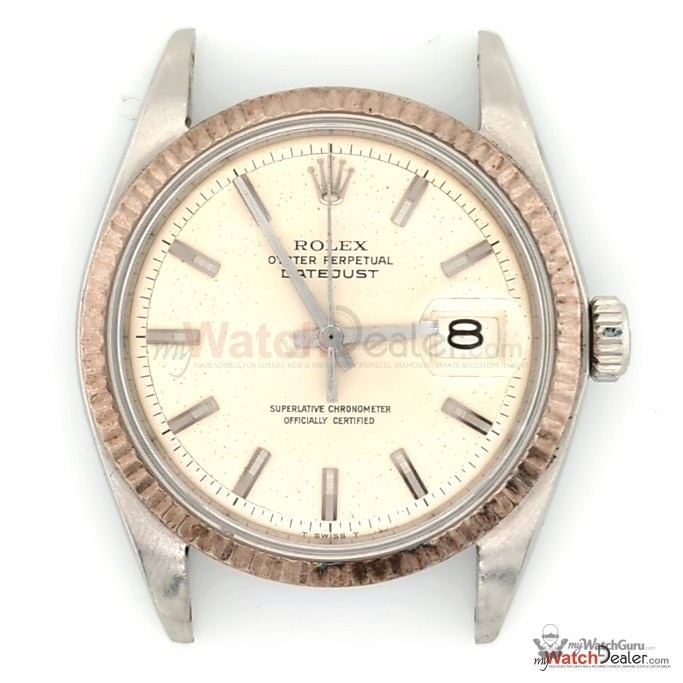
When a listing says head only, it means you are buying the case and movement, and the bracelet question is entirely yours to solve. For a 1967 Datejust, a period-correct bracelet in the right end-link configuration for that reference is a separate hunt. Aftermarket options exist, but fitting them correctly and keeping the right proportions for a 36mm vintage case takes research. A modern Datejust purchased with its Oyster bracelet already attached avoids that problem entirely: the bracelet is sized, fitted, and correct for the reference from day one.
A used vintage watch from 1967 has lived nearly sixty years. The question is not whether the case shows wear but whether that wear adds character or signals neglect. Lugs thin with repeated polishing. Brushed surfaces that get buffed smooth lose the contrast the factory intended. When you look at a vintage piece as a daily wearer, the case condition at purchase is roughly what you will have going forward, because a daily wearer accumulates new marks quickly. On a modern watch purchased in used condition from a recent year, you are starting from a much shallower baseline of wear.
At 36mm and dating from 1967, the Rolex Datejust ref 1601 is a steel watch with a silver index dial and a fluted bezel, coming head only with no bracelet, no box, and no papers. That configuration puts every one of the vintage daily-wearer questions front and center. Finding a correct bracelet, confirming the gaskets are fresh, living with the non-quick-set date mechanism: these are the decisions the watch hands you at purchase. The 36mm case sits modestly on most modern wrists, which many wearers find genuinely comfortable. What you are buying here is the object and the history, and you need a clear plan for the practical side before it goes on your wrist every morning.
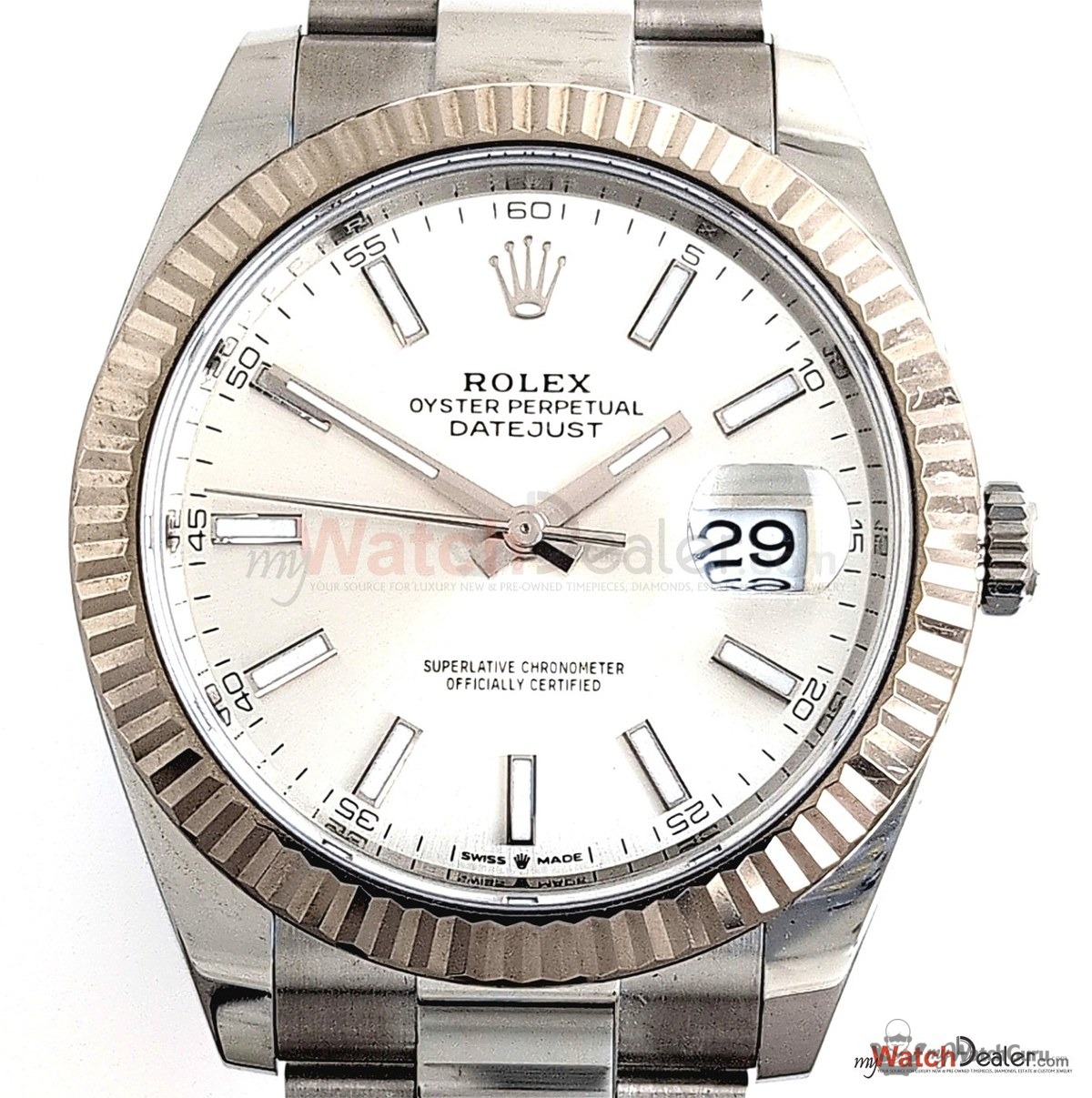
From 2021, the Rolex Datejust ref 126334 is a 40mm steel Datejust with a silver index dial, a fluted white gold bezel, and an Oyster bracelet already included. Papers are present, which helps confirm the reference and establishes a documented history. As a daily-wearer proposition it starts from a much more settled place: the bracelet is in hand, the current-generation movement has a quick-set date, and a watch from 2021 is far less likely to have gaskets and lubricants that are spent. Used condition means some wear is expected, but the practical gap between a four-year-old piece and a nearly sixty-year-old one is real.
Neither watch is the wrong answer. The 1967 piece is a genuine artifact with visual character that a newer watch cannot replicate. The 2021 piece is easier to live with from the first morning: bracelet sorted, date simple to correct, water resistance far closer to current spec. The vintage watch asks more of its owner, and that is not a reason to avoid it. It should be a fully informed decision, though, before you make it the watch you reach for every single day.
Sold through My Watch Dealer, our retail desk — full details, current price and purchase all happen there.
View this piece at My Watch Dealer ›