Values & guides
Understanding how yellow, white, and rose gold actually look, wear, and age can save you from second-guessing your choice for years to come.
Gold is gold in name, but the three alloys a watchmaker reaches for are genuinely different materials once the copper, silver, palladium, or other metals enter the mix. The color is the obvious part. The part buyers less often think about is how each alloy wears over years of real use, and whether the look that appeals in a dealer's case still appeals a decade later on your wrist.
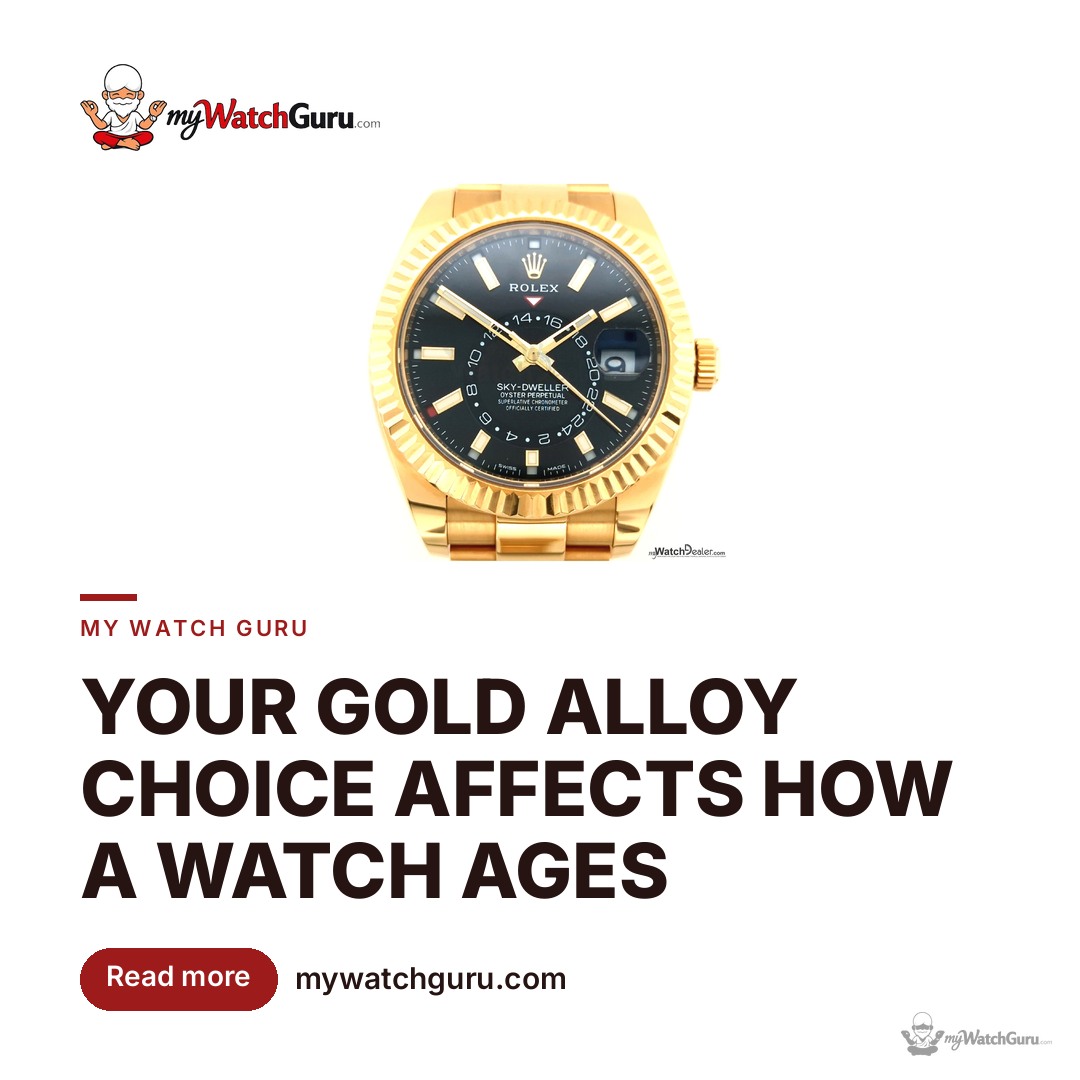
Yellow gold is the original. Its warm, saturated tone comes from alloying pure gold with silver and copper in proportions that preserve that familiar deep warmth. Among the three alloys, yellow gold changes the least with time. It scratches and scuffs like any soft precious metal, but polishing restores it readily. There is no plating involved, so the color you see when you buy the watch is the color you will have indefinitely. On a larger, heavier case, yellow gold tends to read as a deliberate statement.
White gold gets its color from white-metal alloys, most commonly palladium or silver, and is nearly always finished with a rhodium plating. That plating matters: it is what gives new white gold its particularly bright, slightly cool white appearance. Over time, rhodium does wear. How quickly depends on how often you wear the watch and how much the bracelet or case contacts hard surfaces. On most watches it is a gradual process, and a watchmaker can re-plate. Buyers who prefer a bright silvery look but want the weight and feel of gold rather than steel tend to land on white gold.
Rose gold's copper-heavy alloy is what produces the warm pink tone. More copper in the mix tends toward a deeper, richer rose, and the exact shade varies slightly by manufacturer. Unlike white gold, rose gold carries no plating, so its color is inherent to the metal itself. The copper content does mean rose gold can develop a slightly richer, deeper tone over years of wear as the surface is handled and polished. Some owners consider this part of the appeal. Others prefer to keep it uniformly bright with regular polishing. The warmth of rose gold tends to work particularly well against darker dials.
Metal choice and case size interact more than buyers expect. A large case in yellow gold reads differently than the same case in white gold, which can feel closer to a steel watch at a glance. Rose gold occupies a kind of middle ground visually: warmer than white but softer than yellow. None of this is a rule. It is simply worth thinking about how the case color sits with the dial and overall proportions on your specific wrist before you commit.
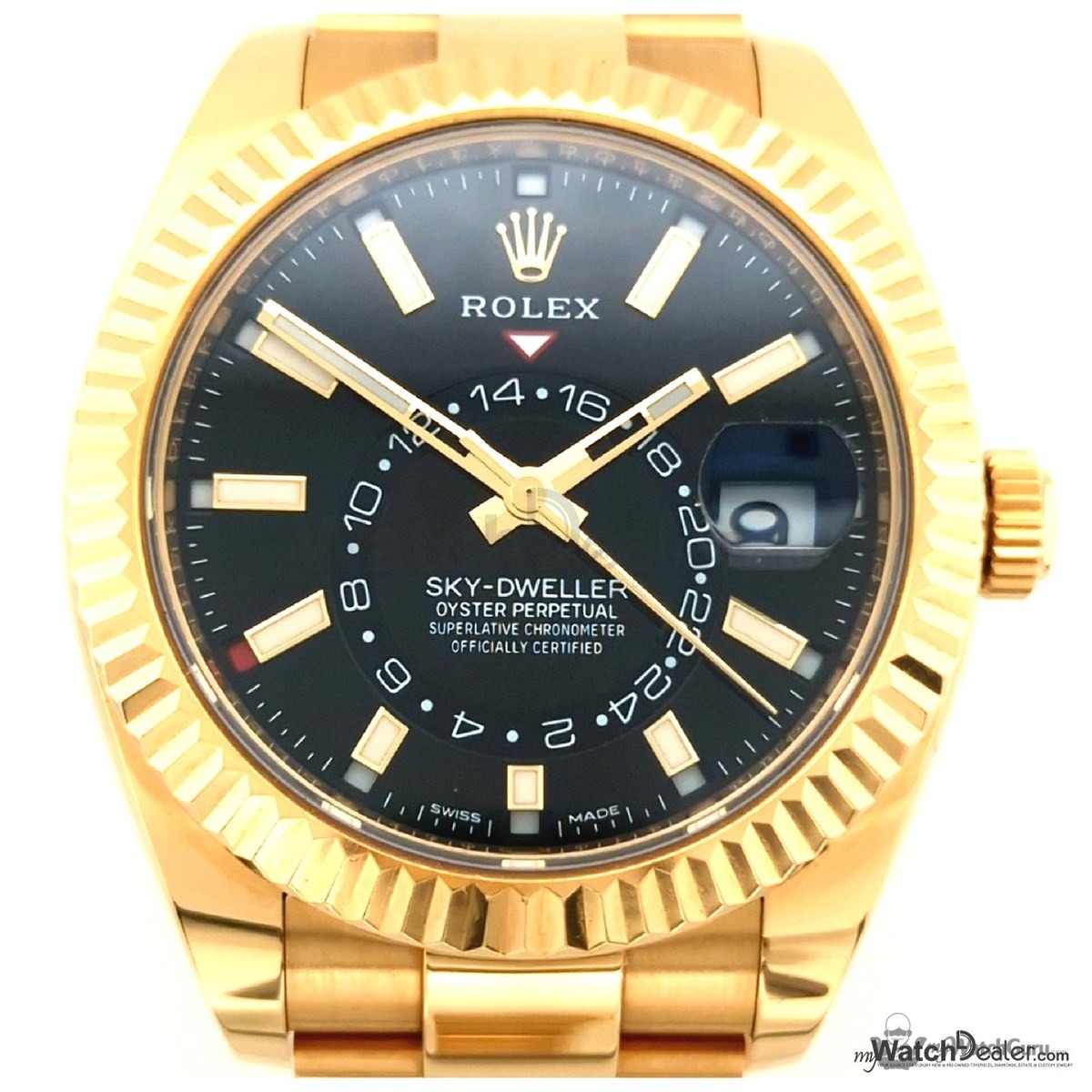
The Rolex Sky-Dweller ref 326938 makes a strong case for yellow gold at scale. At 42mm in solid yellow gold with a bright black dial and fluted yellow gold bezel, the color contrast is sharp and deliberate, with nothing understated about it. The Oyster bracelet and like-new condition with full box and papers, from 2020, mean this is a reference where the yellow gold presence is part of the design intent from the ground up, not incidental.
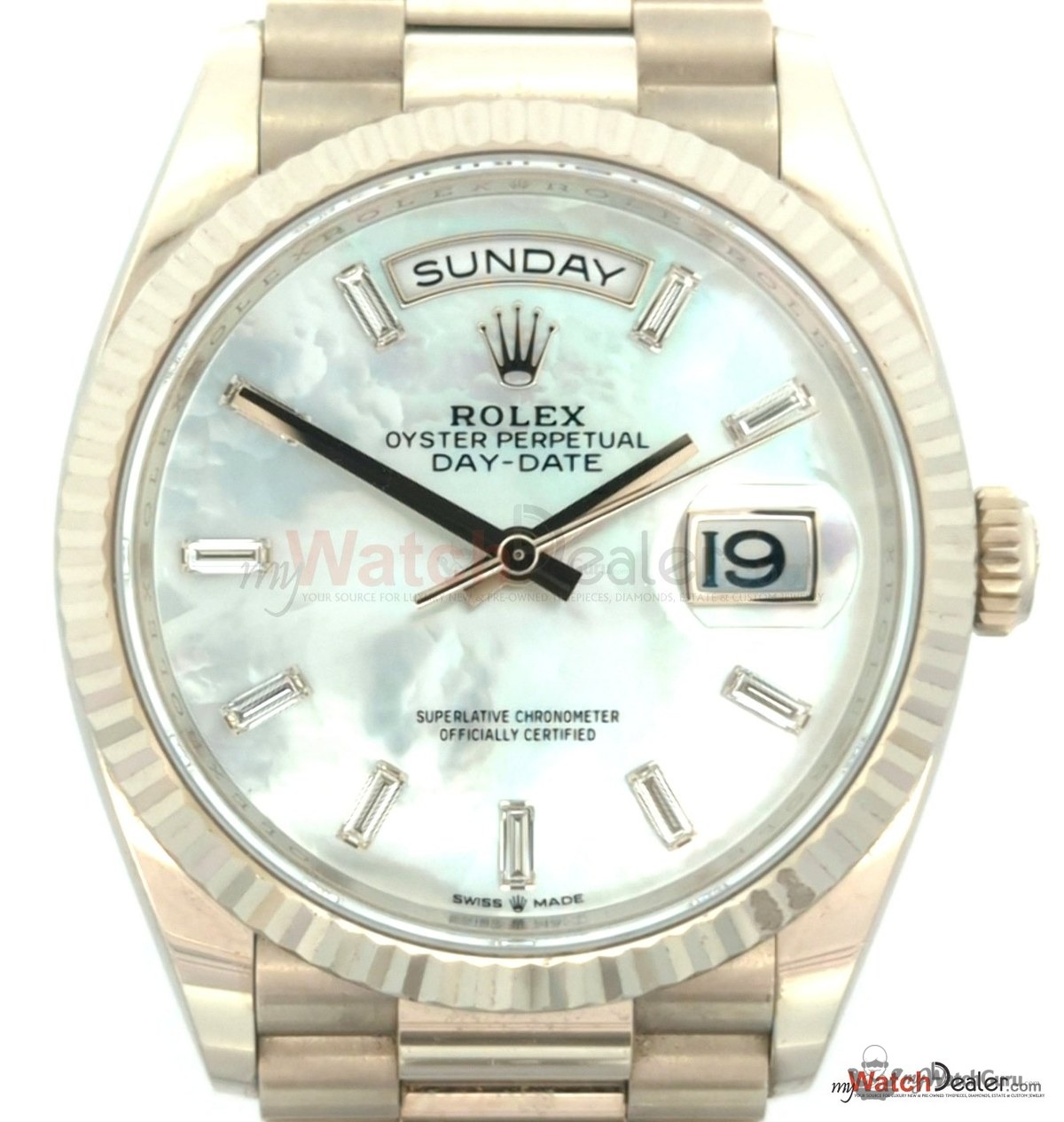
For white gold, the Rolex Day-Date ref 128239-0065 shows how the alloy behaves at 36mm. White gold with a fluted white gold bezel and a white mother-of-pearl baguette diamond dial produces an effect that is bright and cool rather than warm. This is a 2025 example in like-new condition with box and papers, so the rhodium plating is essentially fresh. The white MOP dial and the white gold case work together in a way that yellow or rose gold simply would not replicate.
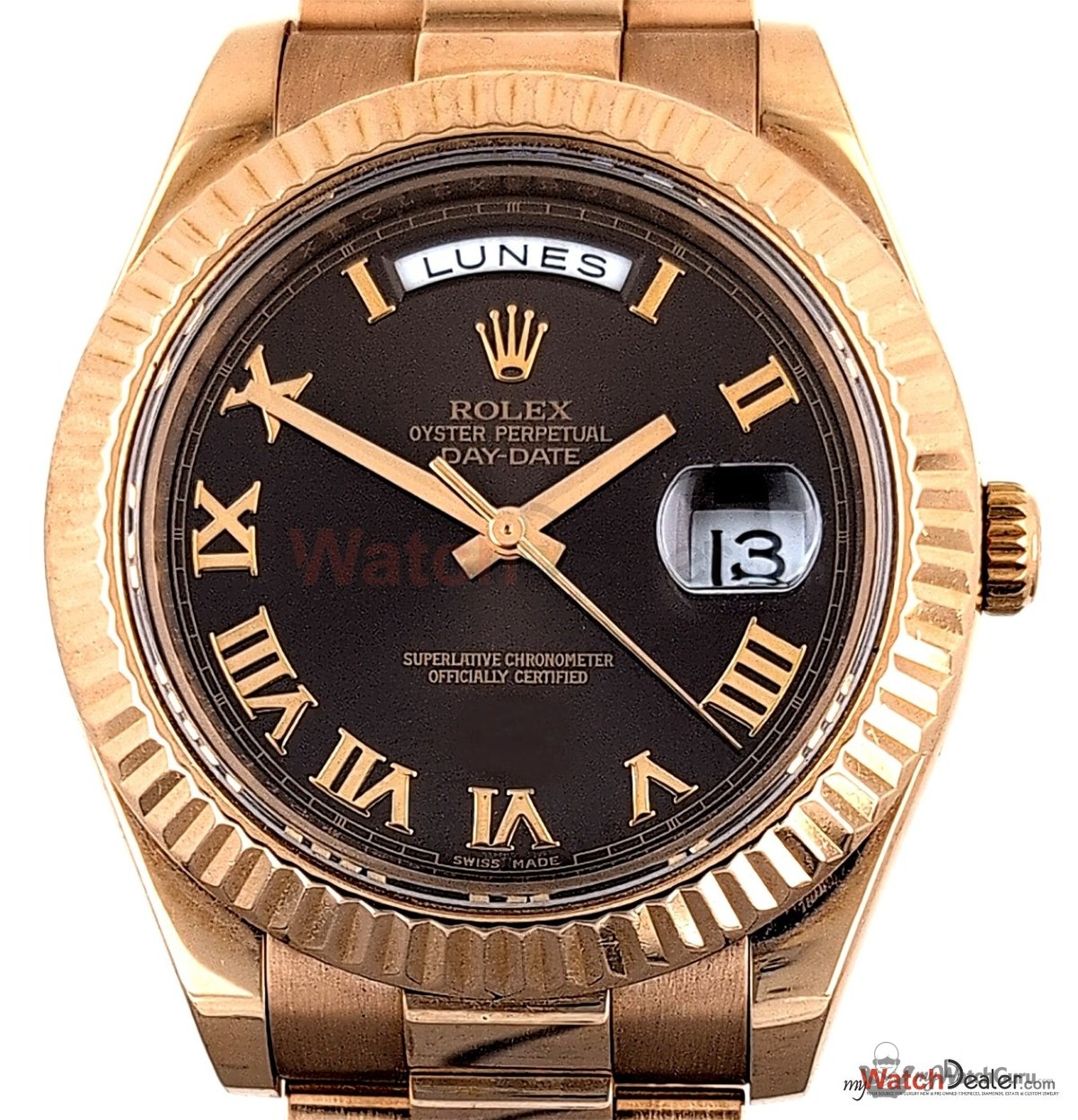
Rose gold's warmth argument is illustrated well by the Rolex Day-Date ref 218235 in 41mm with a chocolate Roman dial. The copper-toned metal and the brown dial complement each other closely, a pairing that would look off in white gold and only slightly less so in yellow. This piece dates to 2013, listed as used with papers, which gives buyers a chance to inspect rose gold that has actually been worn and handled over time.
White gold is the one alloy that involves periodic re-plating as part of ownership. Yellow gold and rose gold do not require it. The decision comes down mainly to how the dial color pairs with the case metal, and how the overall combination reads on your wrist. Those factors are worth settling before the watch ships.
Sold through My Watch Dealer, our retail desk — full details, current price and purchase all happen there.
View this piece at My Watch Dealer ›